
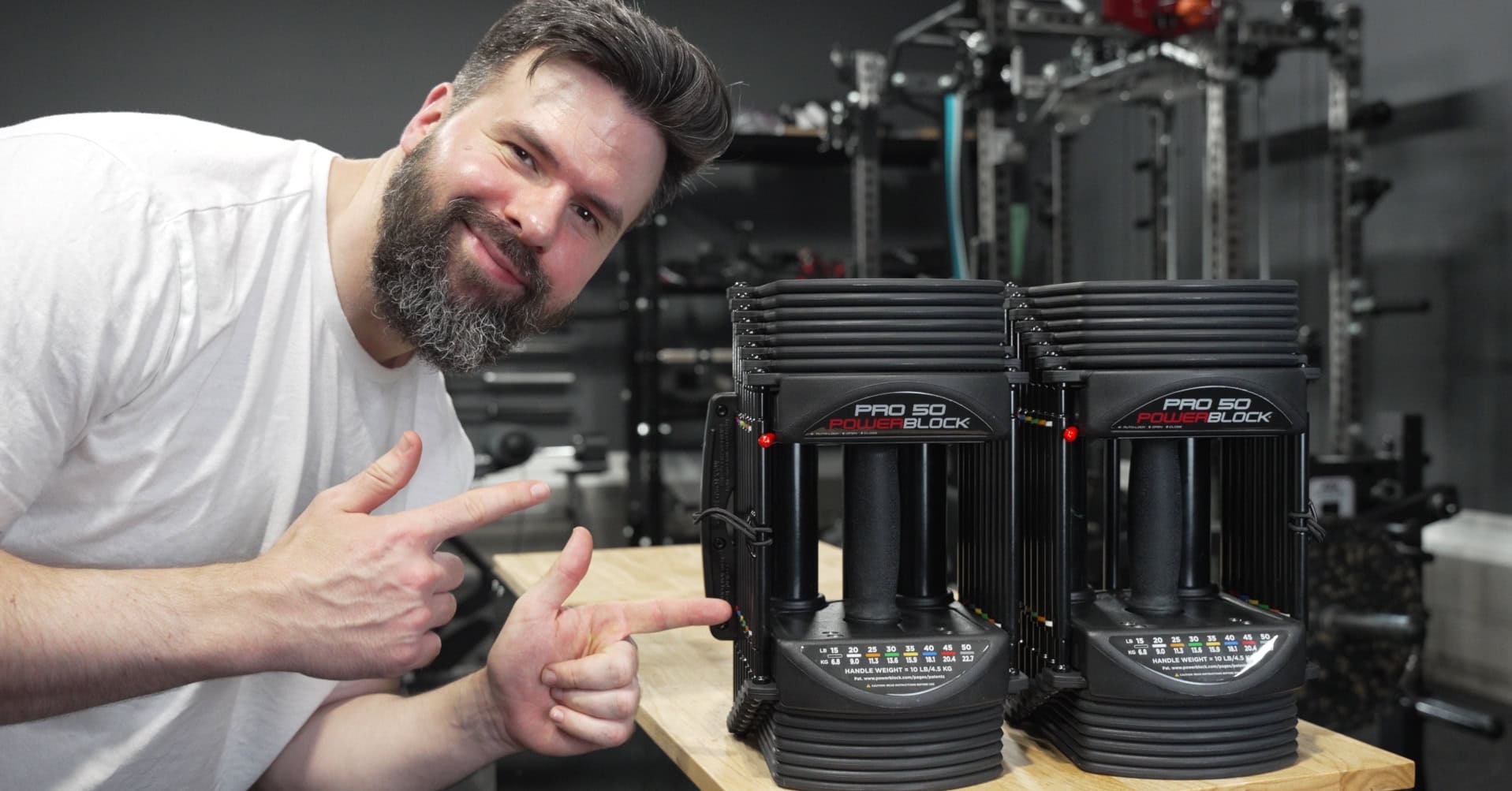
Every PowerBlock that adjusts in 2.5 lb increments skips some of them. Except this one.
The PowerBlock Pro 50 gives you every single weight from 5 to 50 lbs with nothing missing, which no other model in the lineup manages. This PowerBlock Pro 50 review covers why that happens, what the 5 lb blocks do for daily use, and the hard ceiling that rules this set out for a lot of lifters.
| Model | Pros & Cons | Rating |
|---|---|---|
PowerBlock Pro 50 | Pros:
| Rated 4.0 out of 5 |
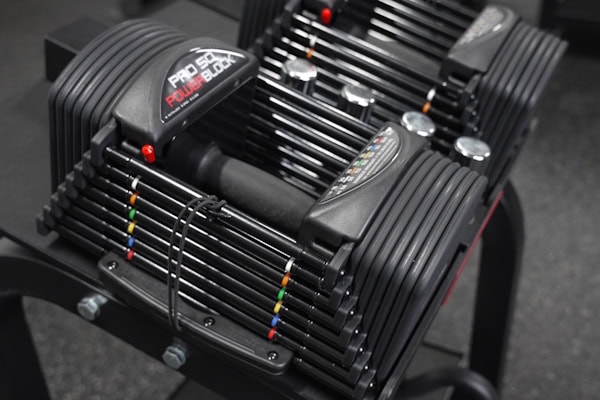


Table of Contents
Every Single Weight Increment Is Available
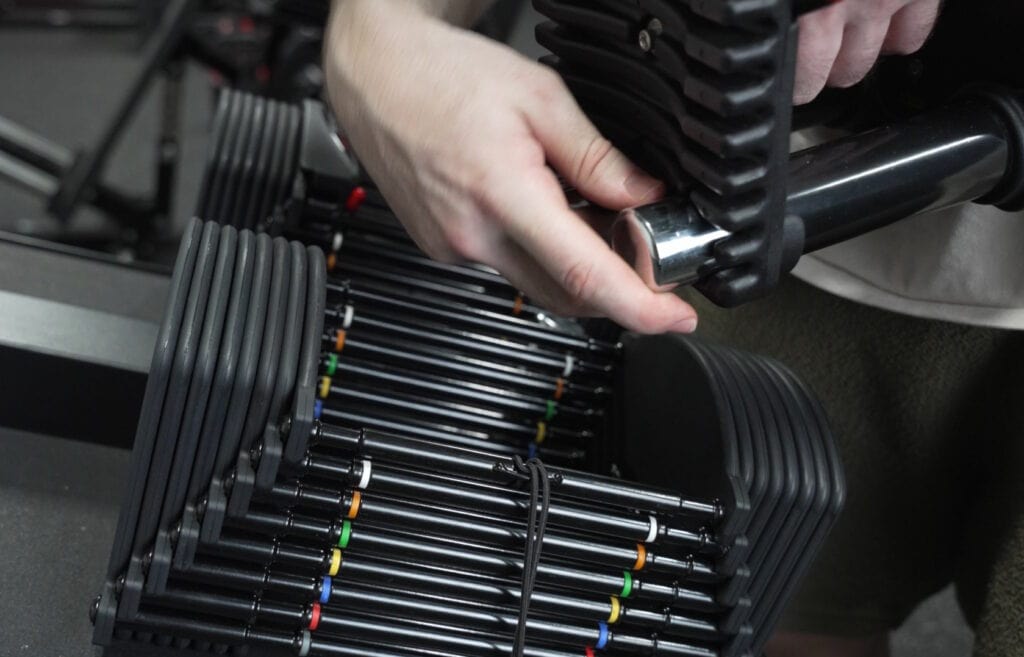
Expandable PowerBlocks skip a 2.5 lb increment roughly every 10 lbs. On a Pro 100 EXP or Elite, you can’t select 12.5, 22.5, 32.5, and so on up the stack.
The Pro 50 has no gaps. 5, 7.5, 10, 12.5, 15, and straight through to 50.
| Model | Increment | Weights you can’t select |
|---|---|---|
| PowerBlock Pro 50 | 2.5 lbs | None |
| Pro 100 EXP | 2.5 lbs | 10 skipped weights |
| Elite USA 90 | 2.5 lbs | 8 skipped weights |
| Commercial Pro 100 | 5 lbs | None |
| Commercial Pro 125/175 | 7.5 lbs | None |
| Pro 32 | 4 lbs | None |
| Sport 24 | 3 lbs | None |
As you can see in the table above, other models offer complete coverage, but at bigger jumps (and sometimes skipped jumps) of 3, 4, 5, or 7.5 lbs. The Pro 50 is the only PowerBlock that gives you 2.5 lb steps with nothing missing.
For anyone who progresses in small jumps and doesn’t want any missed increments, that’s a worthwhile benefit. Lateral raises, rear delt work, external rotations, and most rehab protocols are in exactly the range where a missing 12.5 or 22.5 can impact your training.
PowerBlock Pro 50 Specs
| Spec | Detail |
|---|---|
| Weight range | 5 to 50 lbs per hand |
| Increments | 2.5 lbs, no skipped weights |
| Block weight | 5 lbs each |
| Adjustment | Selector pin + micro weights with auto-lock |
| Grip | Contoured TPR |
| Handle | Wedge-shaped, open |
| Plate construction | Urethane-coated steel, flex frame, arched shape |
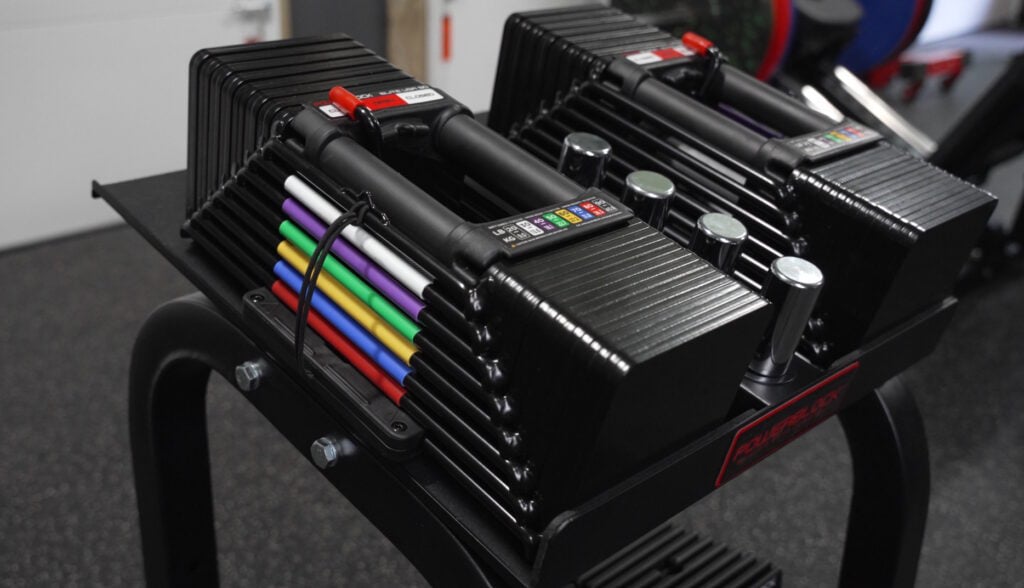
| Weight indicators | Colored rings, both sides |
| Rail hardware | Black zinc plated |
| Dimensions (L×W×H) | 12.5″ × 7″ × 7.25″ at 50 lbs |
| Expandable | No |
| Stand | Sold separately |
| Warranty | 5 years residential |
| Price | $549 |
The 5 lb Blocks Change How You Use It
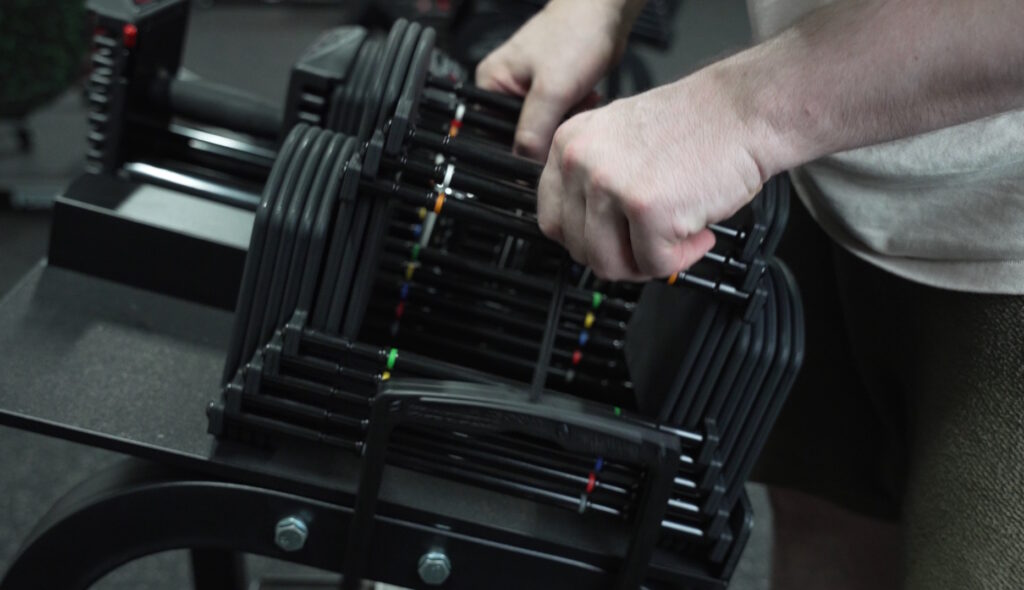
Heavier PowerBlocks use 10 lb blocks. To move 5 lbs on those models, you have to open the handle slot and add or remove a micro weight. That’s a slower adjustment than moving a pin.
The Pro 50’s blocks are 5 lbs each. So a 5 lb jump means moving the selector pin one position and nothing else. You only touch the micro weights when you want a 2.5 lb step.
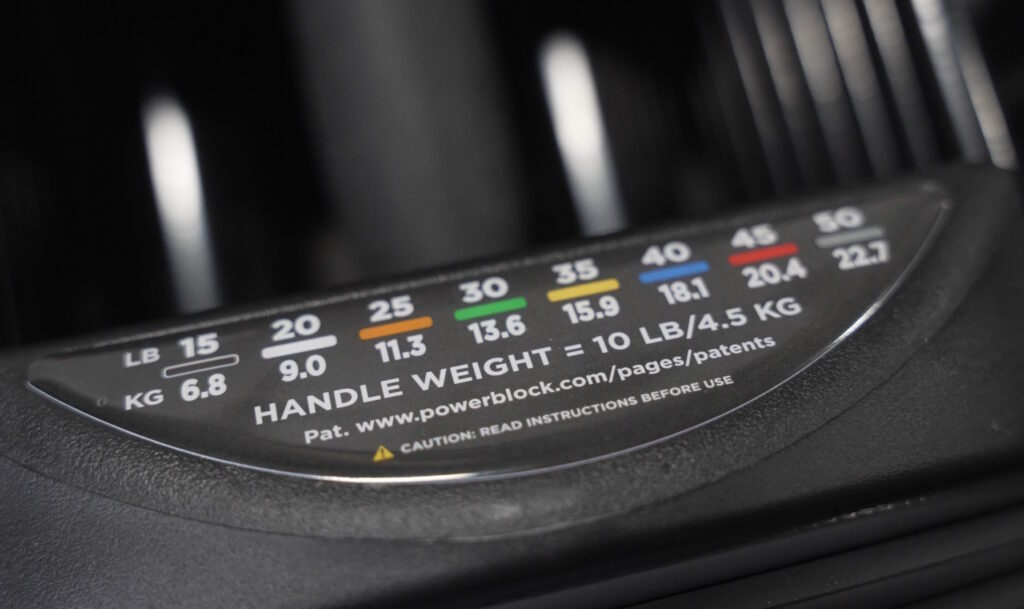
In practice that means most of your weight changes on this set take about two seconds per dumbbell. It’s the fastest micro-weight PowerBlock to adjust, which I think is an underrated benefit.
The auto-lock feature handles the rest of the adjustment process. When you drop the handle back into the blocks, the top rail pushes the lock lever closed so the micro weights stay put. The only time you lock it manually is when you’re lifting the handle with micro weights with no plates selected (handle only).
The Ceiling Is Capped
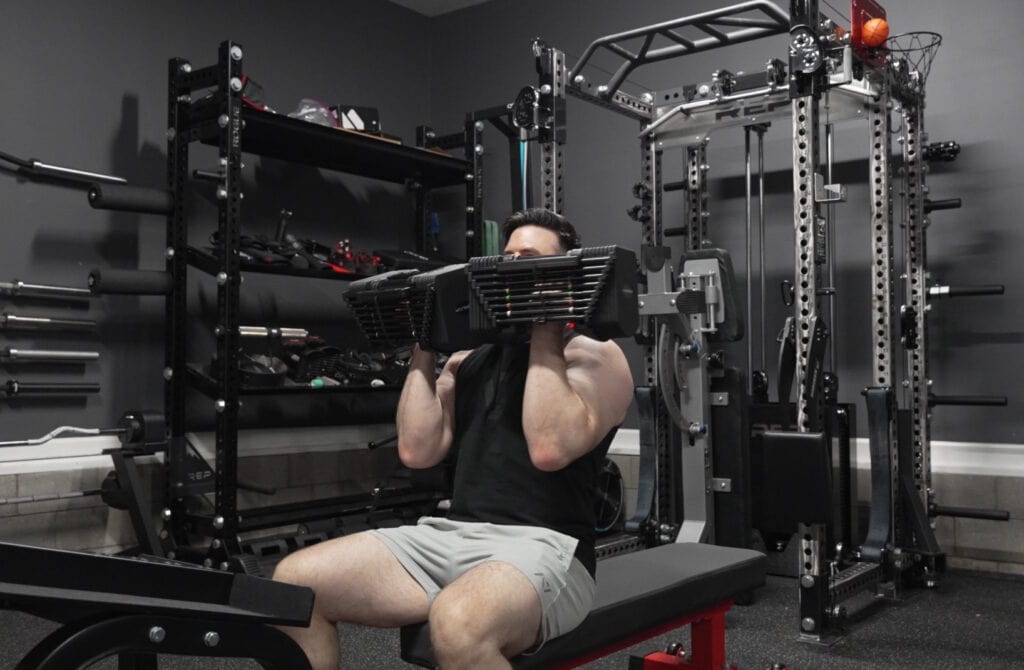
This is the part of my PowerBlock Pro 50 review where I get less enthusiastic.
Fifty pounds is the end of the road. There is no expansion kit or any other way to increase the max weight. If you outgrow it, you have to buy a different set and eat the cost of this one.
This is a big deal if you’re still progressing significantly in strength. A lifter who can row 50 lbs today may be rowing 70 in a year. Fifty pounds is also below where most intermediate lifters do their pressing.
Compare that to the Elite USA 90, which starts at 50 lbs for $469, undercuts the Pro 50 by $80, and expands to 90 lbs later for $199 a stage. If there’s any real chance you’ll pass 50 lbs per dumbbell for your training needs, go with a heavier/expandable model.
Personally, 50 lbs is too light for how I train, and it will be for a lot of readers here, too.
Who the PowerBlock Pro 50 Is Built For

The max weight rules this dumbbell set out for some people and makes it a smart buy for others. Three groups get a lot of value here:
- Lighter lifters and beginners who will stay under 50 lbs. If you’re training for general fitness rather than chasing heavy numbers, the fine increments are worth more to you than a high ceiling you’ll never use.
- Rehab and physical therapy. Post-injury protocols move in small steps, and the complete increment coverage means you can follow a program exactly rather than rounding to the nearest available weight.
- As a second, lighter set. This is a use case that may not be obvious, but it’s a legitimate reason for buying the PowerBlock Pro 50. If you already own heavy dumbbells that may have larger plate increments, a Pro 50 covers everything under 50 lbs with faster and smaller adjustments.
Build and the Arched Plate Shape
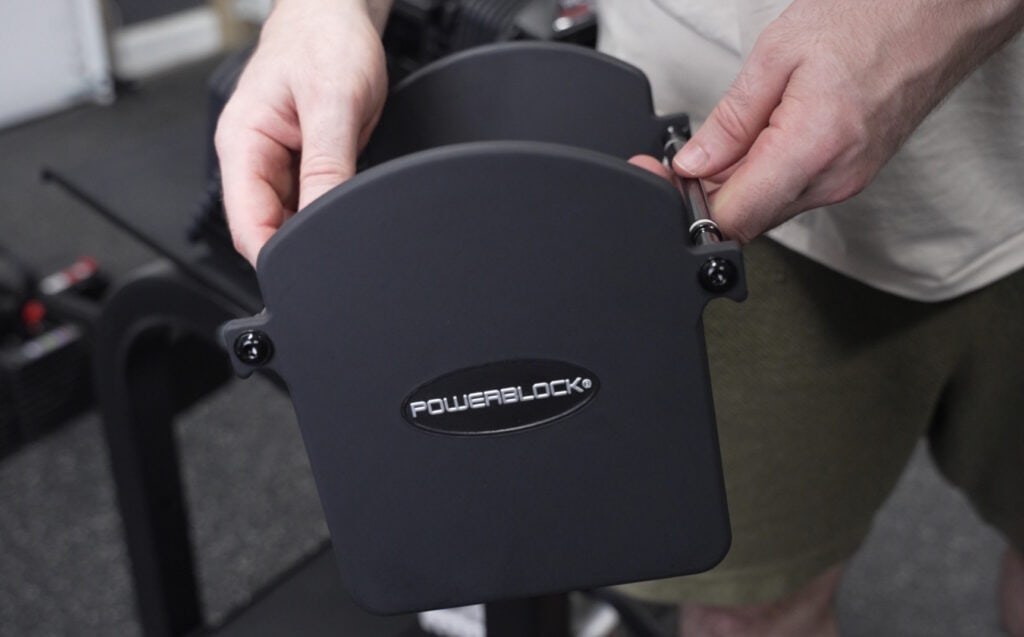
The Pro 50 uses urethane-coated steel plates with PowerBlock’s flex frame, where the rails run through urethane tabs so each end flexes slightly and absorbs impact.
The coating does the same three jobs it does across the Pro line. Quieter racking and lifting, more comfort when you rest the dumbbells on your thighs between sets, and a more finished look than bare powder-coated steel.
The plate shape is worth calling out because it’s different from most of the lineup. Instead of the classic square blocks you see on the Elite and Pro 100 models, the Pro 50 uses an arched profile that looks a bit like a slice of bread. The Sport 24, Pro 32, and the Commercial Pro 50 share it.
The shape is cosmetic rather than functional. It doesn’t change how the dumbbell loads or feels.
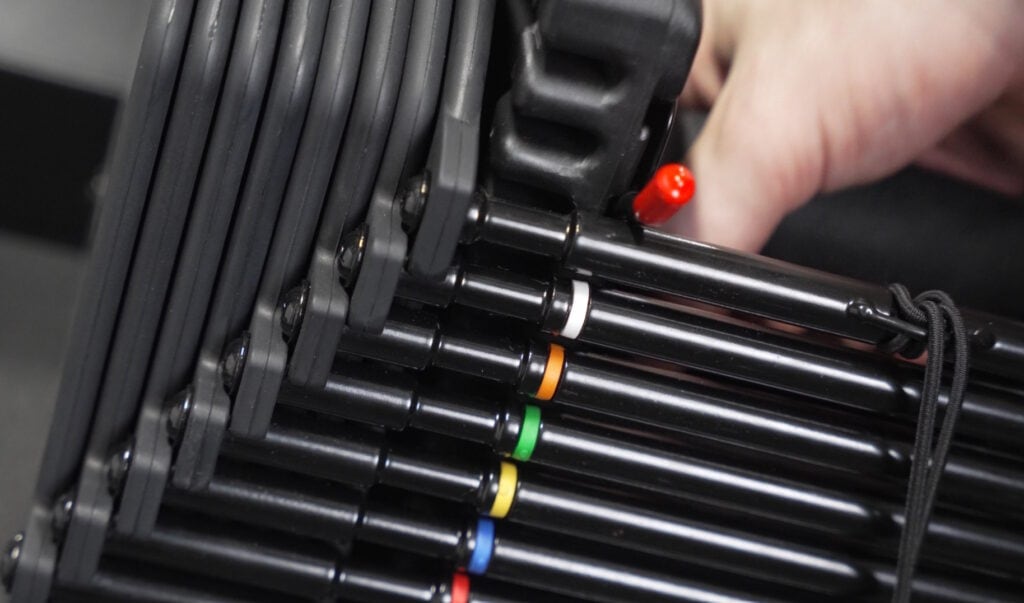
Weight indicators are colored rings embedded in the rails, sitting on both sides of the block. You can grab the dumbbell from either direction and still read your weight, which the one-sided strip indicators on the Elite and Sport models don’t allow.
The rail hardware is black zinc plated. Commercial sets use stainless steel instead. It’s a small durability difference that may only matter over the very long term after years of use in a humid space.
The Grip: TPR, With a Knurled Option
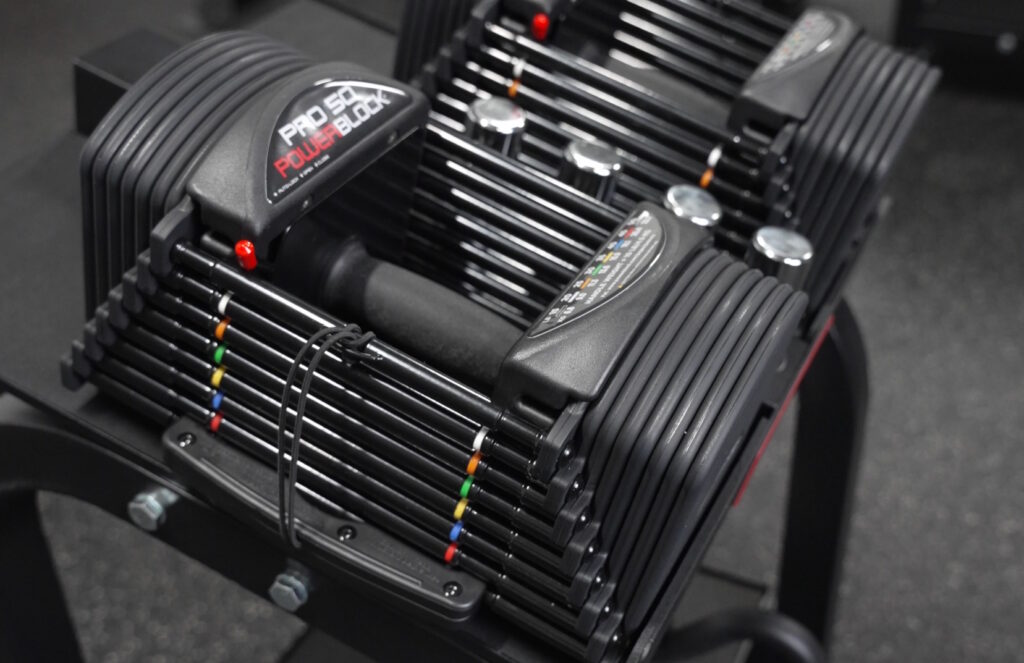
The Pro 50 ships with contoured TPR rubber grips. There’s no knurled option at checkout the way there is on the Pro 100 EXP.
At a 50 lb max weight, TPR is enough for most people. Grip security becomes a limiting factor at heavy weights, and 50 lbs per hand generally isn’t heavy enough for a rubber grip to slip on you.
That said, if you want knurled steel, PowerBlock’s Pro Series knurled grips fit the Pro 50. They run around $109 a pair and install with an Allen key. That puts a knurled Pro 50 at roughly $658 all in.
Stepping up to the Commercial Pro 50 for knurled grips that come standard costs $1,049. Buying grips for a Pro 50 gets you the same grip material for nearly $400 less, though you give up the commercial hardware and the included stand (and the commercial version also has no micro weights).
My knurled handles review covers the grip upgrade in more detail.
Handle Shape and Feel
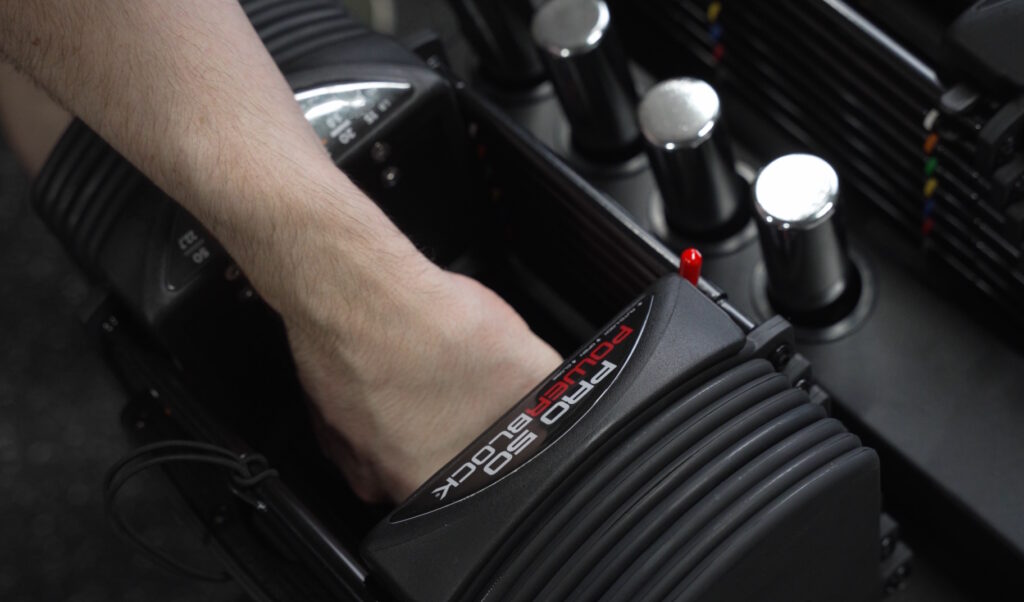
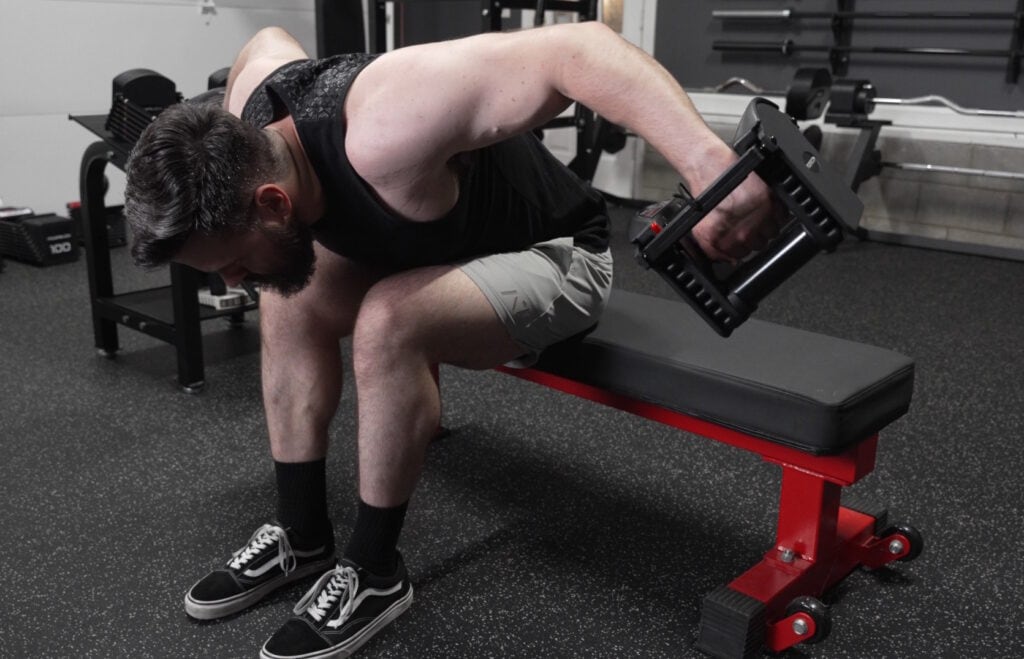
The Pro 50 uses the wedge-shaped open handle found across the Pro line. Your hand and forearm have room to move side to side, and the wedge gives you a natural spot to brace your wrist on a few exercises like lateral raises.
I prefer this to the closed handle with wrist supports on the Elite models. The Elite design adds stability on some movements (especially curls) but can feel cramped if you have larger hands. The open wedge has no such constraint.
Balance is good overall, but not perfect. The micro weights add a small amount of mass in the handle that shifts the center of gravity, particularly if just one is added.
Size
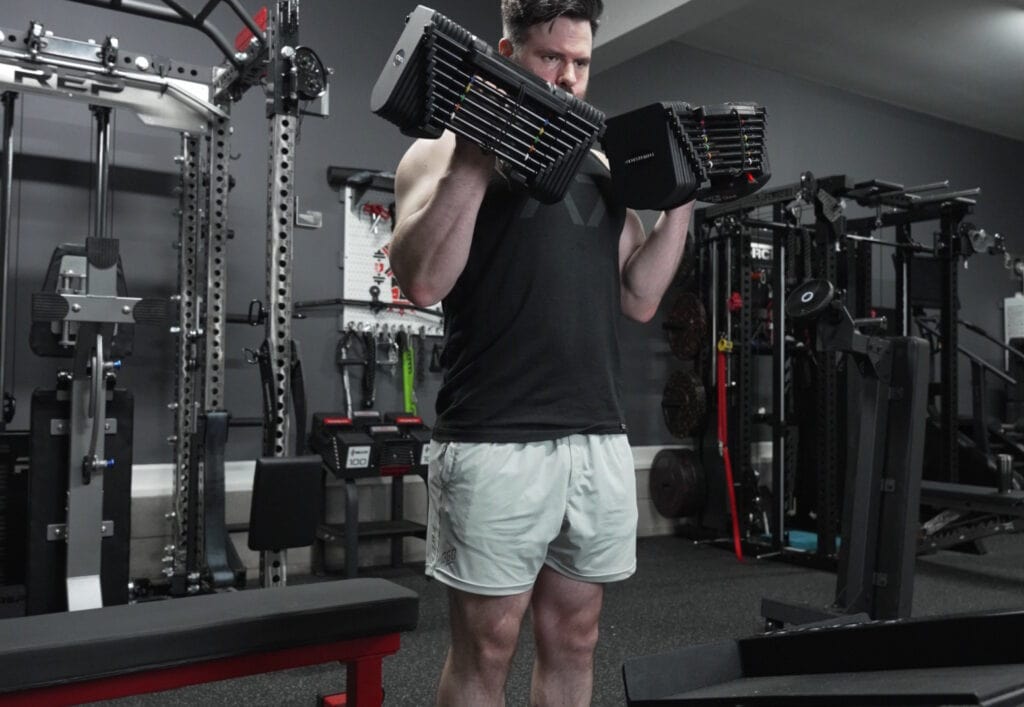
At the full 50 lbs, the Pro 50 measures 12.5″ long, 7″ wide, and 7.25″ tall.
That’s compact in absolute terms but somewhat chunky for the weight it holds, which I think of as the “urethane tax.” For comparison, the Sport 24 is 10″ at 24 lbs and the Pro 32 is 12″ at 32 lbs, so the Pro 50 only adds half an inch of length over the Pro 32 while holding 18 more pounds.
So the extra bulk really comes in the plate height and width, though to be clear, it’s not oversized. For storage and for bringing the dumbbells together on pressing movements, 12.5 inches is a non-issue.
Attachments
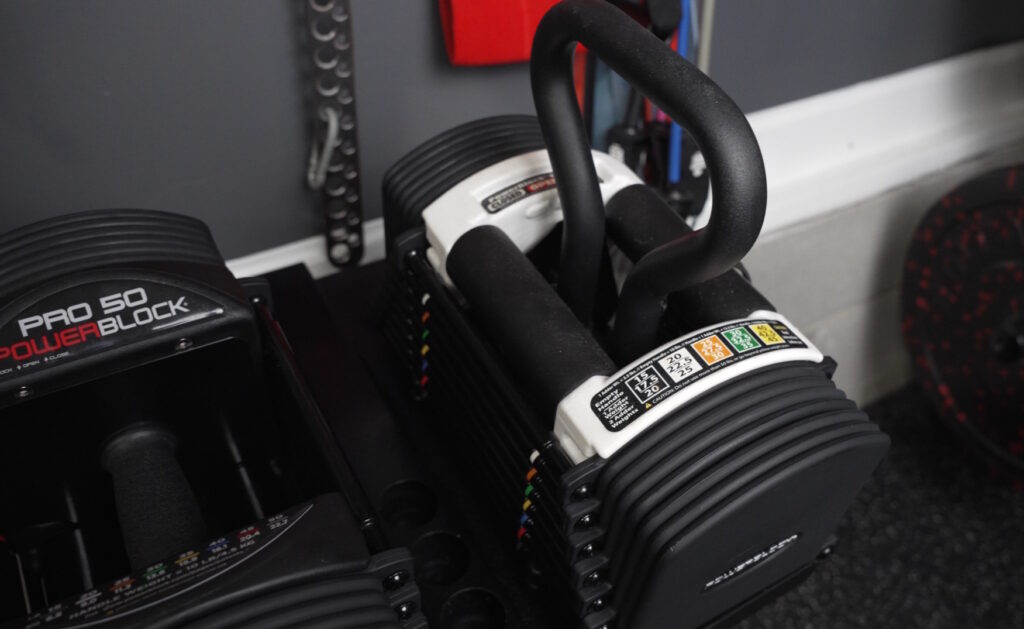
The Pro 50 works with the Pro Series attachment family, which also fits the Commercial Pro 50 and the discontinued Pro EXP.
| Attachment | Price | Notes |
|---|---|---|
| Kettlebell handle | $149 each | Fixed, does not rotate |
| Straight bar | $199 | Loads to about 115 lbs |
| EZ curl bar | $199 | Loads to about 115 lbs |
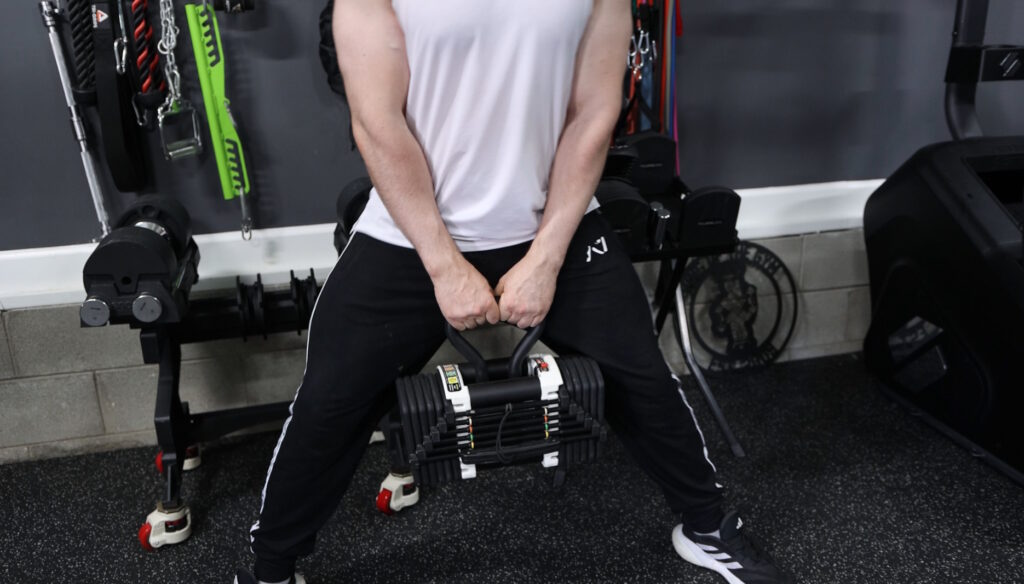
There’s one caveat with the kettlebell handle. The Pro Series version is fixed, while the newer Pro 100 and Elite handles rotate 90 degrees so you can orient the blocks to clear your legs on swings. I own the fixed version, and once you load it up the blocks start hitting your legs. At Pro 50 weights, that’s less of a problem than it is on a heavier set, but it’s nonetheless a limitation of this particular kettlebell handle attachment.
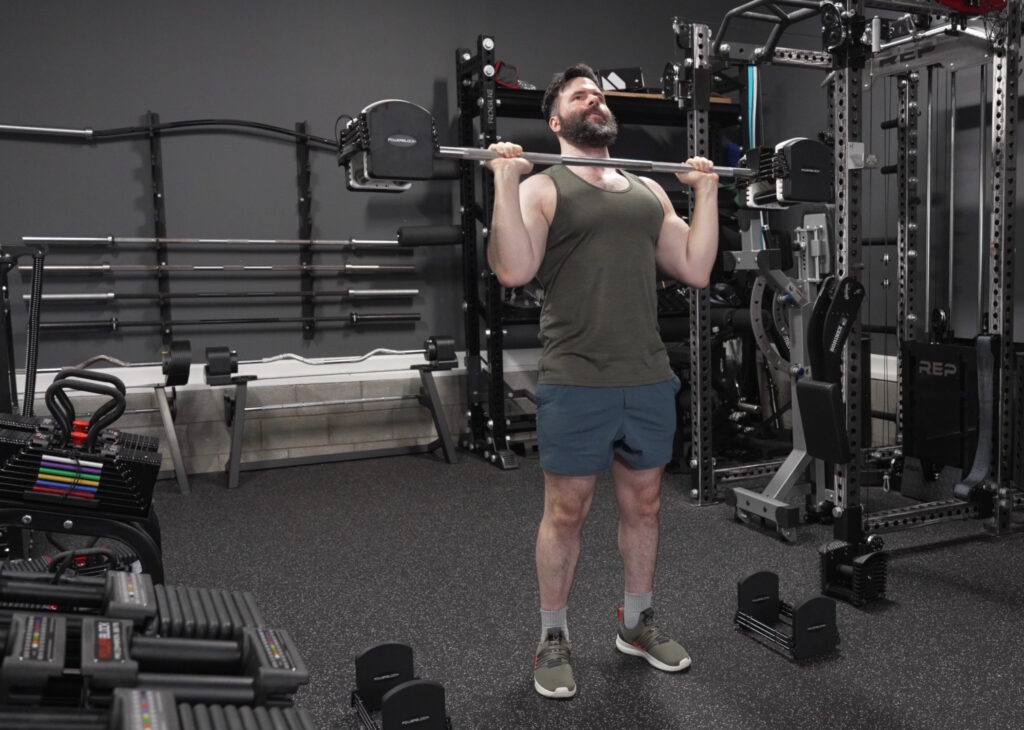
The bar attachments for the Pro 50 cap out at around 115 lbs, since the bar itself is 25 lbs and you’re adding the block weight from both dumbbells. That’s usable for pressing and rows, though a real Olympic bar and plates will feel significantly better if you have the space for them.
Pro Series attachments do not fit the Pro 100 EXP or the Commercial Pro 100, and vice versa. Those use the separate Pro 100 family of attachments.
Which Stand to Get
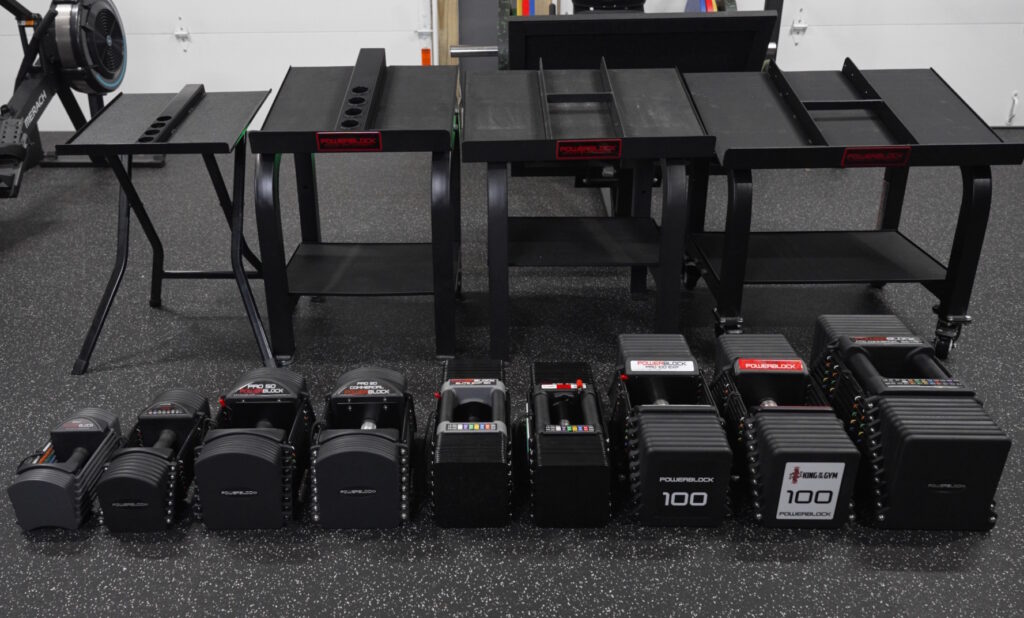
No stand is included with the Pro 50. The one you get needs micro weight storage ports:
- Home Rack Stand ($279): my pick, but only if you don’t mind paying a premium. Tallest, most robust, with a lower storage shelf.
- Large Compact Stand ($109): the budget option, and it folds flat when you need the floor space.
- PowerMax 2.0 ($199): step-in design, no lower storage shelf.
At a $549 dumbbell price, the $109 Large Compact makes more sense proportionally than spending half again on the stand. Budget accordingly.
Warranty
Residential PowerBlock sets carry a 5 year limited warranty covering materials and workmanship defects. It excludes misuse, including drops from above 6 to 12 inches depending on the model.
For context, NÜOBELL offers 2 years and REP x Pépin offers a limited lifetime warranty on structural integrity.
PowerBlock Pro 50 Pros and Cons
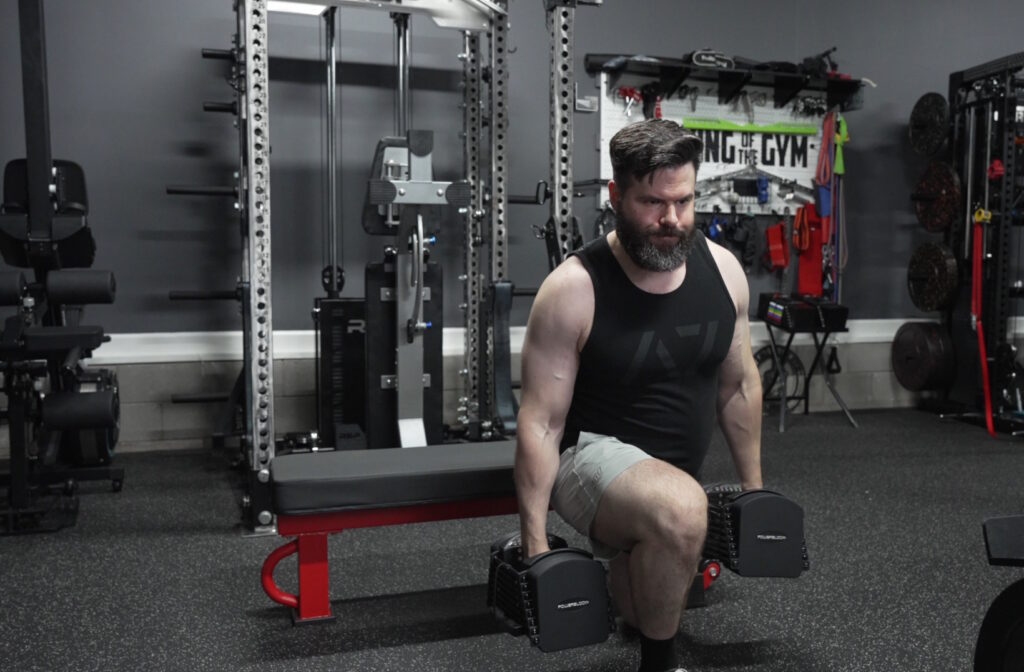
Here’s the condensed version of this PowerBlock Pro 50 review.
Pros:
- The only PowerBlock with 2.5 lb increments and zero skipped weights
- 5 lb blocks mean most weight changes take one pin move
- Auto-lock on the micro weight slot
- Urethane-coated plates are quieter and more comfortable than bare steel
- Ring indicators on both sides of the block
- Wedge-shaped open handle with room for your hand and forearm
- Works with the Pro Series bars and kettlebell handle
- PowerBlock’s own knurled grips fit it for around $109
- Compact at 12.5 inches, only half an inch longer than the Pro 32
- $549, well under the expandable models
Cons:
- Non-expandable, so 50 lbs is a permanent ceiling
- The Elite USA 90 starts at $469 and grows to 90 lbs
- TPR grips standard with no knurled option at checkout
- The Pro Series kettlebell handle is fixed, not rotating
- Too light for most intermediate and advanced lifters
PowerBlock Pro 50 vs Commercial Pro 50
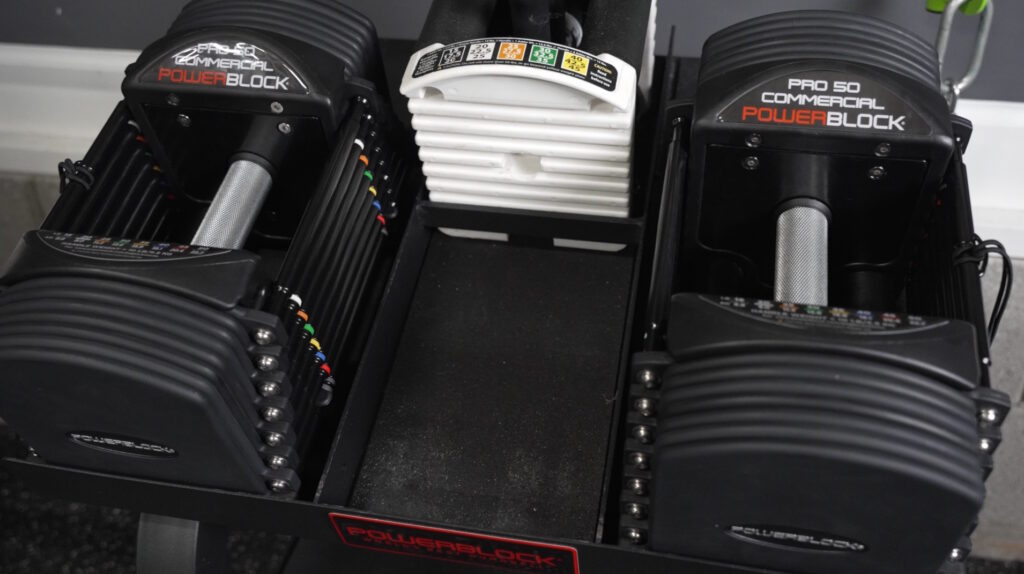
This is the comparison that comes up in almost every PowerBlock Pro 50 review question I get. The two are dimensionally identical, use the same plates, and their handles are interchangeable. Three things separate them.
| Pro 50 | Commercial Pro 50 | |
|---|---|---|
| Grips | Contoured TPR | Knurled stainless steel |
| Increments | 2.5 lbs (micro weights) | 5 lbs (pin only) |
| Rail hardware | Black zinc | Stainless steel |
| Stand | Not included | Pro Rack Stand included |
| Price | $549 | $1,049 |
The Commercial Pro 50 balances slightly better because it has no micro weights adding mass to the handle, and its adjustments are faster since every change is a pin move. But you lose the 2.5 lb increments, which is the Pro 50’s entire reason for existing.
At $500 more, the commercial version is hard to justify for most home gym buyers. If you want knurled grips on a 50 lb set, buying a Pro 50 and adding $109 grips gets you there for $658.
The Commercial Pro 50 makes sense for a facility, or for someone who specifically wants commercial hardware and doesn’t need fine increments (or who doesn’t want to fiddle with micro weights).
PowerBlock Pro 50 vs Elite USA 90
This is the comparison that should decide your purchase if there’s any chance you’ll get stronger.
The Elite USA 90 base set is 5 to 50 lbs at $469, which is $80 less than the Pro 50 for the same weight range. It expands to 70 and then 90 lbs at $199 per stage.
What the Pro 50 gives you in return: complete increment coverage with no skipped weights, urethane plates instead of bare steel, ring indicators on both sides, an open wedge handle, and auto-lock.
Pick the Pro 50 if 50 lbs is your permanent ceiling and you value the fine increments. Pick the Elite USA if there’s a realistic path to needing more weight.
My Pro vs Elite comparison goes deeper.
PowerBlock Pro 50 FAQ
Can the PowerBlock Pro 50 be expanded past 50 lbs?
No. There is no expansion kit for it. Fifty pounds per hand is a permanent ceiling, which is the main reason to consider an expandable model instead if you’re still getting stronger.
Does the PowerBlock Pro 50 have any skipped weights?
No. Every 2.5 lb increment from 5 to 50 lbs is selectable. The expandable models skip one roughly every 10 lbs, so the Pro 50 is the only PowerBlock offering 2.5 lb steps with complete coverage.
Can you put knurled grips on a PowerBlock Pro 50?
Yes. PowerBlock’s Pro Series knurled grips fit the Pro 50 and run about $109 a pair, installed with an Allen key. That’s a much cheaper route to knurled steel than stepping up to the Commercial Pro 50.
What’s the difference between the Pro 50 and the Commercial Pro 50?
Same dimensions and plates. The commercial version has knurled grips, stainless rail hardware, and an included stand, but no micro weights, so it jumps in 5 lb steps instead of 2.5. It costs $1,049 against $549.
Does the PowerBlock Pro 50 come with a stand?
No. The Large Compact Stand at $109 is the sensible budget pairing, and the Home Rack Stand at $279 is the more premium option. Both have micro weight storage.
What attachments work with the Pro 50?
The Pro Series family: a straight bar, an EZ curl bar, and a non-rotating kettlebell handle. Those same attachments fit the Commercial Pro 50 and the discontinued Pro EXP. They do not fit the Pro 100 EXP or the Commercial Pro 100.
How big is the PowerBlock Pro 50?
12.5 inches long, 7 inches wide, and 7.25 inches tall at 50 lbs. That’s only half an inch longer than the Pro 32 while holding 18 more pounds.
My Rating
No schema found.PowerBlock Pro 50 Review: Final Verdict
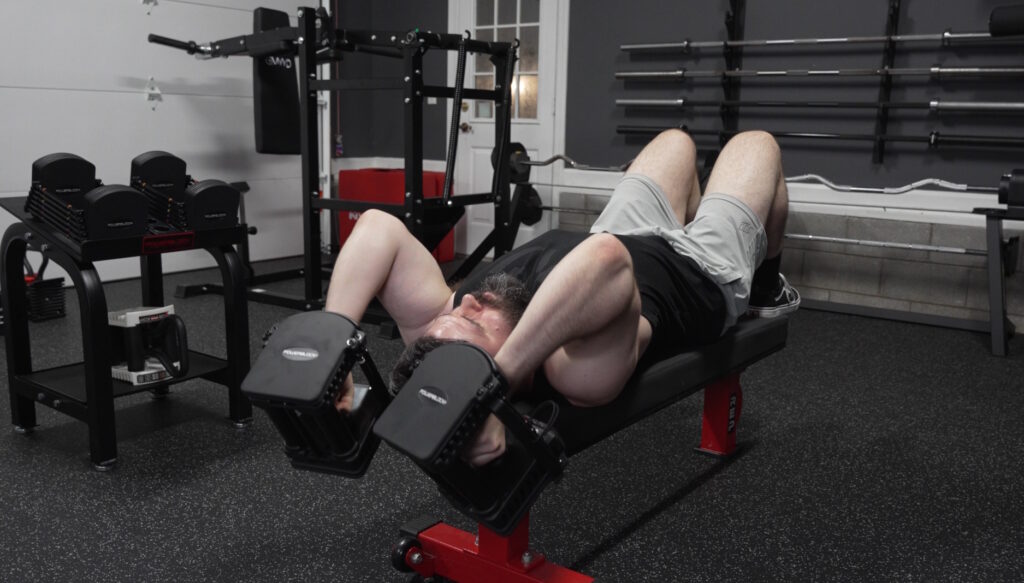
The Pro 50 does one thing better than any other PowerBlock: Complete 2.5 lb increment coverage with no gaps, plus 5 lb plates that make most adjustments consist of a single pin move.
The problem is the weight ceiling. At $549 with no expandability, the PowerBlock Pro 50 requires you to commit permanently to 50 lbs, while the Elite USA 90 starts $80 cheaper and grows to 90. For anyone still building strength, that makes it hard to choose the Pro 50.
However, if you’re training for general fitness, working through rehab, or adding a dedicated light pair alongside heavy dumbbells you already own, the increment coverage is worth paying for and the low max weight isn’t an issue.
Check the Pro 50’s current price here and remember that my code KING20 saves you $20 on any order over $200.