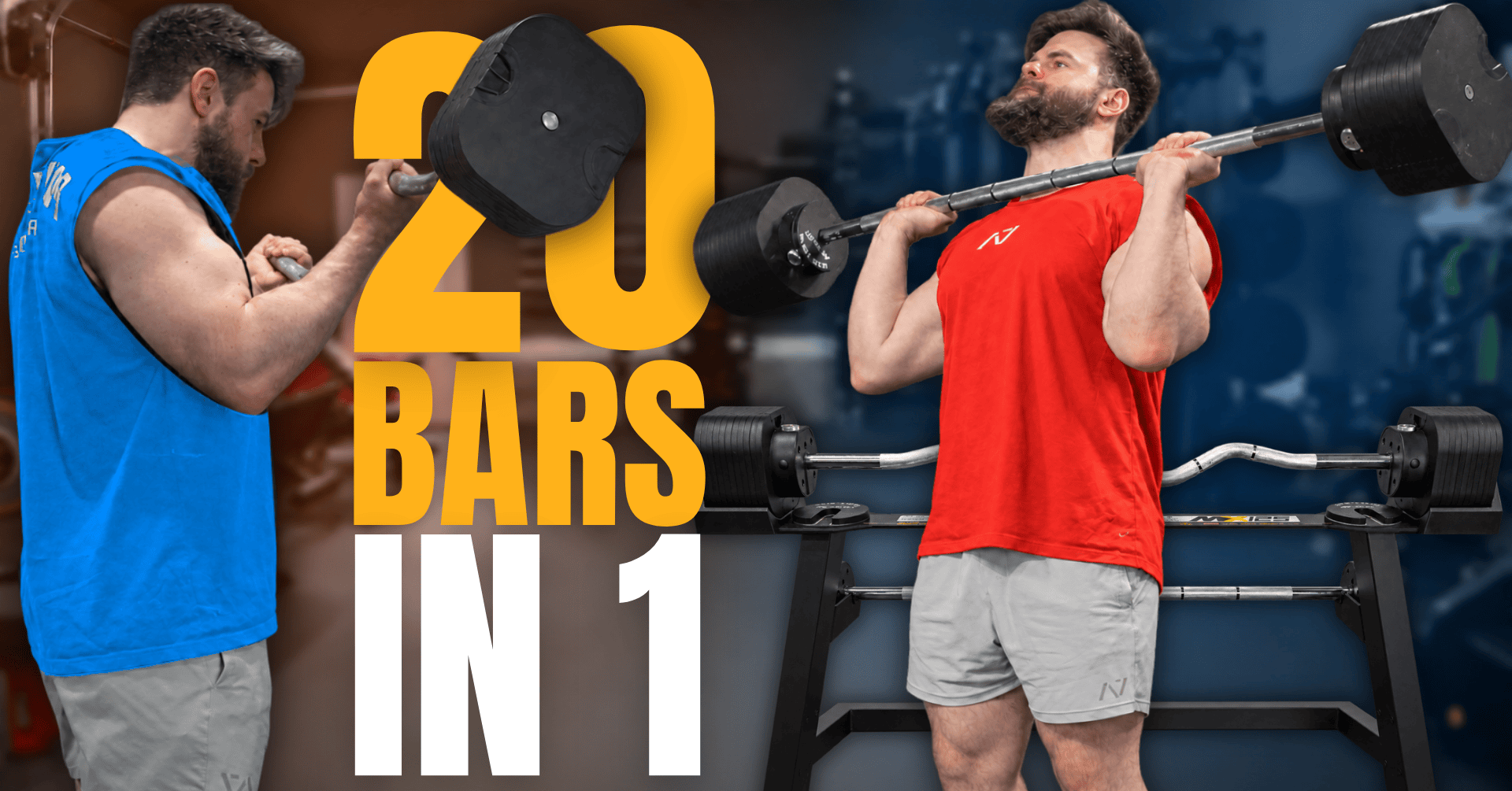
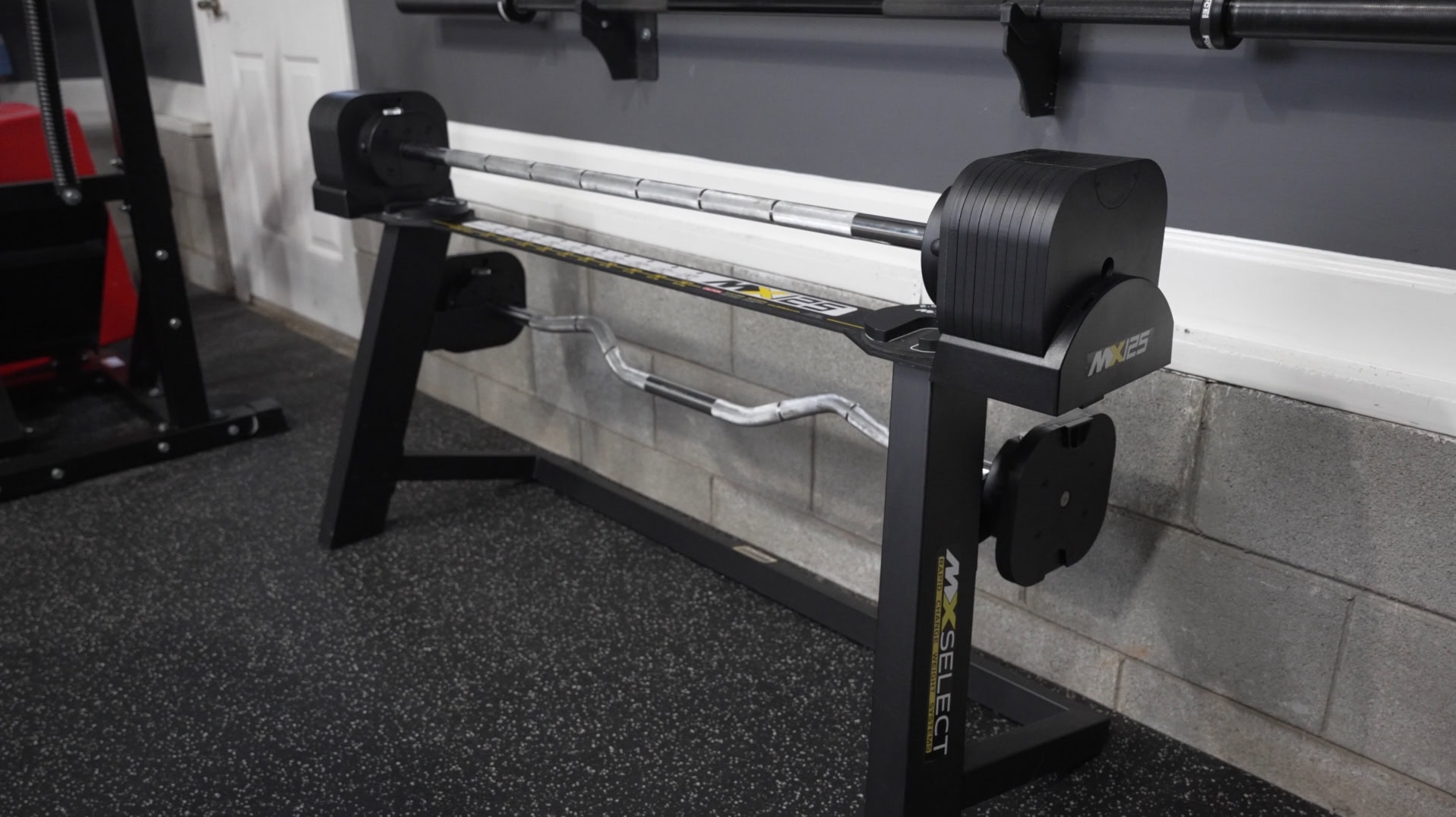
The MX Select MX125 EVO replaces 10 straight bars and 10 EZ curl bars in about 7 square feet, and it fixes the one thing that held the previous generation back: the balance.
| Model | Pros & Cons | Rating |
|---|---|---|
MX Select MX125 EVO Adjustable Barbell System | Pros:
| Rated 4.8 out of 5 |
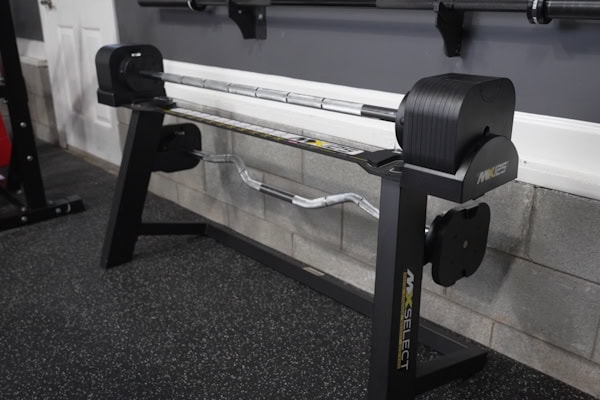


I’ve owned the previous version, the MX100, for over three years. I’ve been training with the MX125 EVO for more than three months. Between the two, I’ve spent more than three years with MX Select’s adjustable barbell system, so I know exactly what changed and what didn’t.
This MX125 EVO review covers how the system works, how it feels to train with, where MX Select cut corners, and whether the MX125 EVO barbell is worth $899.
Table of Contents
MX125 EVO Review Video
Watch my full MX125 EVO review on YouTube:
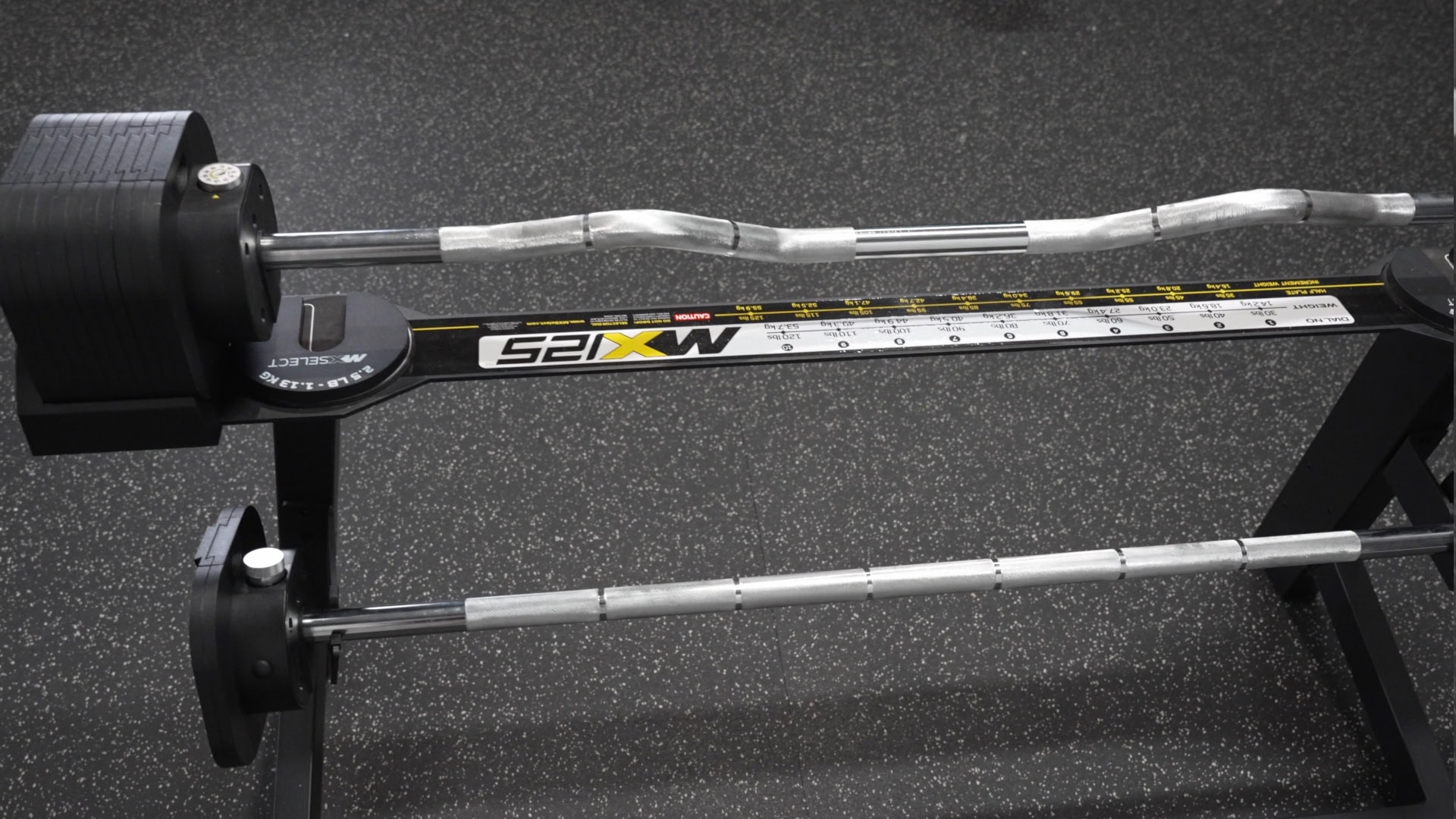
What You Get With the MX125 EVO Barbell System
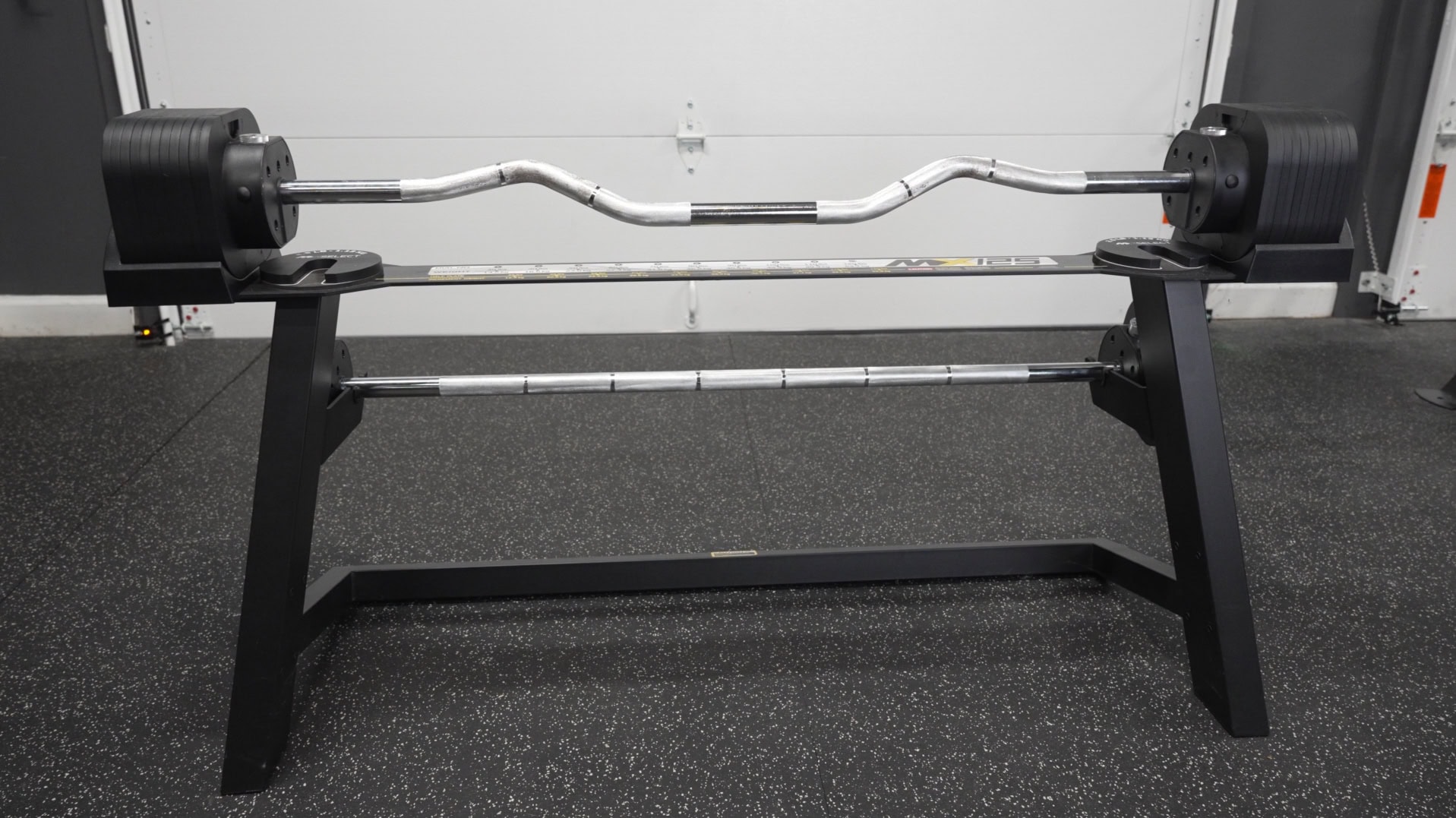
The MX125 EVO ships as a complete system:
- A knurled steel straight bar
- A knurled steel EZ curl bar
- One shared set of weight plates
- A rack that holds both bars and stores the plates
- Two magnetic add-on plates at 2.5 lbs each
Only one bar sits in the plate cradle at a time. The other stores on the back of the rack, and swapping between them takes a few seconds.
To change the weight, you press the button on each end of the bar to pop the dial up, turn it to the weight you want, then press it back down to lock. Lift the bar out and only the plates you selected come with it. The rest stay in the cradle.
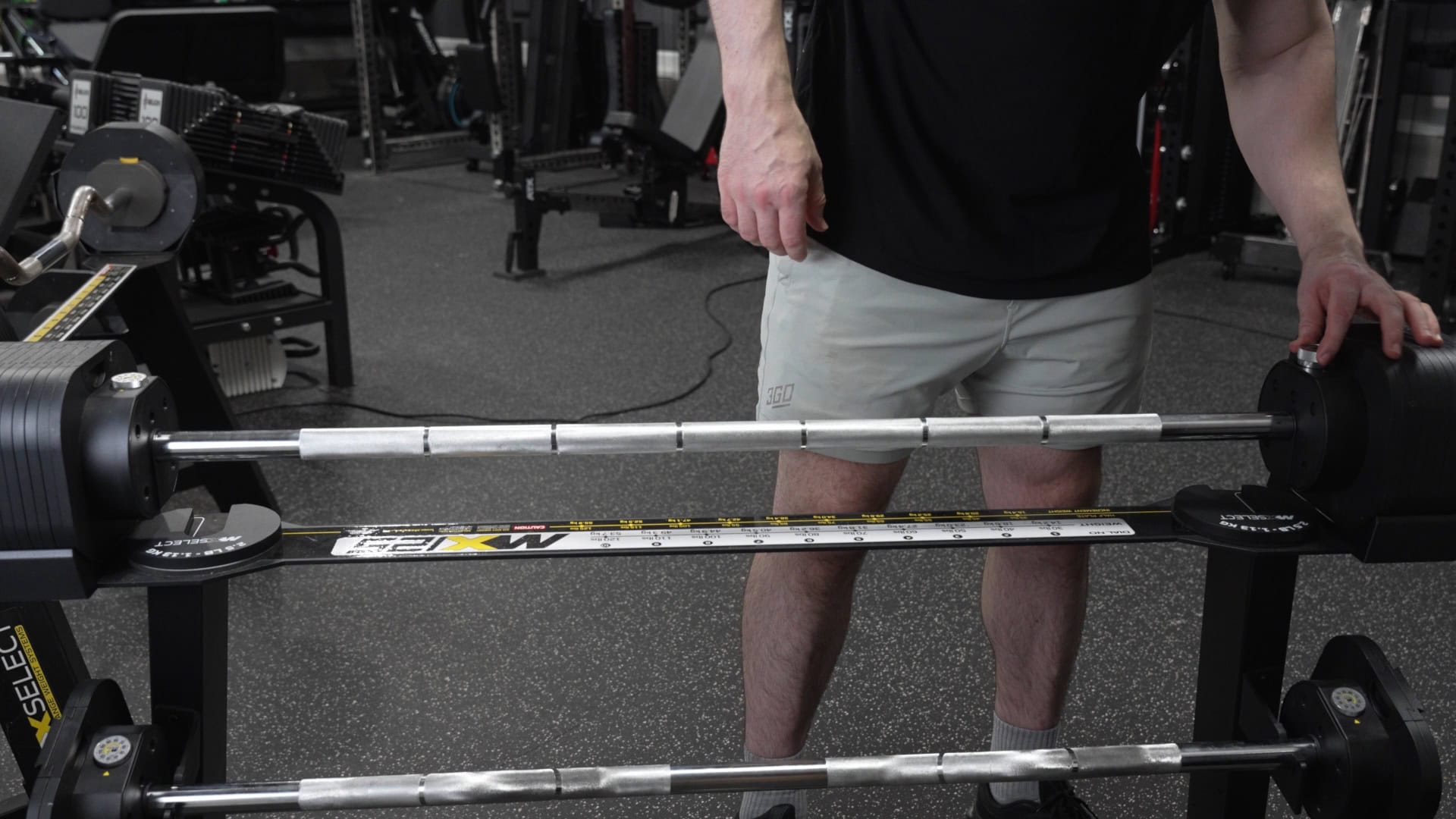
MX125 EVO Specs
| Spec | MX125 EVO |
|---|---|
| Weight range | 30 to 125 lbs |
| Increments | 10 lbs on the dial, 5 lbs with add-on plates |
| Weight settings | 20 per bar |
| Bars included | Straight bar and EZ curl bar |
| Bar length | Just under 49 inches (min) to 55.5 inches (max) |
| Usable grip width | 43.25 inches |
| Knurled section | Just under 33 inches |
| Grip diameter | 1.13 inches measured (1.15 inches listed) |
| Plates | 8 x 7.25 inches, powder-coated steel |
| Rack footprint | 57 x 18 inches (about 7 sq ft) |
| Adjustment | Dial-driven rack and pinion, metal internals |
| Weight change time | About 5 seconds for both sides |
| Price | $899 (MSRP $1,099) |
| Warranty | 2 years |
Weight Range and Increments
The dial covers 30 to 120 lbs in 10-lb jumps. The two magnetic add-on plates fill in the 5-lb steps between those and push the top end to 125 lbs, which works out to 20 weight settings per bar. So really, if you include the add-on plate increments, you could say this system replaces a whopping 40 fixed bars, rather than the more conservative (but still impressive) 20 bars claimed in the title of this review.
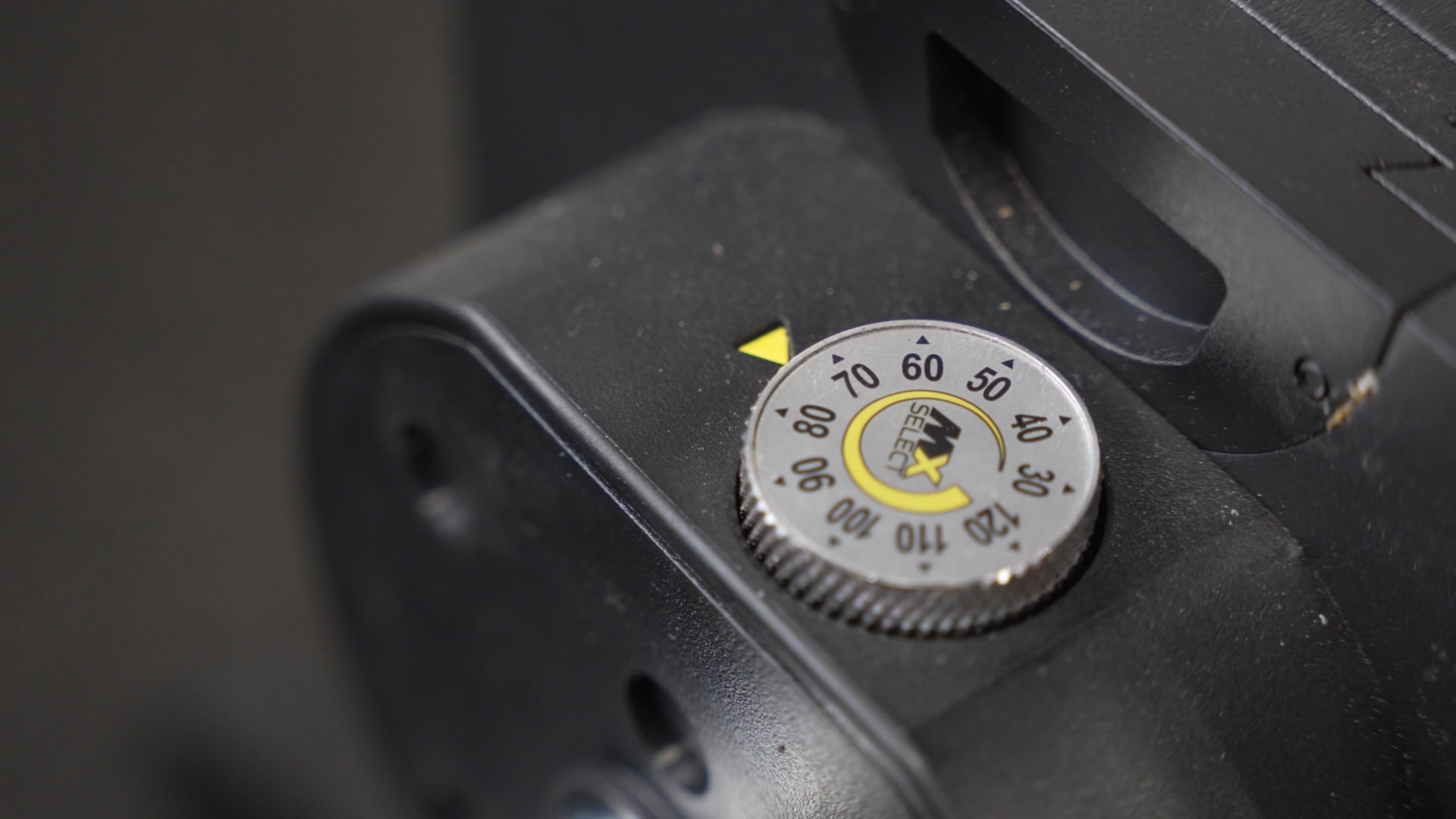
In comparison, the MX100 ran from 28 to 100 lbs in 8-lb jumps with no add-on plates. So the dial increments technically got bigger on the MX125 EVO by two pounds, but I don’t count that as a downgrade:
- The difference between 8 lbs and 10 lbs is negligible.
- Round numbers are nicer to deal with for workout tracking.
- The add-on plates give you 5-lb steps, which is finer than anything the MX100 offered.
That beefed-up 125-lb max weight is the bigger story. Fixed barbell sets top out at 110 lbs, so the MX125 EVO barbell gives you 15 more pounds of progression than a full fixed set, and 25 more than the MX100. On the old system, I ran into that 100-lb cap on triceps extensions and heavier curl sets. I don’t on this one.
Weight Accuracy Test
I weighed every setting up to 90 lbs on a postal scale (90 lbs is the capacity of that scale, otherwise I would’ve tested further). Each one came in within 0.6 lbs of the number on the dial. That’s accurate enough that I’d never think about it again.
The Balance Problem Is Fixed
The older MX100 felt unbalanced from top to bottom, and the EZ curl bar was even worse than the straight bar. On any lift where the bar travels through an arc instead of straight up and down, you could feel it trying to rotate in your hands, so you had to set your grip before every set and fight it a little through the rep.
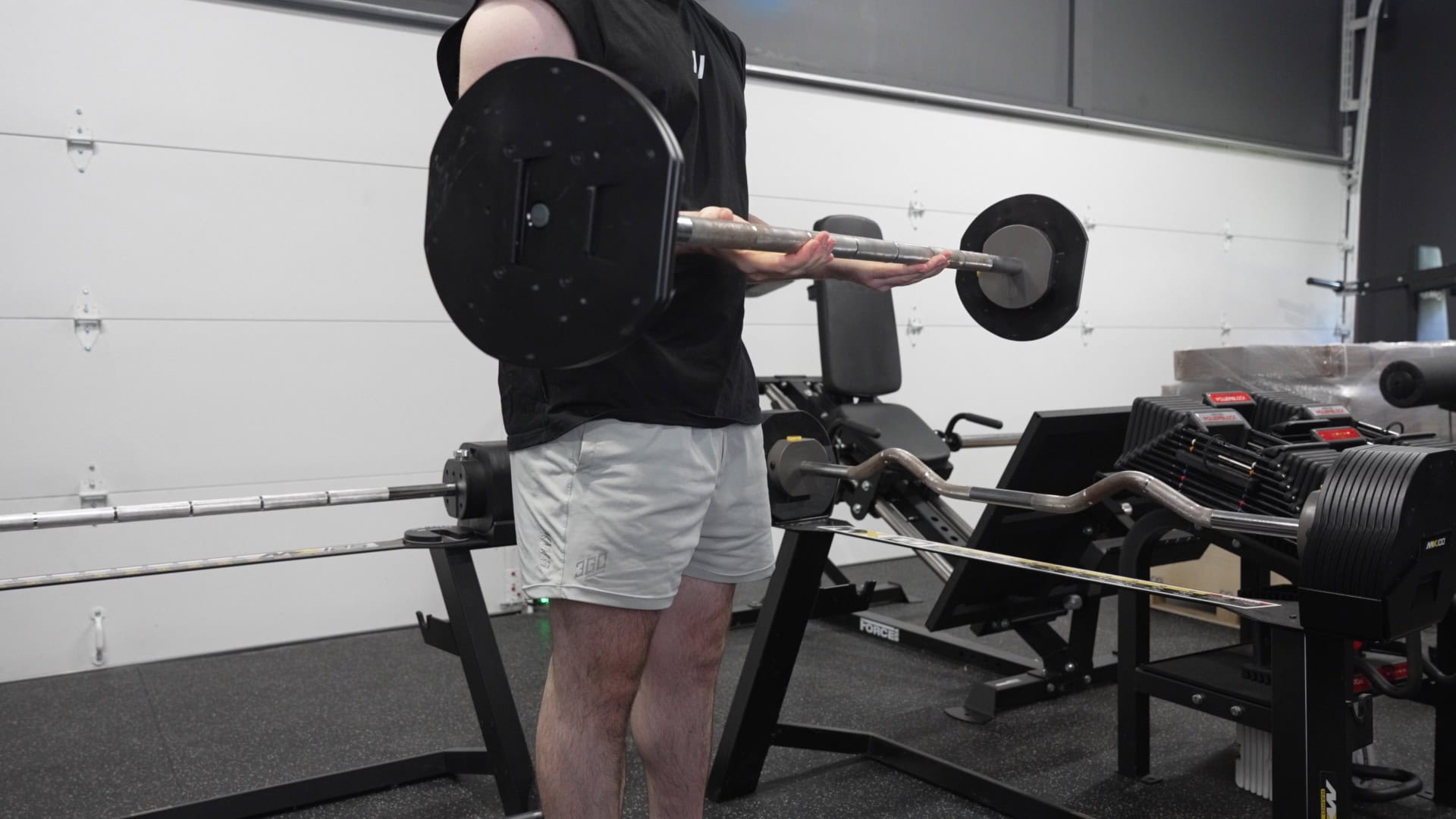
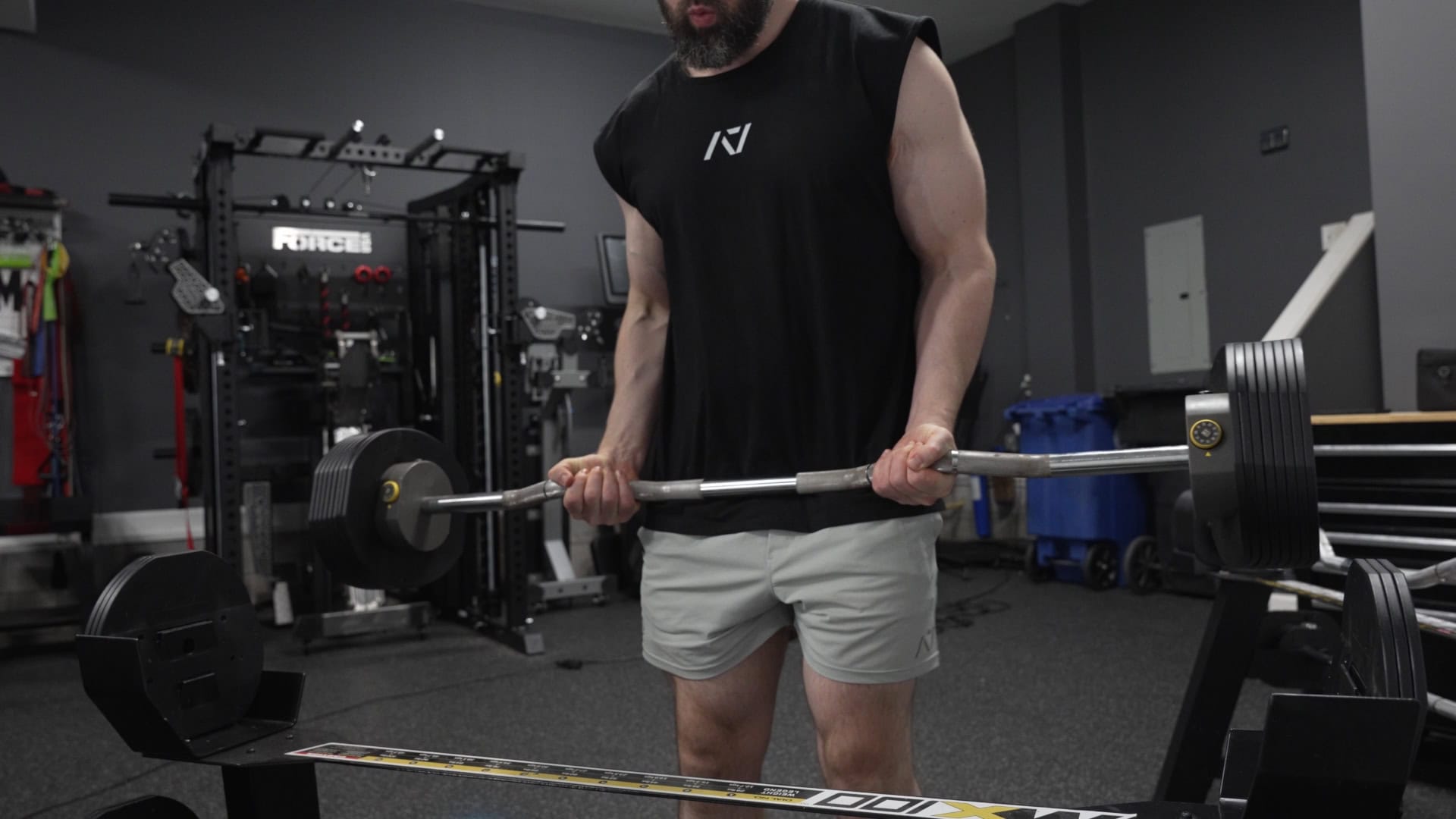
The MX125 EVO doesn’t do that. MX Select switched from round, angled plates to flat rectangular plates, and the weight now sits evenly enough that I’d call it close to perfectly balanced on both bars.
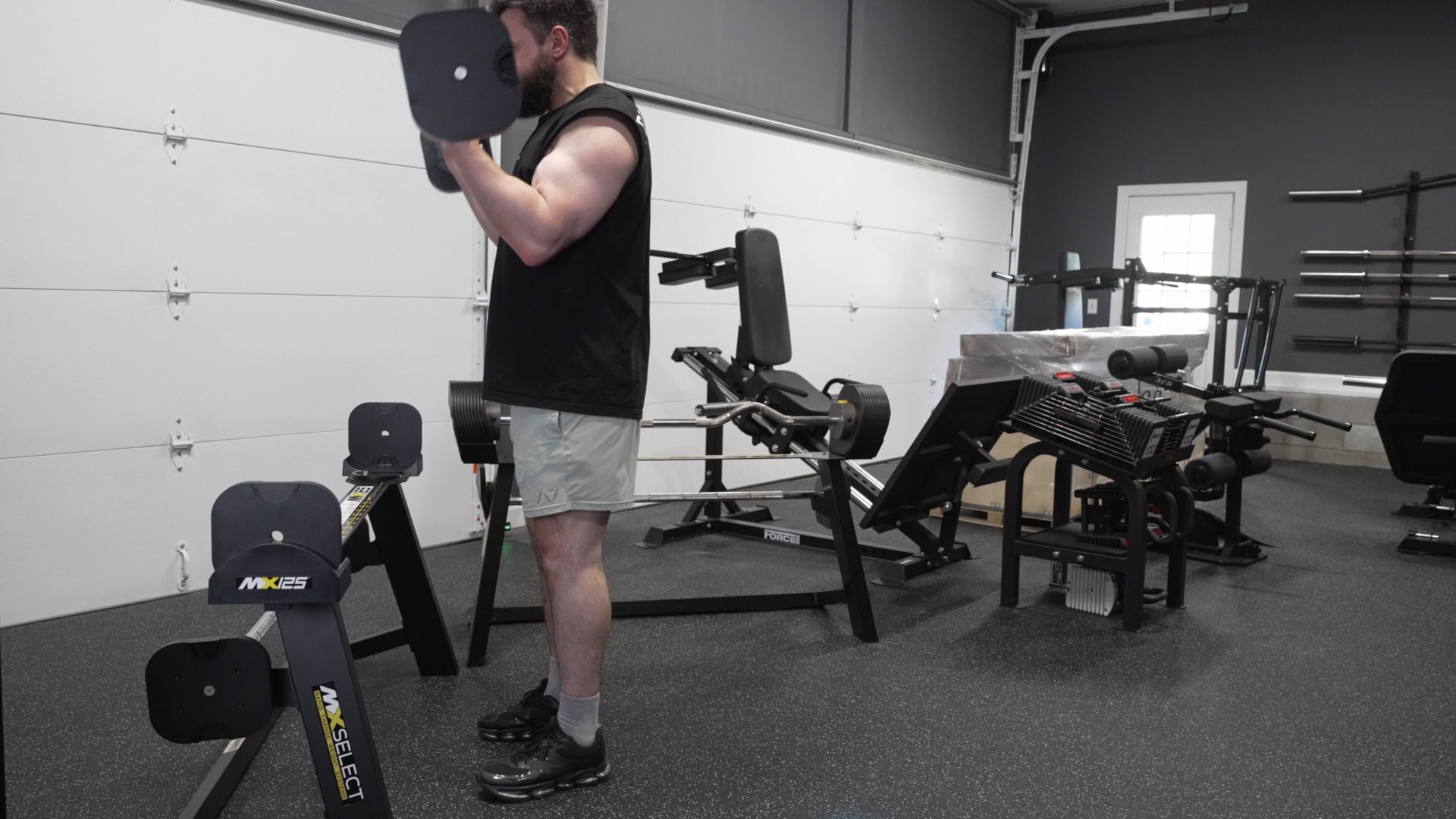
That said, the add-on plates do shift the balance slightly when they’re installed. The effect is noticeable but minor, and even with them on, the MX125 EVO is better balanced than the MX100 is without them.
Racking and Unracking
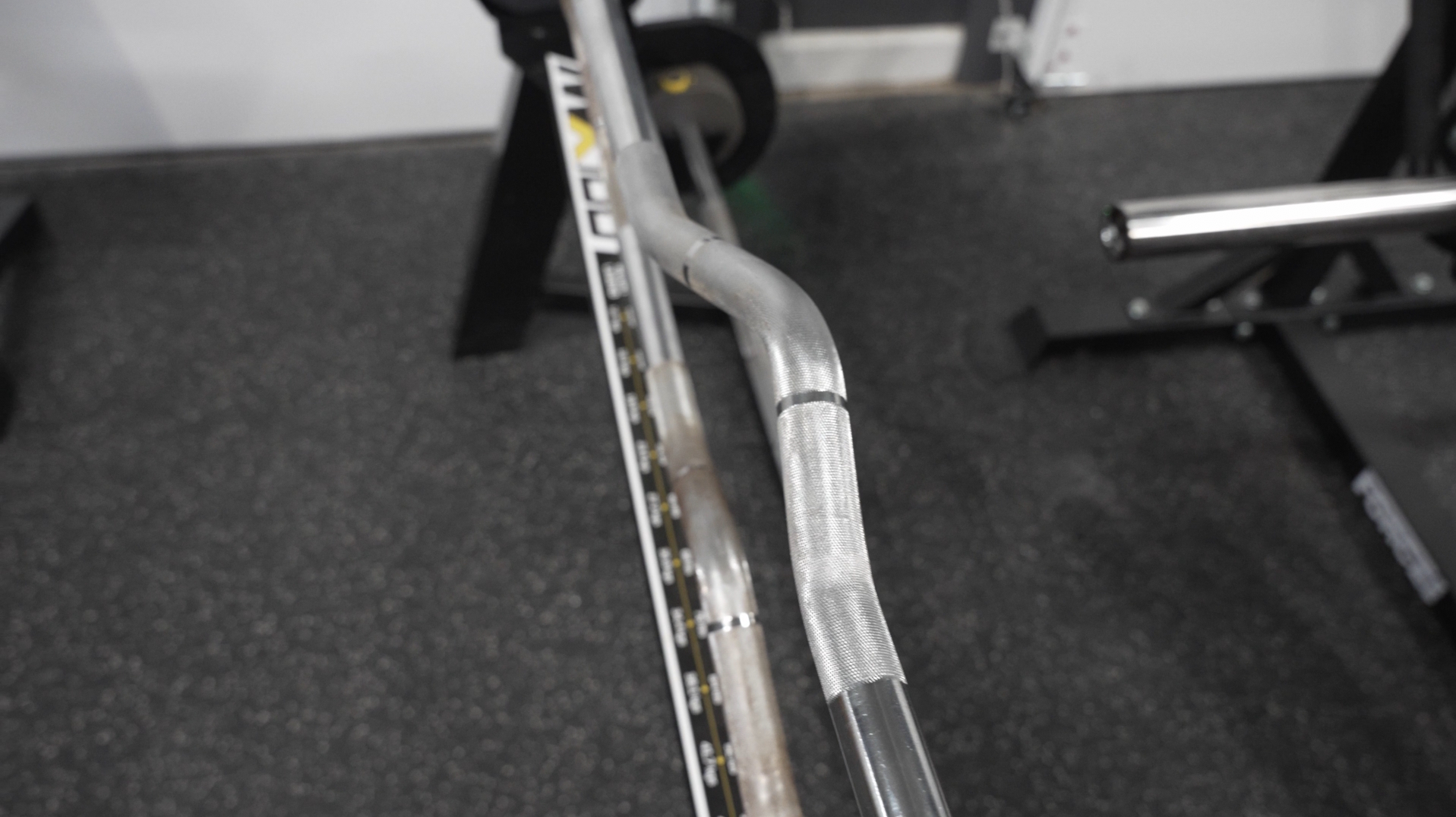
The second big upgrade between on the MX125 vs the MX100 is the EZ curl bar unrack.
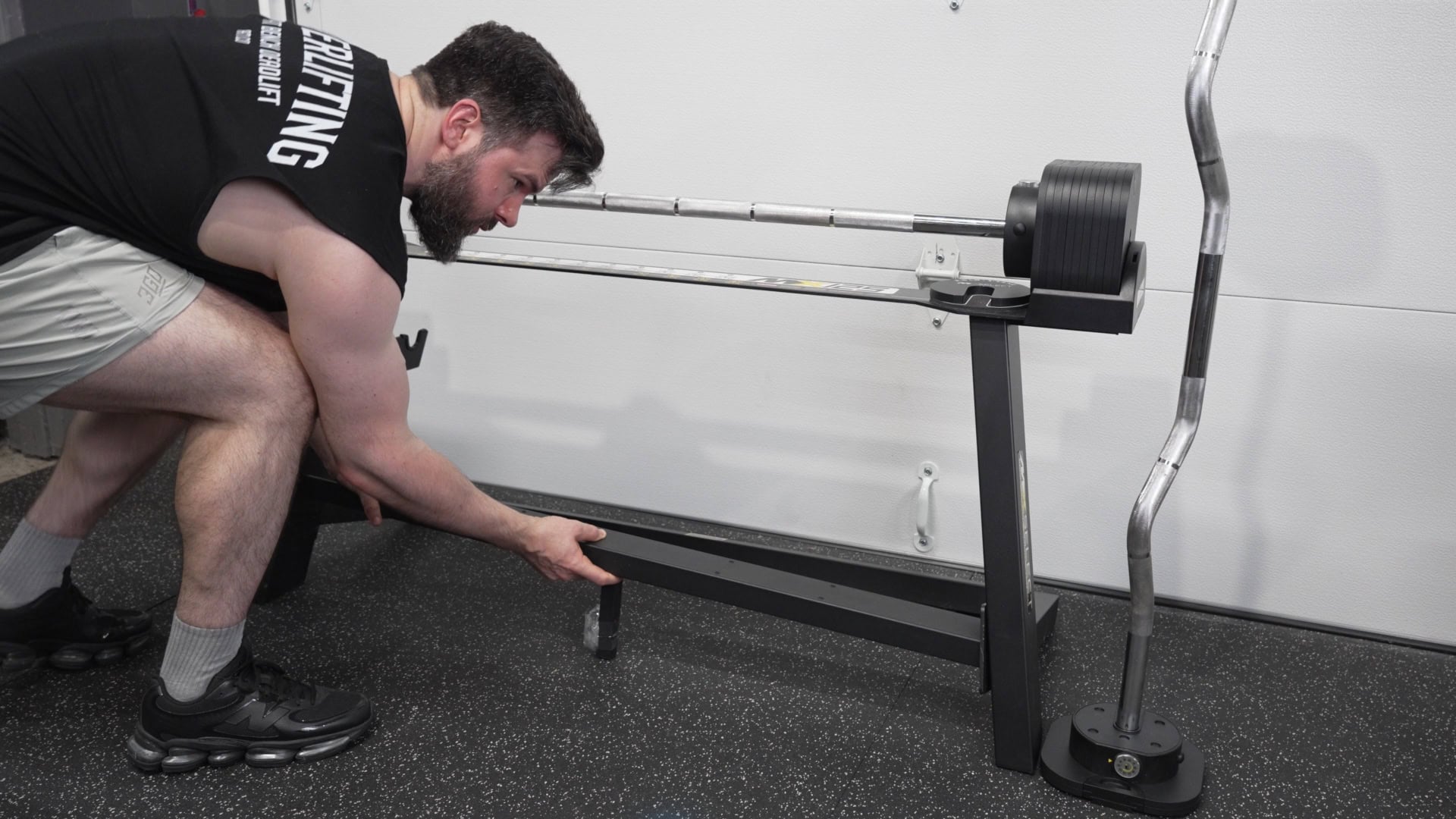
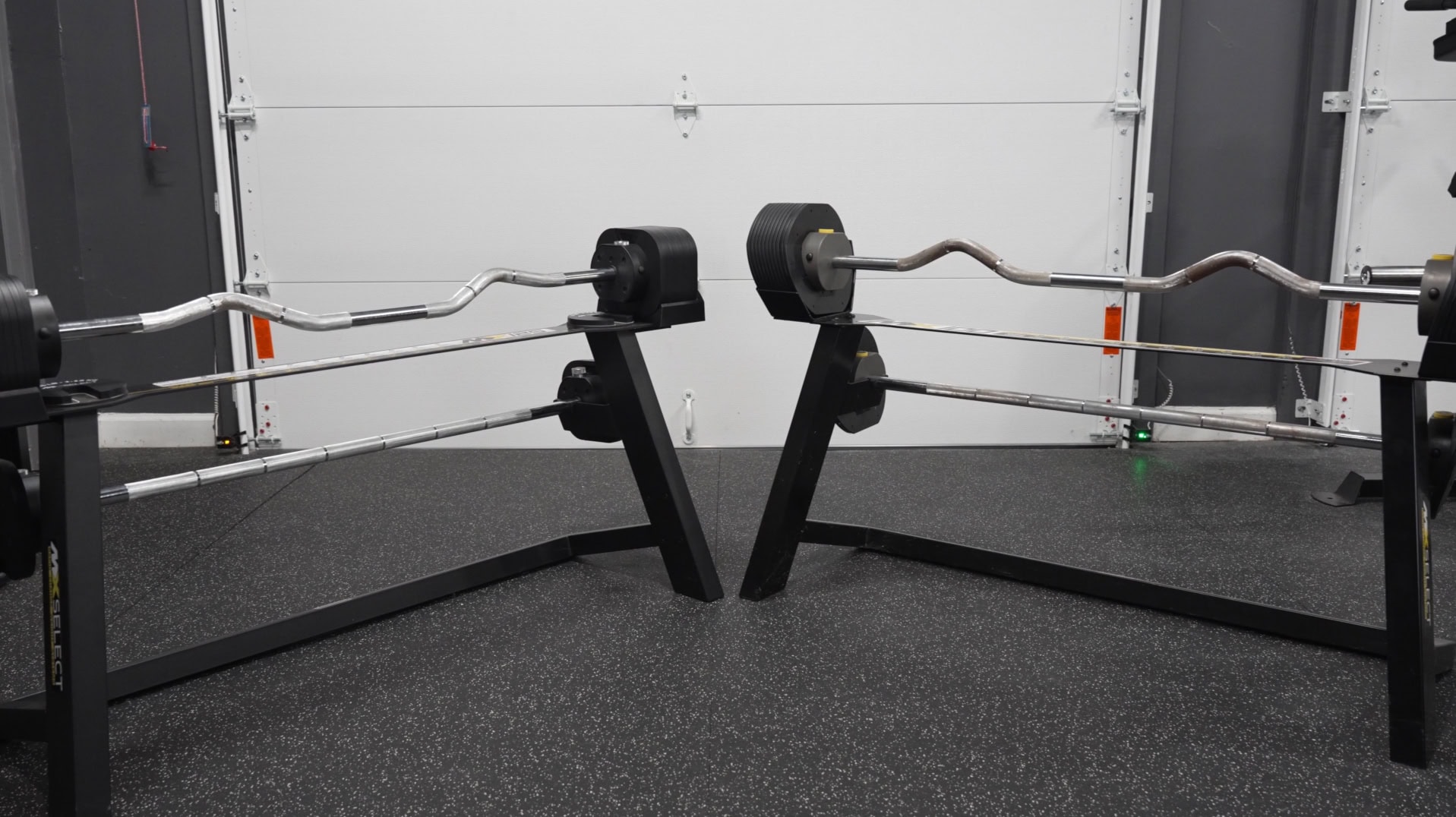
On the MX100, the curl bar sat in the cradle at an awkward rotation. You had to crouch down and grab it from underneath to get the right orientation, or pull it out and re-adjust your grip before starting your set. On the MX125 EVO, the bar sits at a better angle and comes out ready to curl. This is shown in the photo below where the the MX125 is sitting atop the MX100 and you can see the fixed shaft rotation is different:
However, racking the bar after a set is the one area where the old system is actually easier to use. The MX100’s angled plates funneled the bar into position, so it dropped into the stack even when I set it down carelessly. The flat plates on the MX125 EVO don’t self-align the same way, so you have to be more deliberate about lining up the dovetails. It adds maybe half a second to a second per set.
That’s the trade for the better balance, and I’d take it every time.
The Adjustment Mechanism
The MX125 EVO uses the same dial-driven rack-and-pinion mechanism as the MX100, and MX Select confirmed the internal moving parts are still metal on the new version. The gear housings are also nylon-reinforced ABS like before.
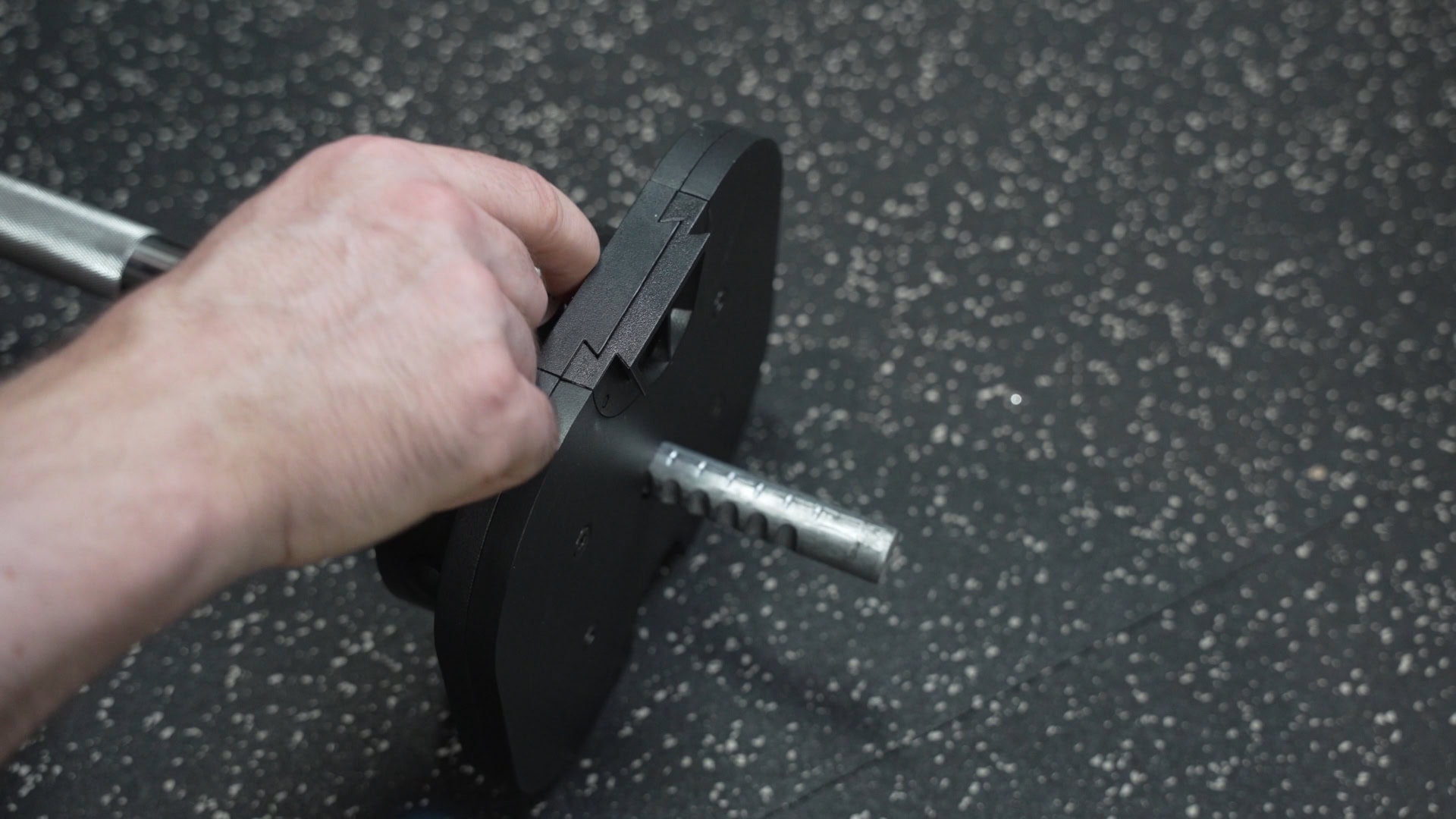
What’s new is serviceability: the main gear housings and the internal parts are replaceable on the EVO line. On a system with this many moving parts, being able to replace a housing instead of the whole handset gives you peace of mind for long-term ownership.
A full weight change takes about 5 seconds for both sides, the same as the MX100. Adding the magnetic plates costs another 2 seconds per side.
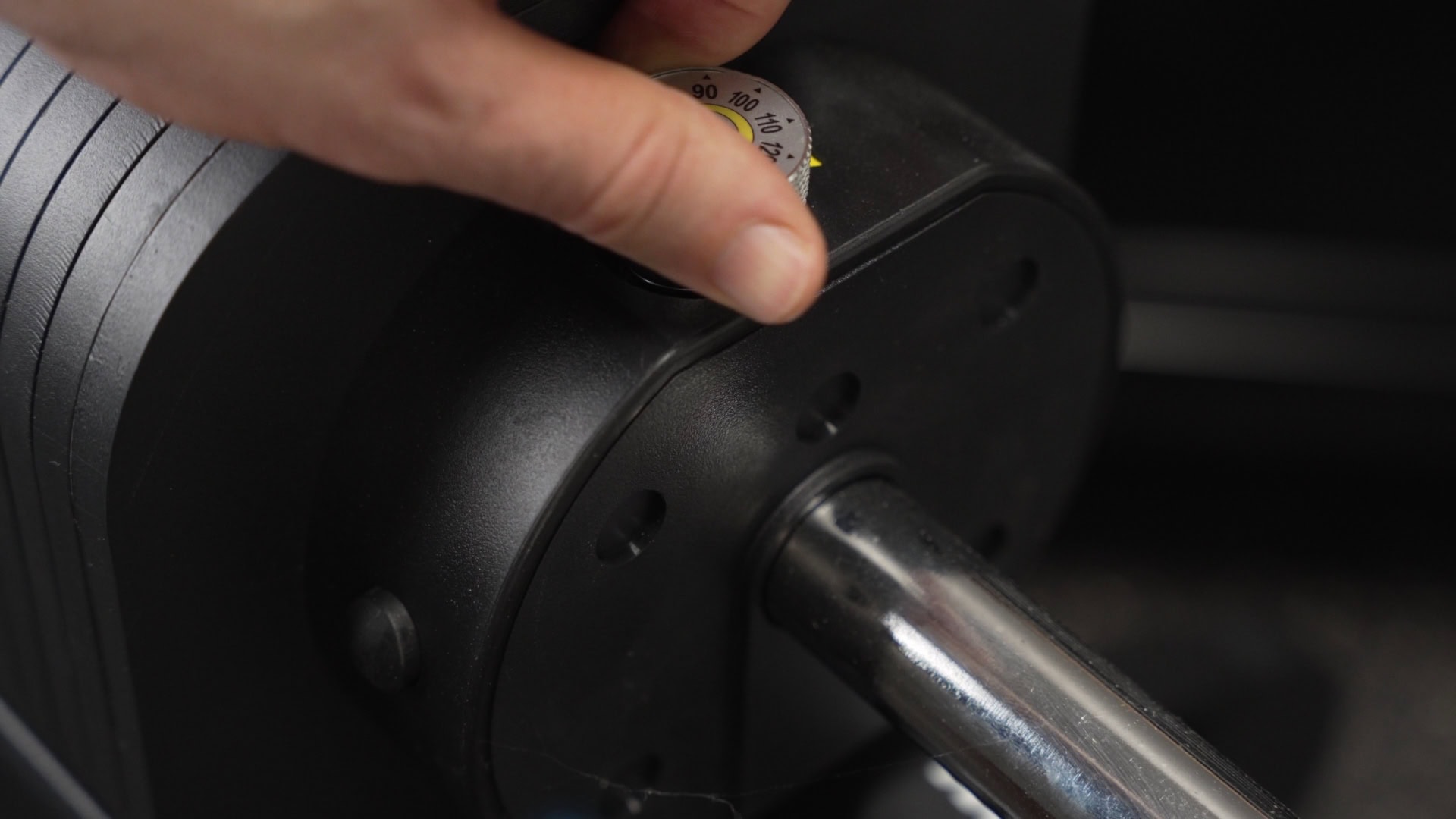
Both versions still share one quirk when it comes to the adjustment process: if you press the dial down while it’s sitting between two settings, it jams. Listen for the click, don’t turn past it, then press down. Once you’ve done it a few times, it’s automatic.
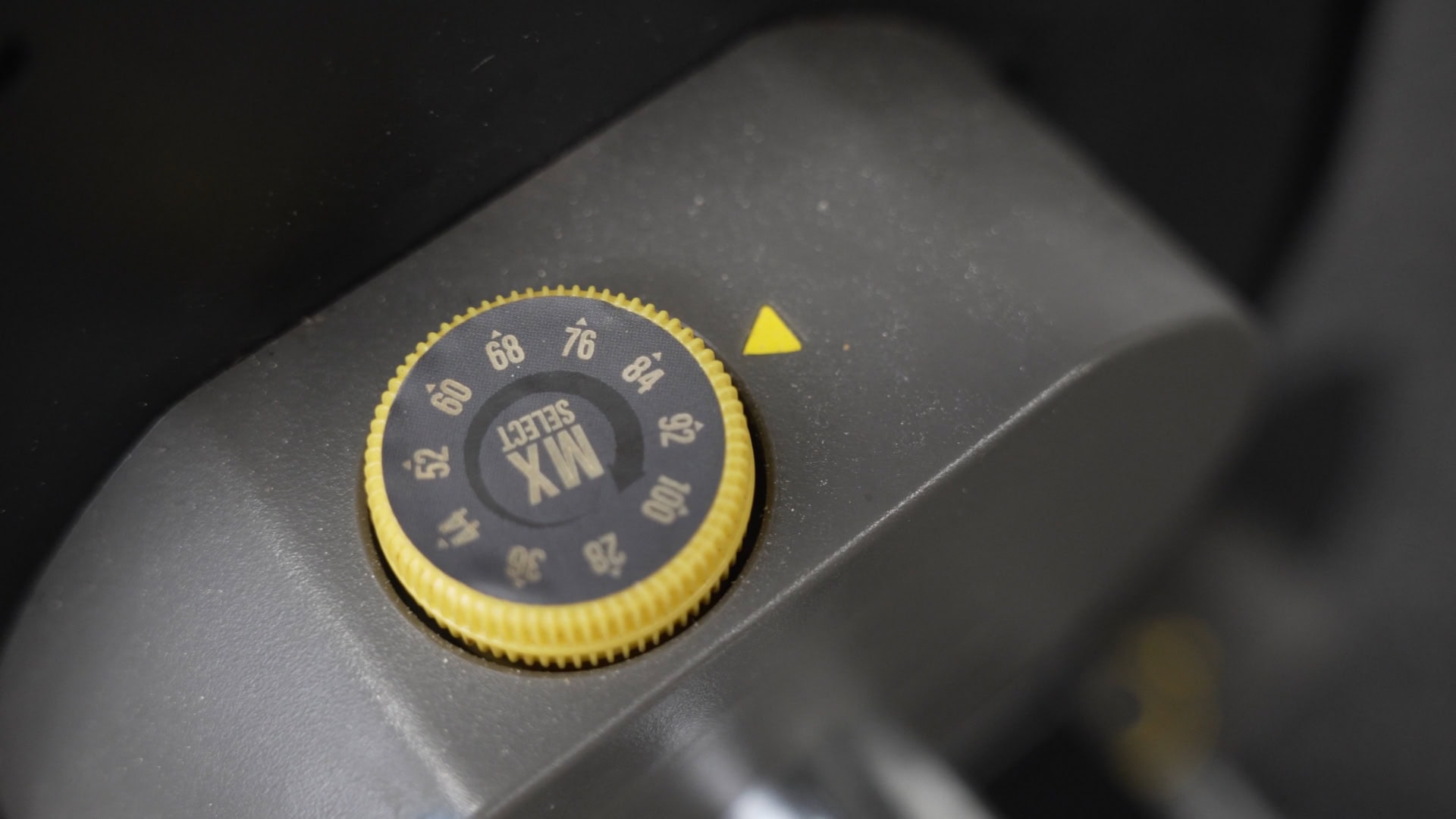
The dial itself is an upgrade. The MX100’s dials were plastic. The MX125 EVO uses machined, knurled aluminum. The weight label on the old dial was a sticker you could almost peel off with a fingernail, while the new silver label is fixed on far more securely.
The Magnetic Add-On Plates
The add-on plates are one of the better-executed details on this system.
Each plate carries four magnets that line up with four recesses in the dial housing at the end of the bar. The plate horseshoes around the bar shaft and locks on with a strong hold. Mine have never come loose mid-set.
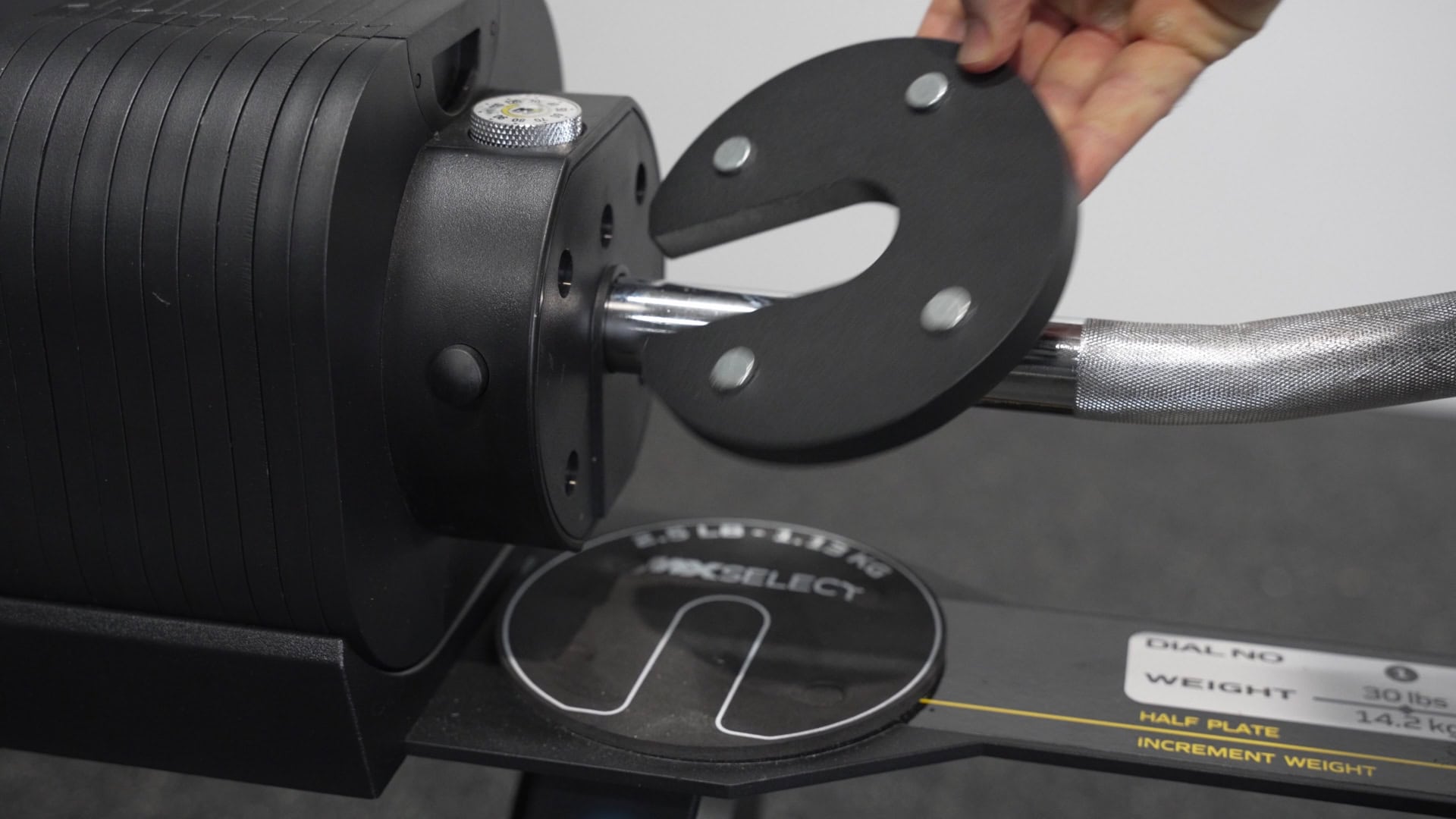
Seating them can take a little fiddling at first, since the magnets have to line up with the recesses, but it gets faster with practice. To pull one off, you hook your finger on the small lip created where the round plate overhangs the flat top of the housing. Without that lip, they’d be tough to remove.
Storage is the weak point. The plates sit in a foam cutout on top of the rack, magnet side down so they stay put if you bump into it. It works, but it feels like an afterthought, and I’d like to see how that foam holds up after a few years.
Plates, Bars, and Knurling
Smaller Plates
The MX125 EVO’s plates are rectangular with rounded corners, measuring about 8 inches wide by 7.25 inches tall. The MX100’s were 9-inch rounds. Dropping the nylon coating is part of how MX Select made them more compact.
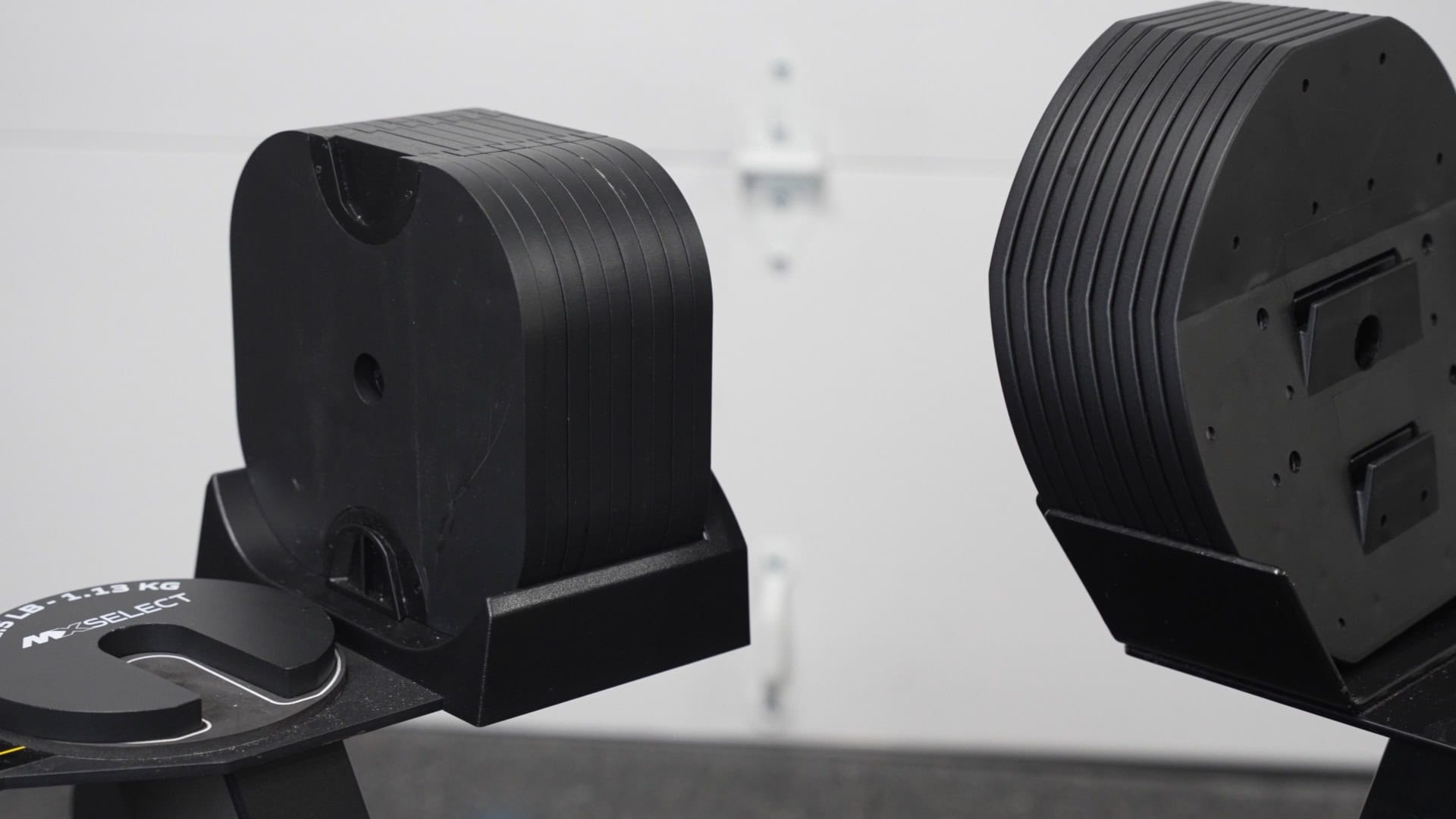
That size difference not only helps with balance, but it also provides more room to maneuver the bar in and out of the rack, especially when the rack sits against a wall.
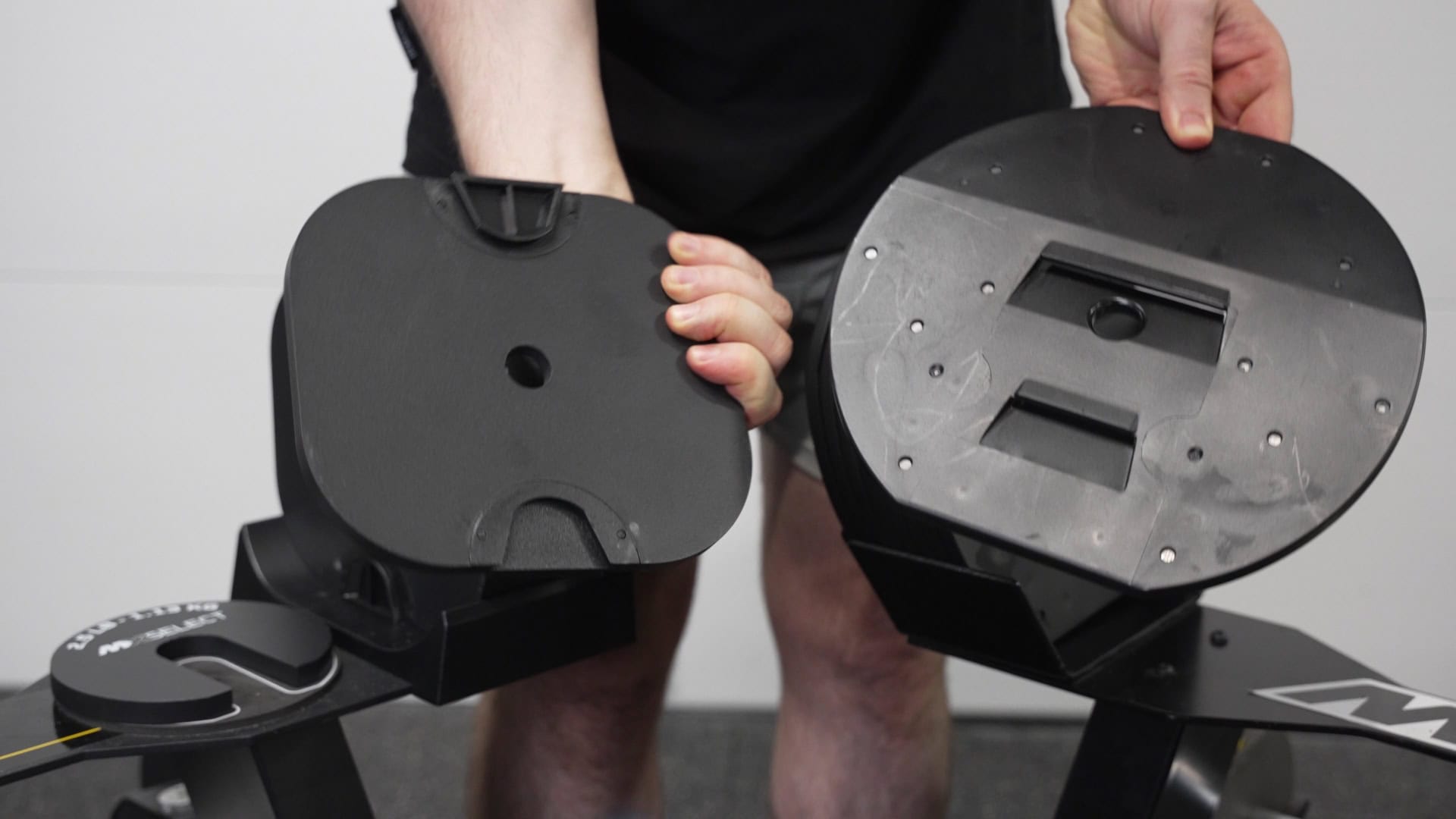
Bar length barely moved. The MX125 EVO measures just under 49 inches at the lightest setting and 55.5 inches maxed out, a quarter inch longer than the MX100 at max, with 25 more pounds on the bar. Usable grip width between the plates is 43.25 inches on both bars.
Knurling
The knurling on the MX125 EVO is a step deeper than the MX100’s. It’s still far from aggressive, which is what you want for a bar that tops out at 125 lbs. You want grip, not shredded hands.
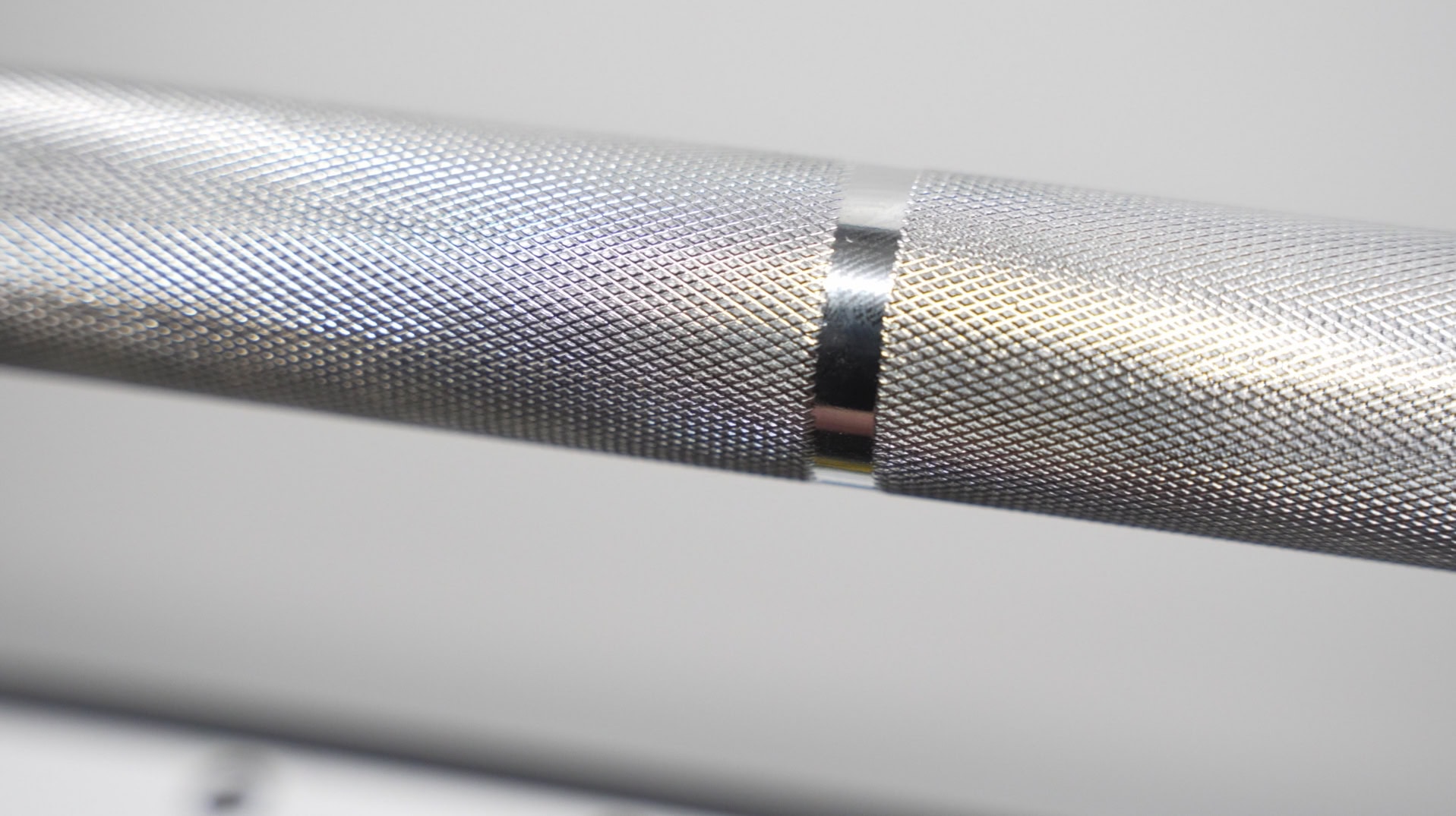
Knurling coverage improved a bit, too. The knurled section runs just under 33 inches on both bars, which is about 2 inches longer than the MX100’s EZ curl bar and 1 inch longer than its straight bar. That extra length may help get a slightly better grip on wide-grip curls if you have bigger hands.
I’d still like full knurling coverage out to the plates. The smooth sections don’t affect anything in my training, but it’d still be nice to have for niche exercises where you may be gripping the bar extra wide.
On the inside, the EZ curl bar’s knurling runs far enough in for close-grip curls. Plenty of curl bars transition to smooth steel too early and leave part of your hand on a slick section. Both MX generations get this right.
Bend Profile and Finish
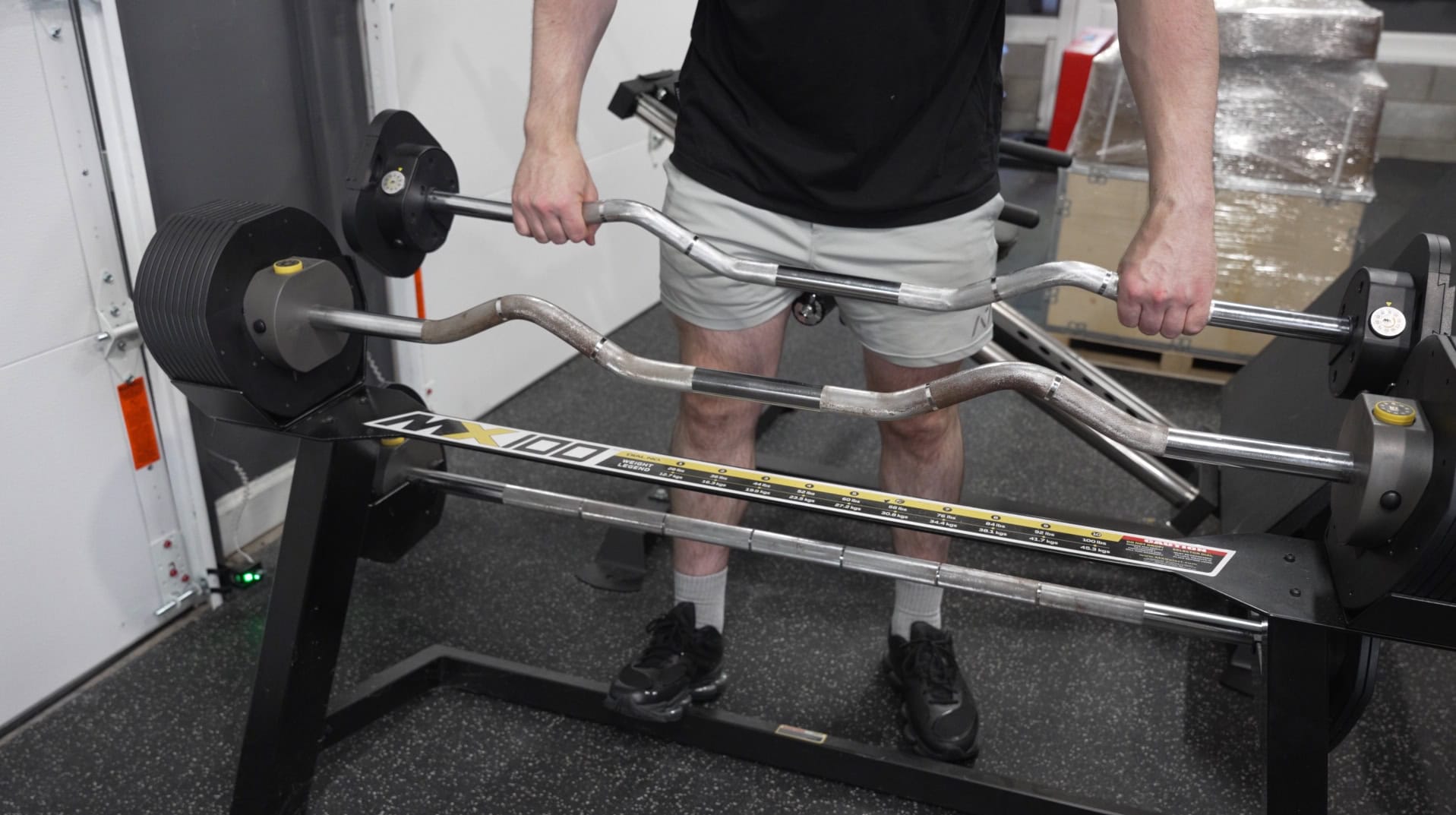
The EZ curl bar’s bend is unchanged from the MX100, with steep camber angles on the inner grips that stay comfortable on the wrists and elbows.
MX Select confirmed the bar finish is the same as the previous generation: chrome.
My grip diameter measured 1.13 inches with calipers against a listed 1.15 inches, which is a negligible difference.
After three months, my MX125 EVO bars show no true oxidation. My MX100 bars certainly do, though, but I’ve gone three-plus years without maintaining them. I recommend wiping these down occasionally if you want them to stay looking pristine. That’s asier said than done, though, which is why I’d like to see a stainless steel version in the future.
Build Quality and Durability
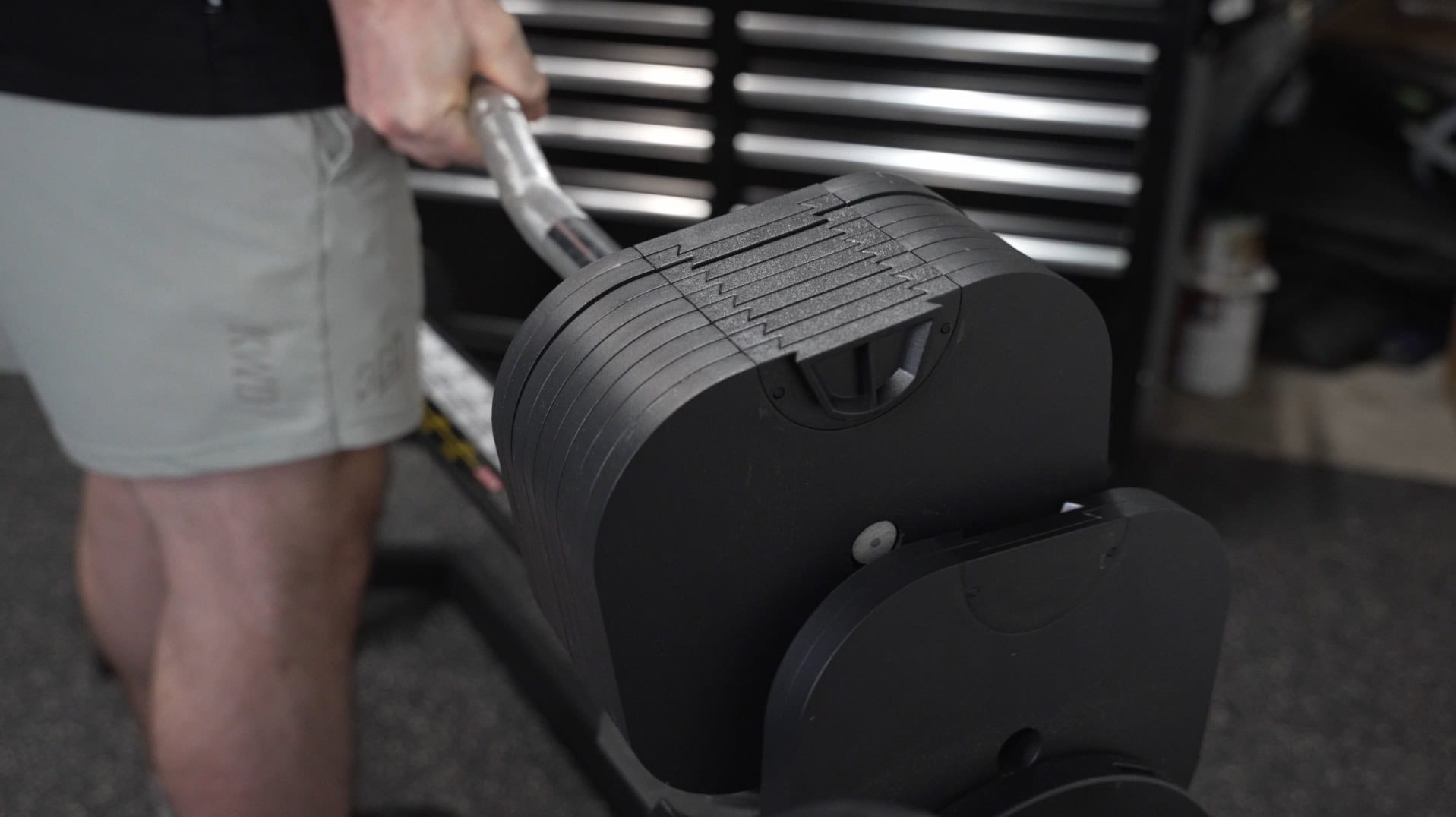
The plates changed from a nylon coating to powder-coated steel, and the powder coat shows dings more easily. Mine have picked up a few small nicks in three months, but nothing major. You can expect more visible wear over time with these than with the nylon-coated MX100:
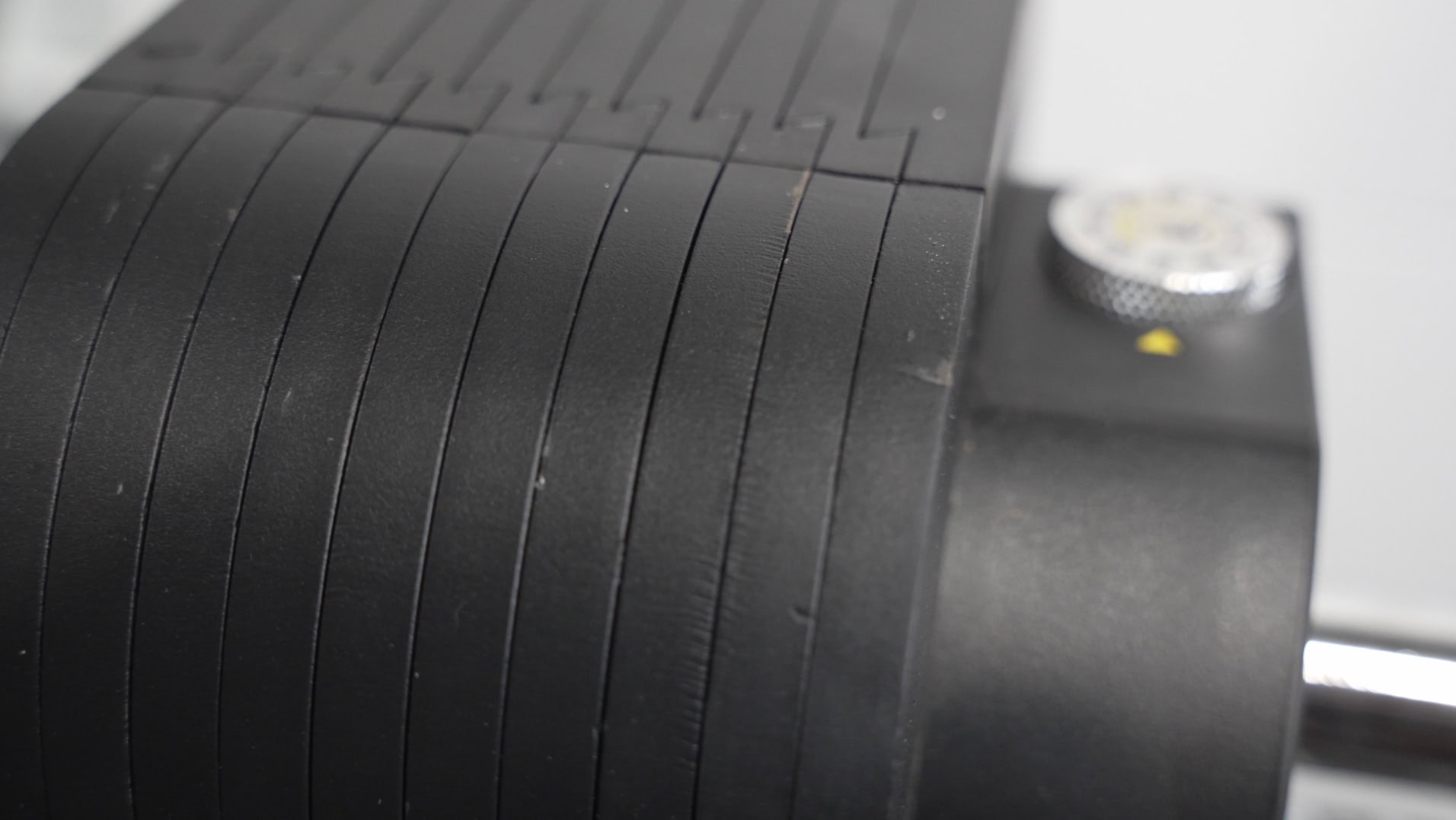
In exchange, the plates sit tighter in the stack. The MX100 had a slight rattle you could feel during reps, and the MX125 EVO doesn’t; or at least it’s less noticeable. Both systems are quiet, though neither is silent. Slow reps make no noise at all, and explosive reps make a little.
Two rack components are downgrades:
- Plate holder: the portion that keeps the linked plates in position is plastic (albeit durable ABS plastic) on the MX125 EVO and powder-coated steel on the MX100. It hasn’t given me any trouble, but plastic cracks more easily than steel if it ever fails. That said, if steel was used on the new rack, it would cause even greater wear on the plate finish.
- Frame tubing: the rack tubing is thinner, and it sounds more hollow when you tap it. It’s still plenty strong for what it holds, but the MX100 rack felt more substantial. You notice it most if you try to move the rack with the bars and weights on it.
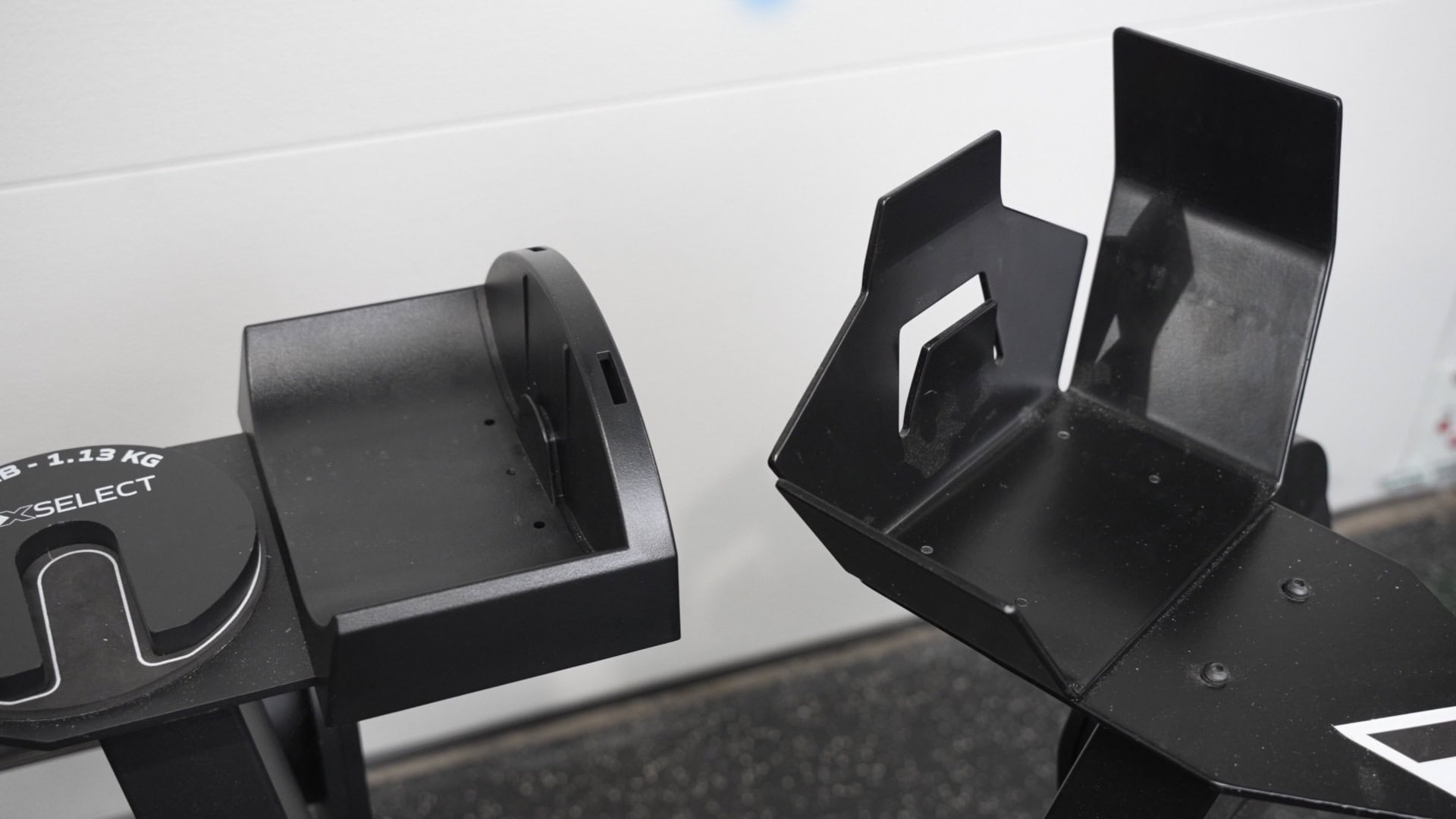
The Rack and Its One Lasting Flaw
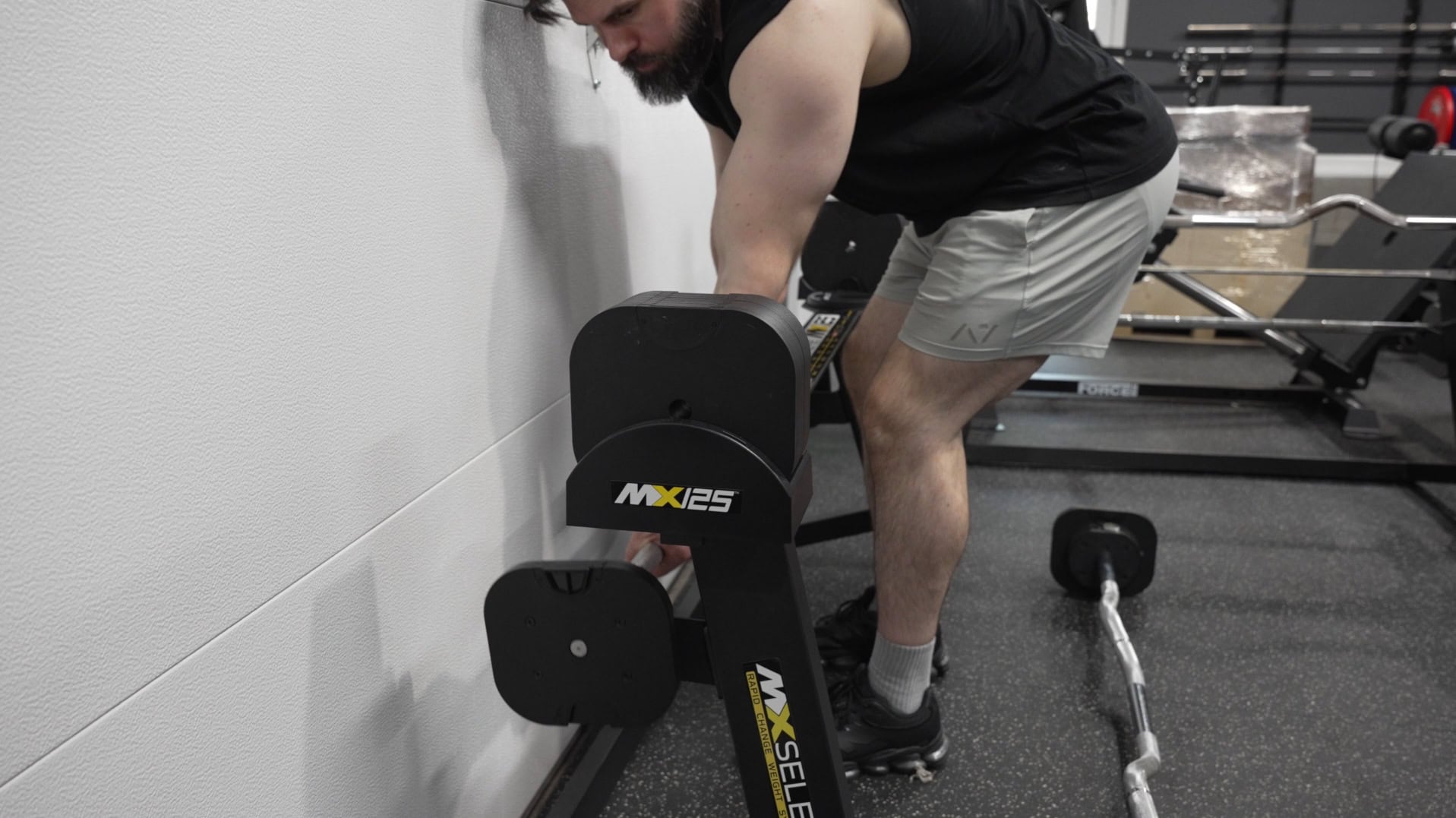
The rack footprint is unchanged, at 57 inches wide and 18 inches deep, which works out to roughly 7 square feet for the whole system. Very compact.
But my complaint about the MX100’s rack carried over: the bar you aren’t using stores at the back. If your rack sits against a wall like mine does, you have to reach over the rack to get it, and the bar wants to drag along the wall on the way out.
The smaller plates on the MX125 make this less of an issue since there’s more clearance to pull the spare bar forward without hitting the wall, so bar swaps go smoother than they did on the MX100. But front storage would still be the better design, and it’s the first thing I’d change on the next version.
MX Select also sells an add-on stand that bolts onto the rack and holds their adjustable dumbbells, turning it into a combined free weight station. I own one and will install it once I add their EVO dumbbells. Ironically, having this is probably what prevented them from putting the secondary bar storage in the front; because it would interfere with the optional dumbbell storage area.
How I Use the MX125 EVO
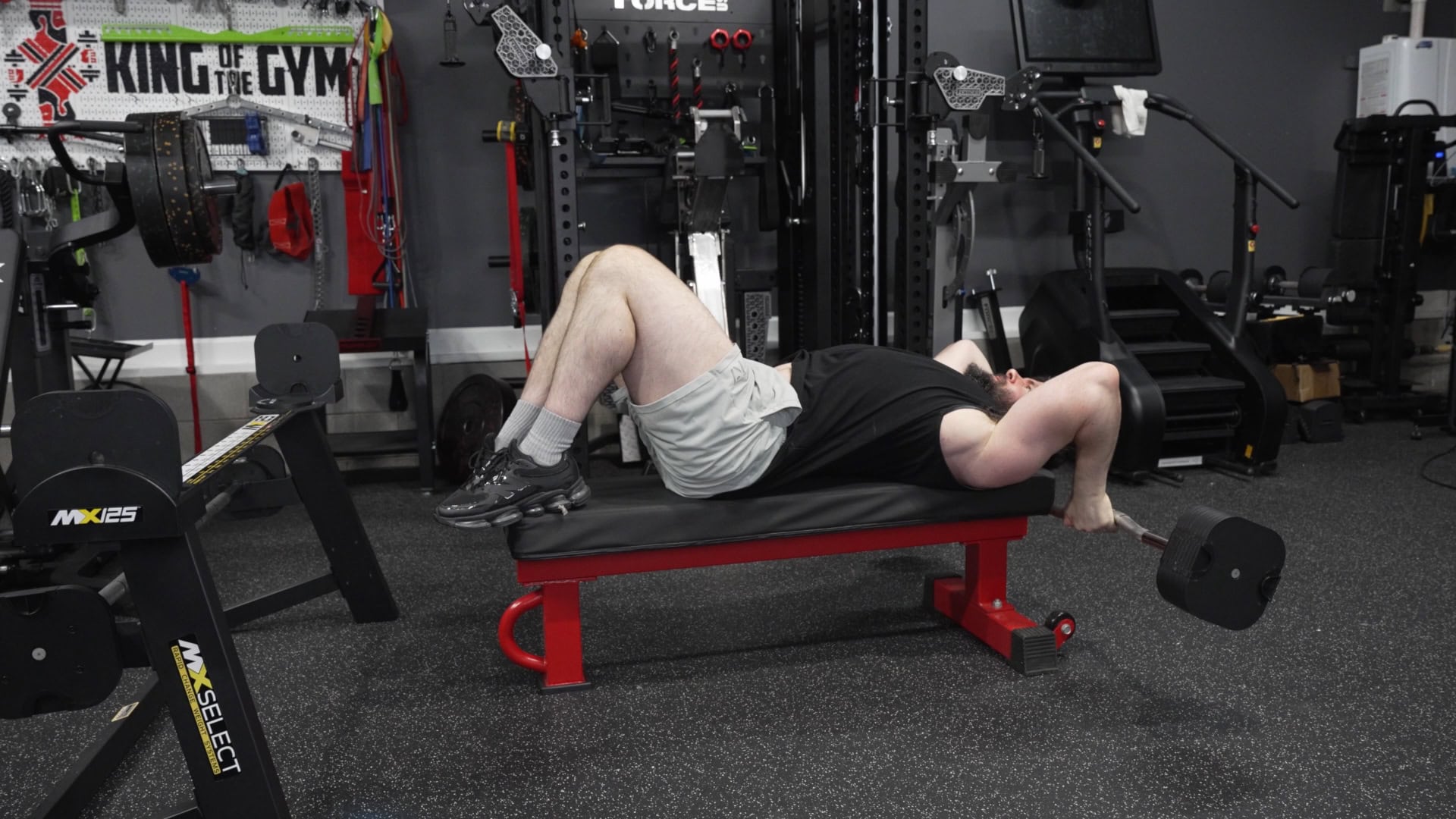
The EZ curl bar gets most of my training time, the same as it did on the MX100.
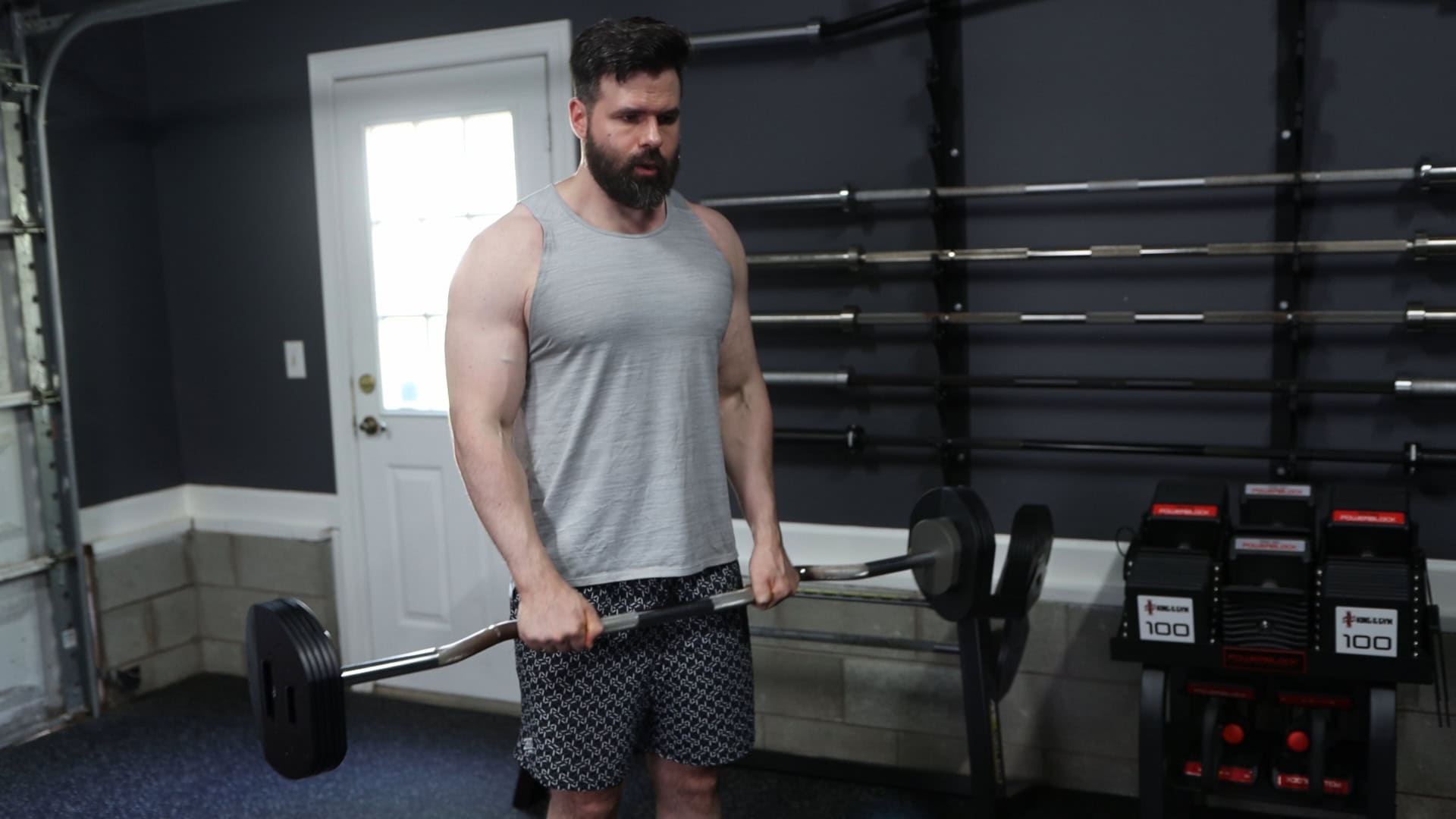
- Biceps curls: usually around 90 lbs on the EZ bar for higher reps, with heavier sets at 100 and 110 lbs
- Lying triceps extensions: 90 to 105 lbs with the EZ bar
- Wrist curls and extensions: straight bar with lighter weights and high reps
- Rows: straight bar for warm-ups only, since my working sets are heavier than 125 lbs and go on cables
- Overhead press: the full 125 lbs for high reps with the straight bar
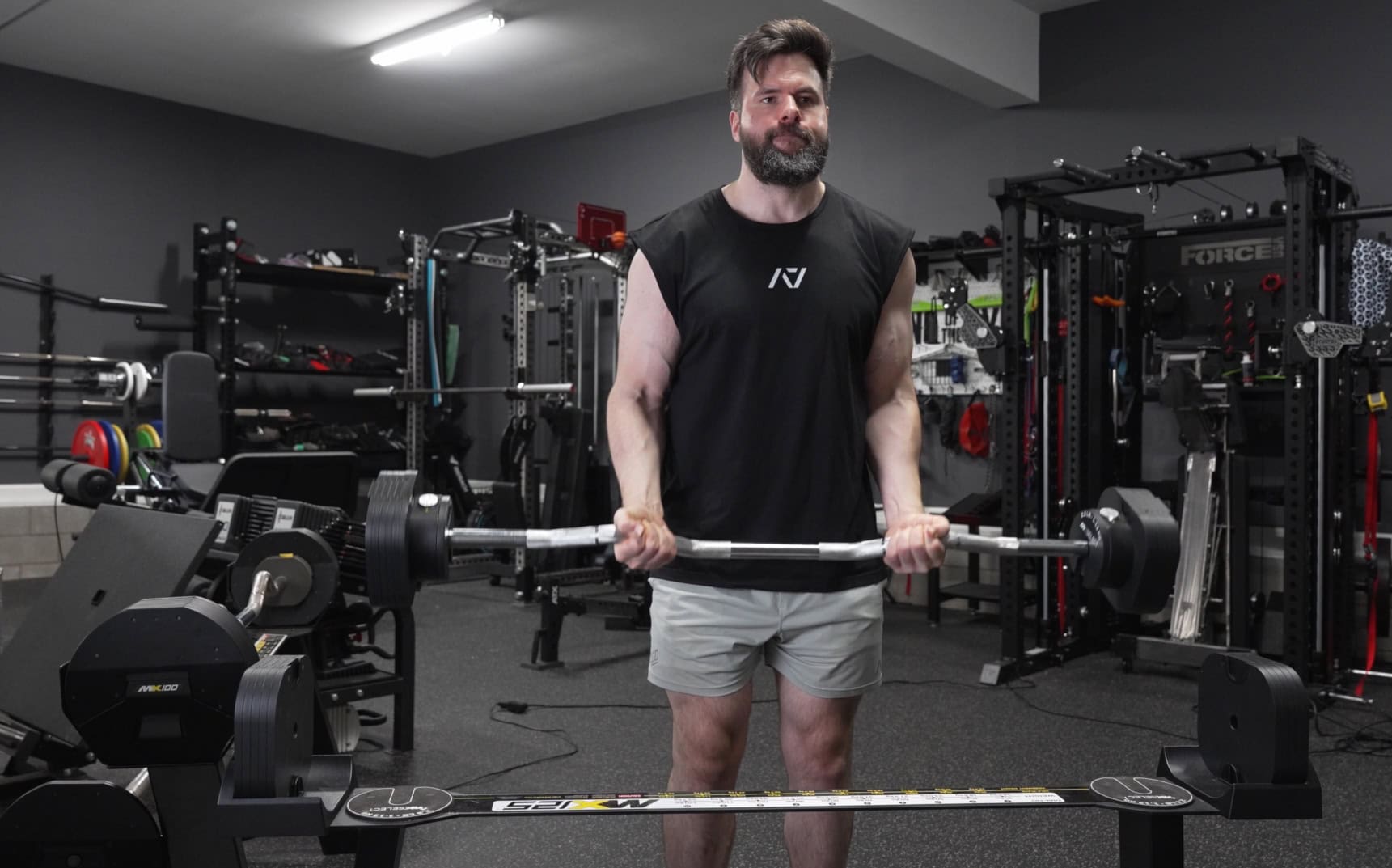
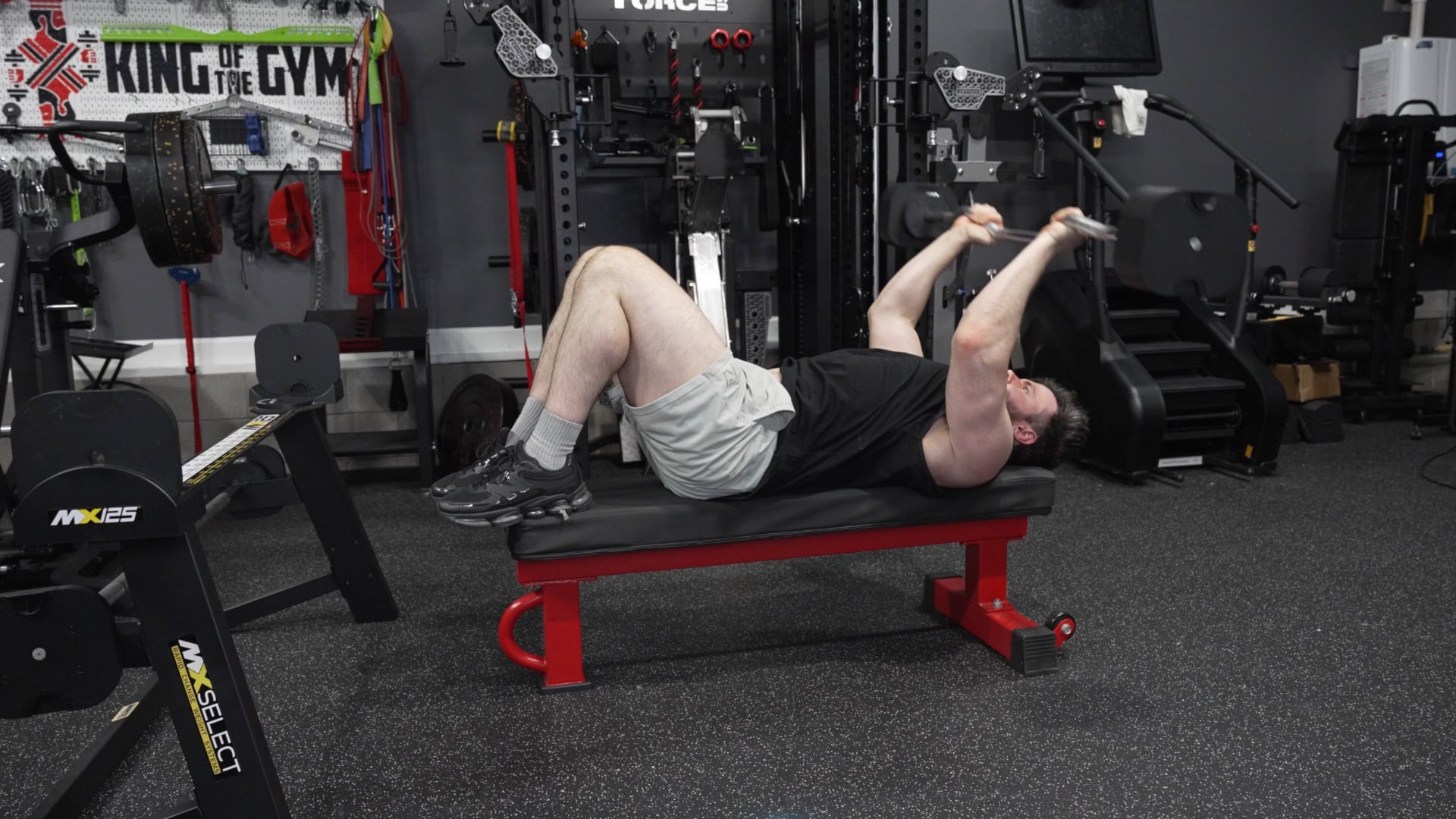
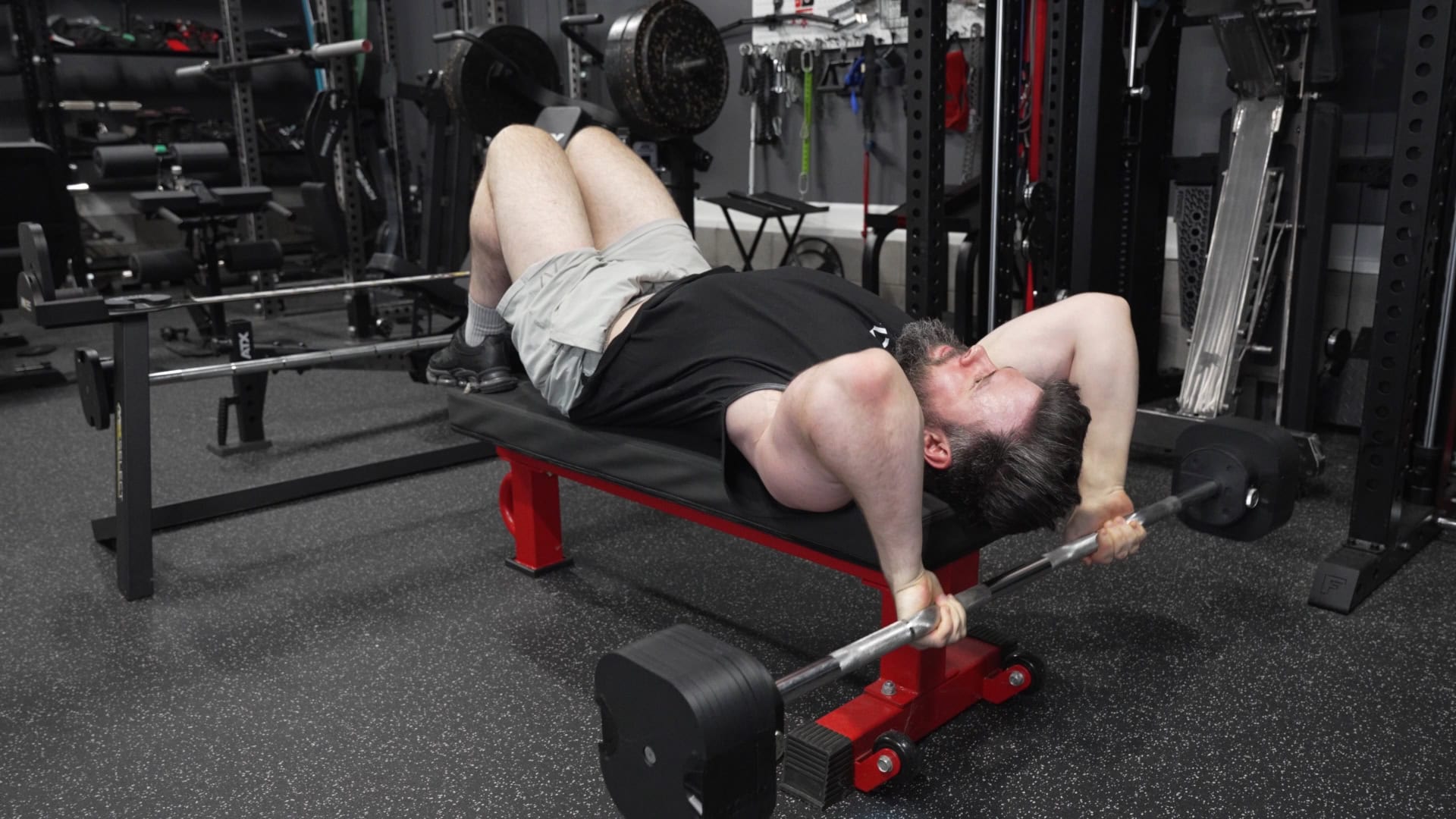
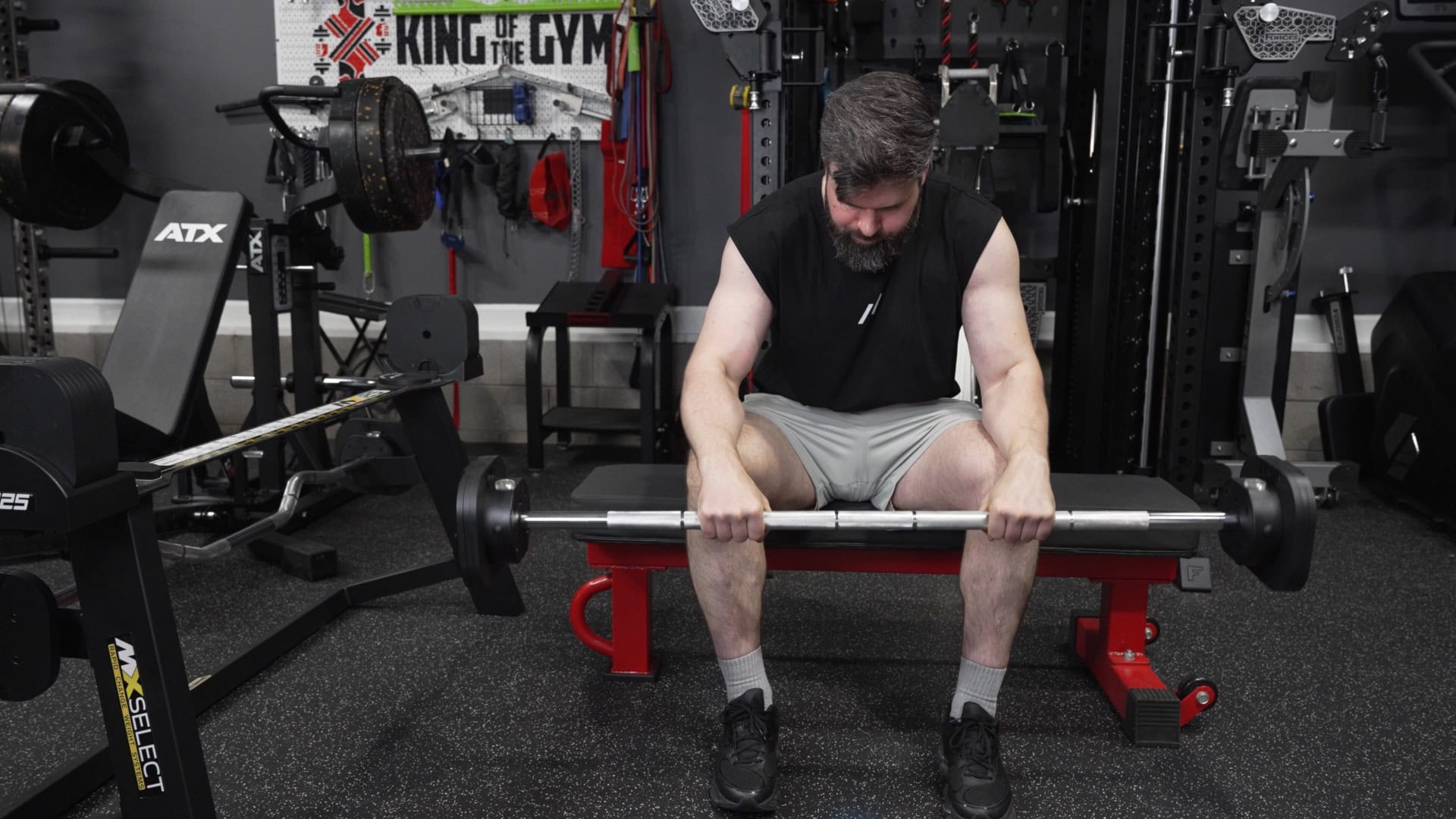
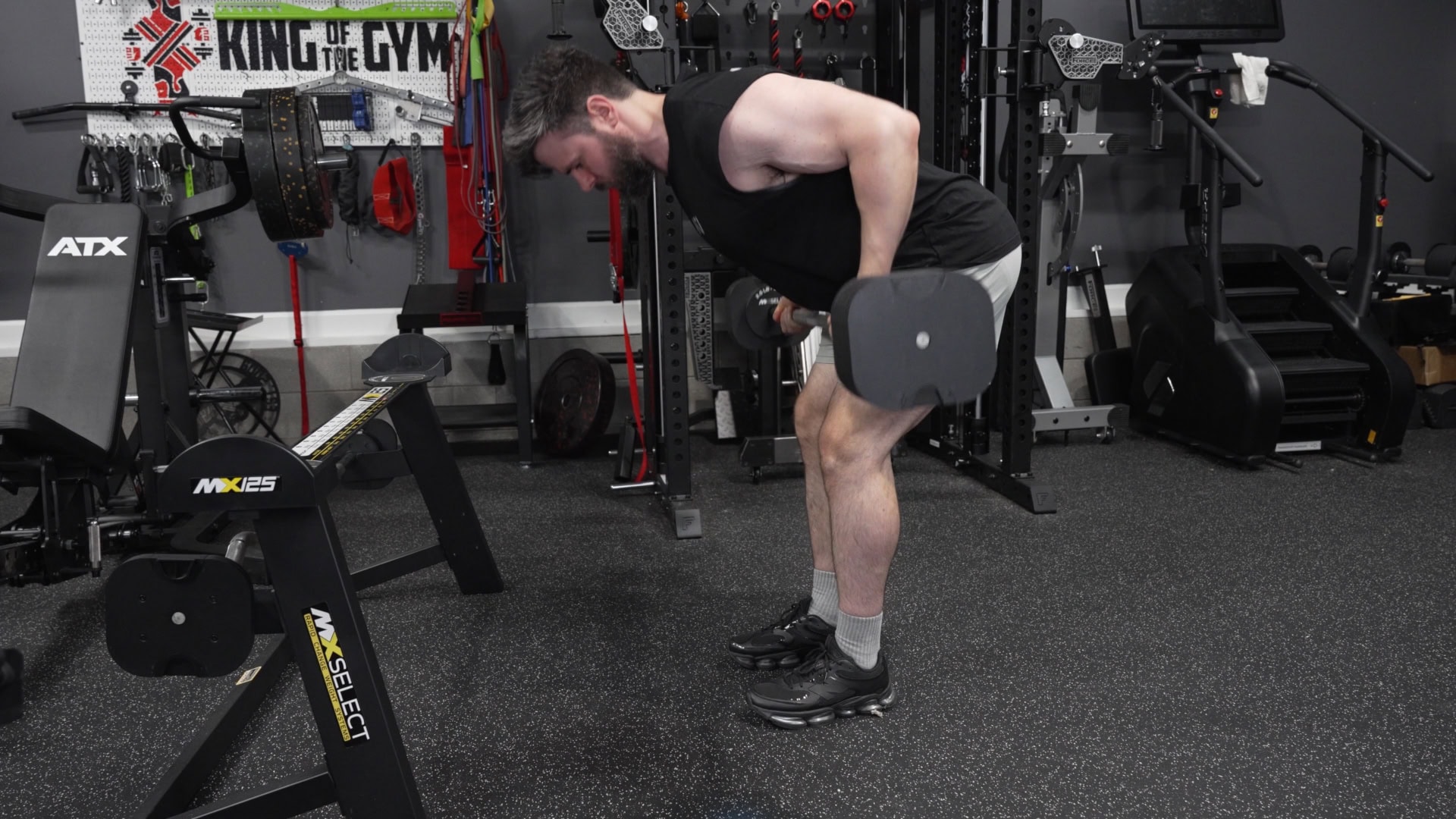
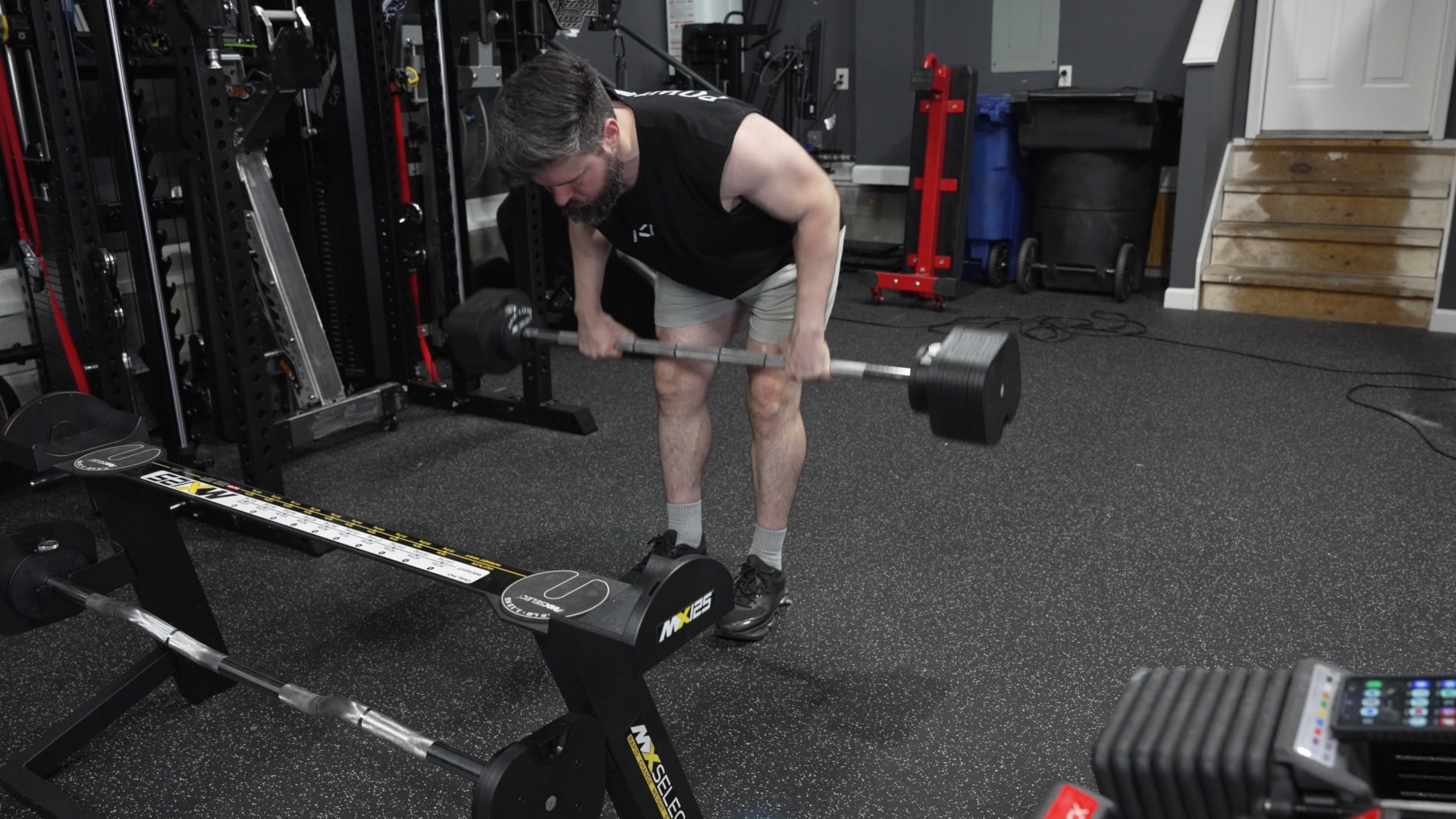
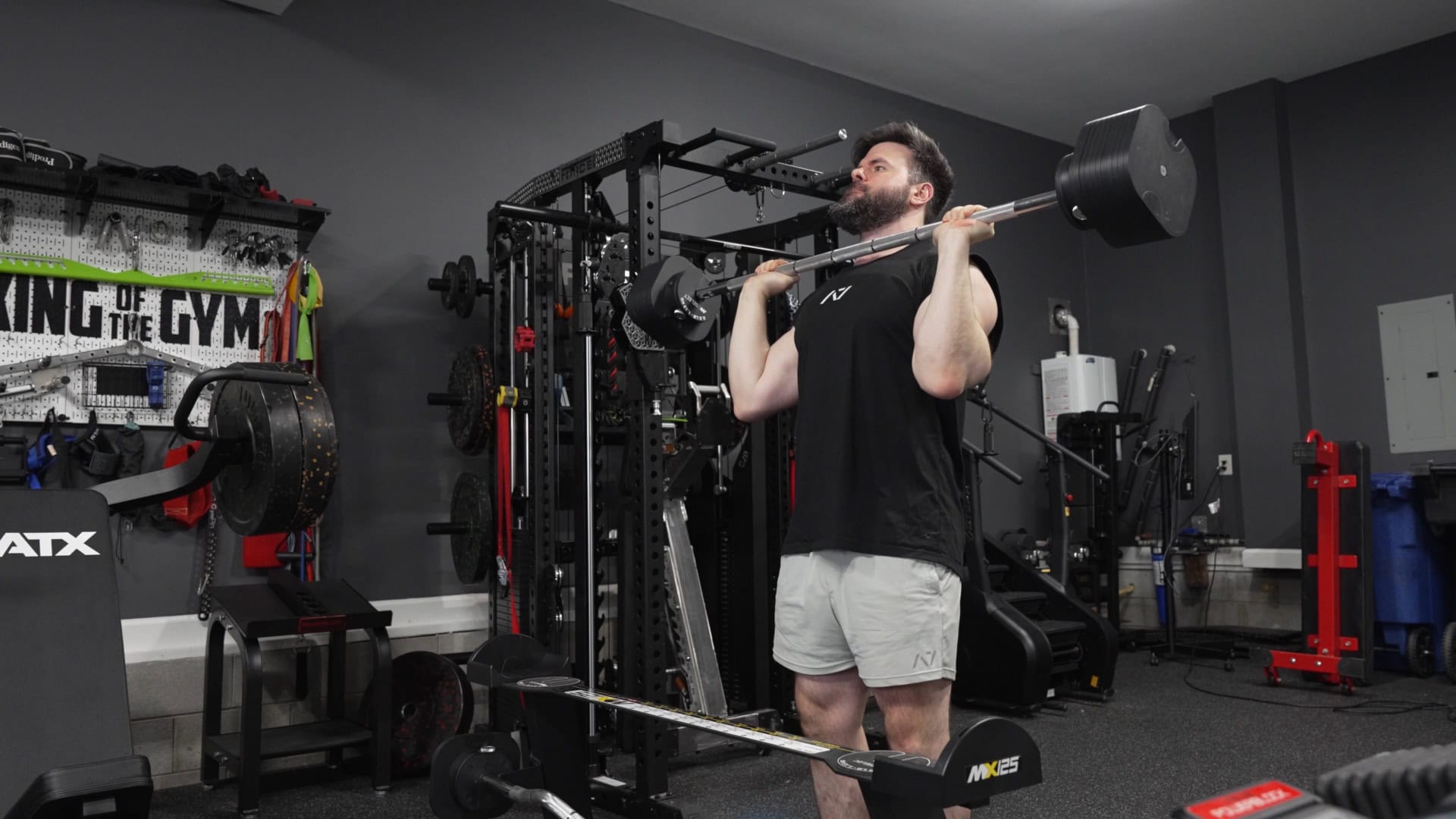
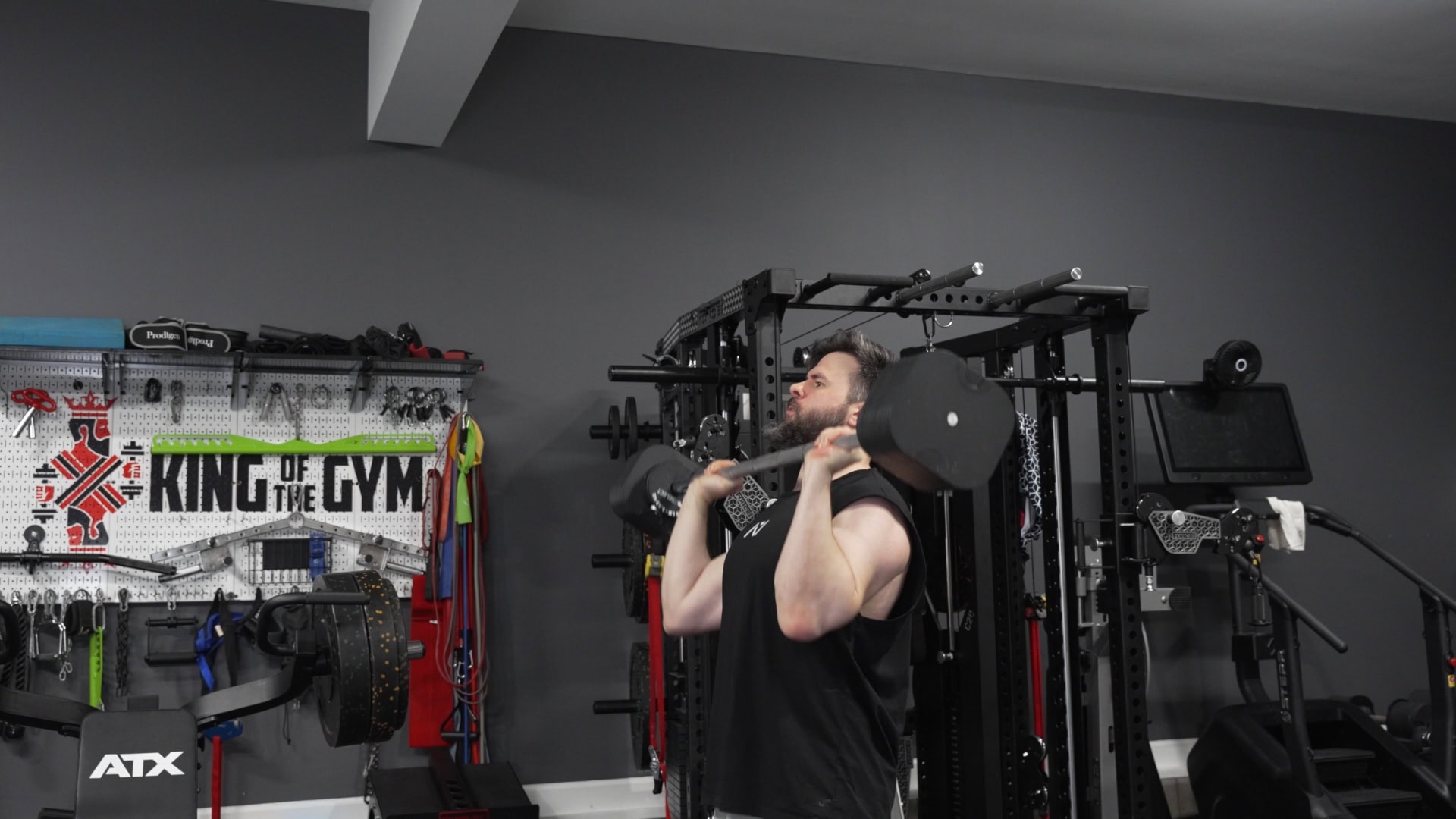
While the 100 lb max on the MX100 was adequate for most uses for me, having the significantly increased weight capacity on the MX125 has allowed me to push the limit on several exercises. So indeed, it makes a meaningful difference.
MX125 EVO vs MX100: Every Change
| Spec | MX100 | MX125 EVO |
|---|---|---|
| Weight range | 28 to 100 lbs | 30 to 125 lbs |
| Dial increments | 8 lbs | 10 lbs (5 lbs with add-on plates) |
| Add-on plates | None | Two 2.5-lb magnetic plates |
| Weight settings | 10 | 20 per bar |
| Plates | 9-inch round, nylon coated | 8 x 7.25 inch rectangular, powder coated |
| Balance | Rotates in your hands | Close to perfectly balanced |
| EZ bar unrack | Crouch and grab from underneath | Comes out ready to curl |
| Racking | Angled plates self-align | Needs more deliberate alignment |
| Selector dial | Plastic | Machined knurled aluminum |
| Internals | Metal | Metal, replaceable housings and parts |
| Rack plate holder | Powder-coated steel | Plastic |
| Rack tubing | Thicker | Thinner |
| Bar length at max | 55.25 inches | 55.5 inches |
| Rack footprint | 57 x 18 inches | 57 x 18 inches |
| MSRP | $1,099 (typically sold between $699 to $899) | $1,099 (typically sells around $899) |
Should MX100 Owners Upgrade?
Only if you need the extra weight, or if the balance bothers you a lot.
The MX100 is still a good system, and the upgrades here are refinements rather than a full rebuild. If 100 lbs covers your curls and extensions and you’ve adapted to the balance, keep your money.
MX125 EVO Price and Value
The MX125 EVO barbell sells for $899 at the time of writing, with an MSRP of $1,099. And you can use code KING for an extra 10% off at checkout.
The MX100 carried the same $1,099 MSRP and commonly sold between $699 and $899, so pricing sits in the same range as the previous generation.
The real comparison is a fixed barbell set, because that’s the experience this system replaces. Using Titan Fitness as a benchmark:
| Item | Price |
|---|---|
| Fixed EZ curl bar set, 20 to 110 lbs | $1,544.97 |
| Fixed straight bar set, 20 to 110 lbs | $1,429.97 |
| A-frame rack (x2, one per set) | $719.94 |
| Total | $3,694.88 |
That’s roughly four times the price of the MX125 EVO, and it tops out 15 lbs lighter.
Plus, they require much more space. Those two A-frame racks take up about 17 square feet, and because they load from both sides, they can’t sit against a wall. The MX125 EVO holds both bars in about 7 square feet and backs right up against mine.
Fixed bars are still the better experience if you have the room and the budget. There’s no adjustment step, and you can drop them on the floor without thinking twice. But you get 90 to 95% of that feel from the MX125 EVO, with more top-end weight and a fraction of the cost and footprint.
Alternatives to the MX125 EVO
There aren’t many.
The Bowflex SelectTech 2080 was the only other dial-adjustable barbell and curl bar system, and it’s discontinued. It ran on a rack-and-pinion design licensed from MX Select, so even that option was built on this technology.
PowerBlock sells straight bar and EZ curl bar attachments for its dumbbells. I own PowerBlock dumbbells and like them, but I don’t recommend the bar attachments for most people. Adjustment is clunky, and the balance is poor on anything that isn’t a straight up-and-down movement.
That leaves the MX125 EVO as the only true adjustable barbell and curl bar system you can buy new. Fortunately, it’s a good one.
MX125 EVO Pros and Cons
Here’s the short version of my MX125 EVO review.
Pros:
- Virtually perfectly balanced on both bars
- No need to adjust EZ bar in hands after unracking
- 125 lb max beats the 110 lb max of fixed bar sets
- 5 lb increments with included magnetic add-on plates
- Rapid weight change (5 seconds for both sides)
- Metal internals with replaceable housings and parts
- Machined aluminum knurled selector dials
- Deeper knurling with more coverage than the MX100
- Compact rectangular plates are easier to maneuver
- Both bars and the rack fit in about 7 square feet
Cons:
- Spare bar still stores at the back of the rack
- Racking takes more precision than the MX100
- Plate holder changed from steel to plastic
- Thinner rack frame tubing than before
- Powder coat shows nicks more easily than nylon
- Foam add-on plate holders feel like an afterthought
Who Should Buy the MX125 EVO
Buy it if you:
- Want fixed-bar convenience for curls, extensions, and pressing without a wall of bars
- Are working with limited floor space
- Train in the 30 to 125 lb range on the exercises you’d use it for
- Want to stop loading and stripping plates off a loadable EZ curl bar every set
Skip it if you:
- Have the space and budget for two full fixed sets
- Need more than 125 lbs on the lifts you’d do with it, since a fixed set won’t be heavy enough either
- Already own an MX100 and are content with its weight range and balance
Overall Rating
MX Select MX125 EVO Rapid Change Adjustable Barbell / Curl Bar System
The MX Select MX125 EVO is an adjustable straight bar and EZ curl bar system that replaces 20 fixed bars in about 7 square feet. It adjusts from 30 to 125 lbs in 10 lb increments (or as little as 5 lbs with the included magnetic add-on plates). Changing both sides takes about 5 seconds. Compared with the MX100, both bars feel better balanced, the EZ bar comes out of the rack ready to curl, and the smaller plates are easier to maneuver. The trade-offs are more precise racking, thinner rack tubing, and a plastic plate holder.
4.8
Pros
- Virtually perfectly balanced on both bars
- No need to adjust EZ bar in hands after unracking
- 125 lb max beats the 110 lb max of fixed bar sets
- 5 lb increments with included magnetic add-on plates
- Rapid weight change (5 seconds for both sides)
- Metal internals with replaceable housings and parts
- Machined aluminum knurled selector dials
- Deeper knurling with more coverage than the MX100
- Compact rectangular plates are easier to maneuver
- Both bars and the rack fit in about 7 square feet
Cons
- Spare bar still stores at the back of the rack
- Racking takes more precision than the MX100
- Plate holder changed from steel to plastic
- Thinner rack frame tubing than before
- Powder coat shows nicks more easily than nylon
- Foam add-on plate holders feel like an afterthought
MX125 EVO FAQ
How much does the MX125 EVO weigh at its heaviest setting?
125 lbs, using both 2.5-lb magnetic add-on plates. Without them, the dial tops out at 120 lbs.
What are the weight increments on the MX125 EVO?
The dial moves in 10-lb steps from 30 to 120 lbs. The two magnetic add-on plates fill in every 5-lb setting in between and extend the range to 125 lbs.
Is the MX125 EVO barbell accurate to the labeled weight?
In my testing, yes. Every setting I weighed up to 90 lbs landed within 0.6 lbs of the dial setting, well inside MX Select’s stated 1 to 5 lb tolerance.
Can the MX125 EVO be used in a power rack or on J-hooks?
No, and it isn’t designed for it. The bars rack in the included stand, the same way you’d return a fixed barbell to its rack rather than to J-hooks.
How long does it take to change weight on the MX125 EVO?
About 5 seconds for both sides. Adding the magnetic plates costs roughly 2 more seconds per side.
Final Verdict
The MX125 EVO is an excellent adjustable barbell system and a clear step up from the MX100.
The higher max weight gives you more room to progress. The balance fix makes it better to train with. The revised unrack position for the EZ curl bar makes it faster to use, and the smaller plates make it easier to live with in a tight space.
Racking takes a bit more precision than it did on the MX100, and a few rack components got cheaper. Those are minor complaints against what MX Select fixed here. Adjustable barbells are slept on as a category, and this is the piece that proves why they deserve more attention.
If you want the function of a full straight bar and EZ curl bar set without the cost or the footprint, the MX125 EVO is easy to recommend.
If you decide to pick one up, use code KING for 10% off at checkout. Using my affiliate link below helps support King of the Gym at no extra cost to you:
Use Code KING for 10% OFF – MX Select MX125 EVO Adjustable Barbell System »