
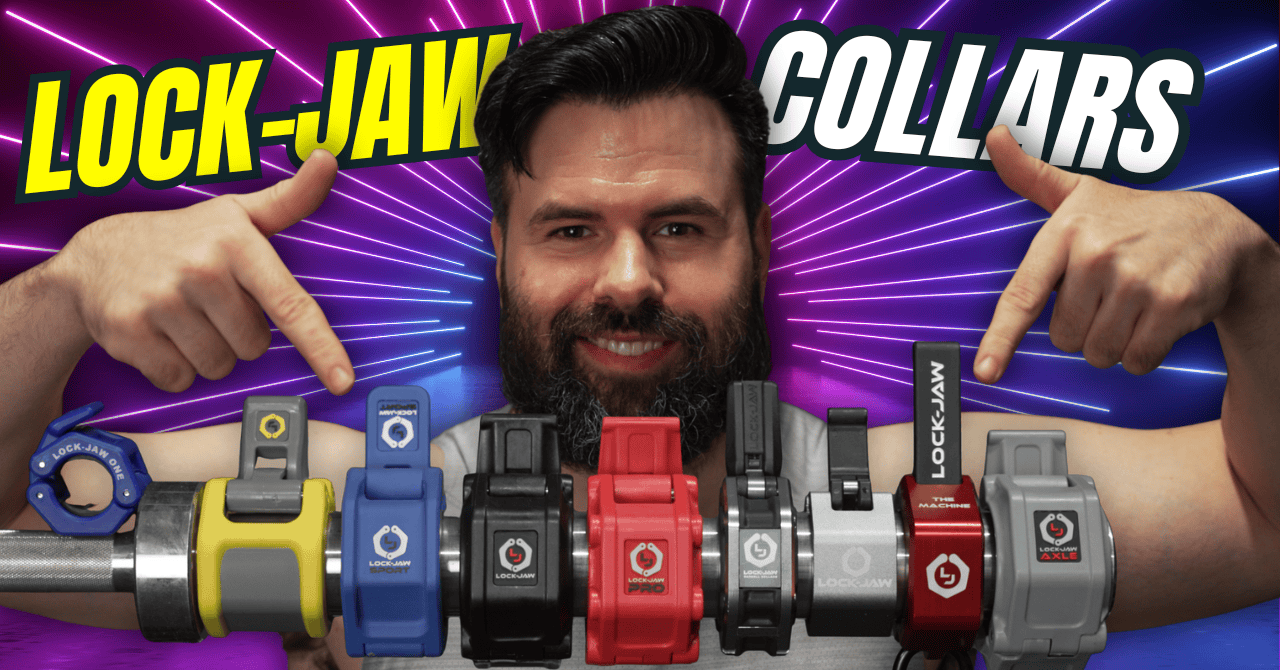
If you’re trying to figure out what best Lock-Jaw barbell collars are for you, but you don’t want to read my full article, here’s the quick summary based on my real-world testing:
- Best overall hold: Flex
- Strongest yet light-feeling: Metal
- Best hold for the price: Sport
- Best premium easy-to-use everyday collar: Olympic
- Best budget choice: HEX
- Best magnetic collar + best rack storage: Pro Magnet
- Best for chains/bands: Machine
- Axle sleeves: Pro Axle
- Standard 1” equipment: One
Lock-Jaw barbell collars are some of the most widely used clamp-style collars in home and commercial gyms, and for good reason: Lock-Jaw essentially popularized the modern quick-release barbell collar as we know it today.
But over the years, their lineup has expanded far beyond a single “default” option. There are budget models, premium models, magnetic versions, aluminum designs, composite designs, and even collars built specifically for chains, bands, axle bars, or standard one-inch handles.
On the surface, many of them look similar, but in actual use, they behave very differently.
To cut through that confusion, I tested every Lock-Jaw collar side by side using consistent methods, including
- Vertical hold testing
- Repeated drop testing
- Usability (ease of opening/closing)
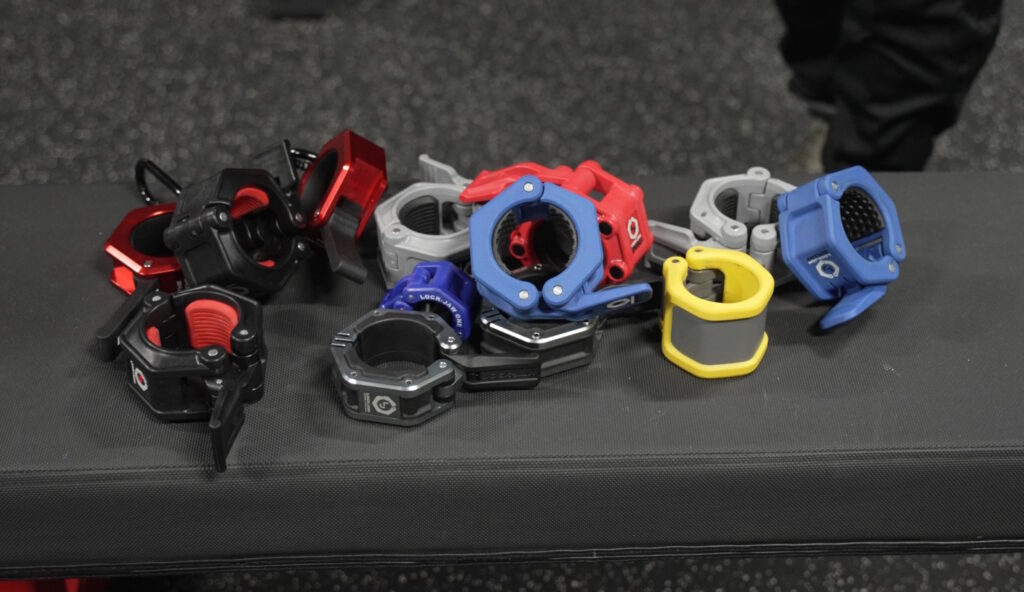
This review breaks down each Lock-Jaw model in detail, focusing on performance, usability, design decisions, and practical use cases, so you can confidently choose the collar that fits your training style and equipment.
Table of Contents
Lock-Jaw Barbell Collars Review Video
Watch my Lock-Jaw barbell collar comparison video on YouTube:
My Test Methods
Before getting into individual models, here’s the context for the results I reference throughout.
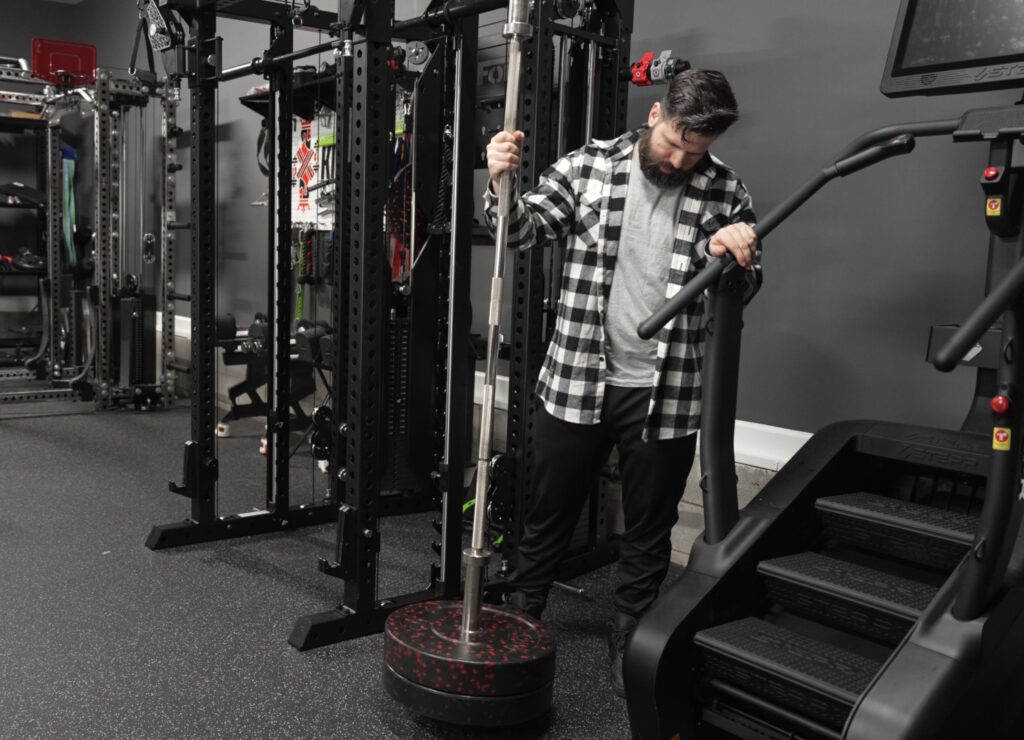
Vertical Hold Test (100 lb, sleeve-down gravity test + Bodyweight)
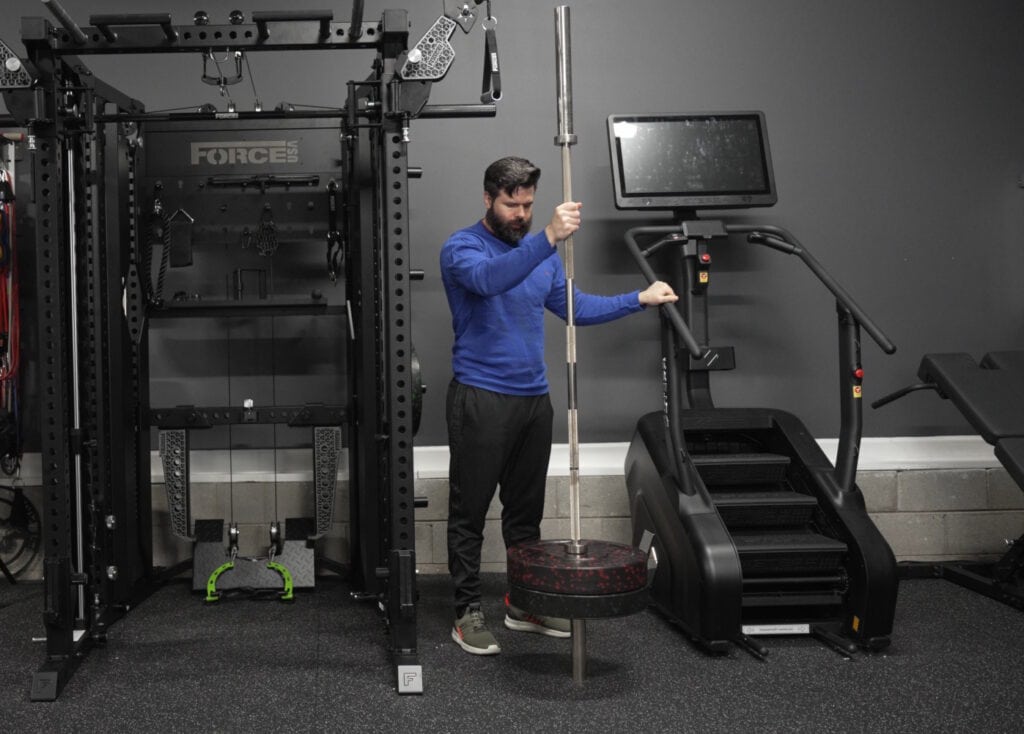
For this test, I loaded 100 lbs on one sleeve (55 + 45), stood the barbell up vertically for a full minute, and watched for movement.
If the collar held steady, I added bodyweight by standing and stomping on the plates to see what it would take to make it slip.
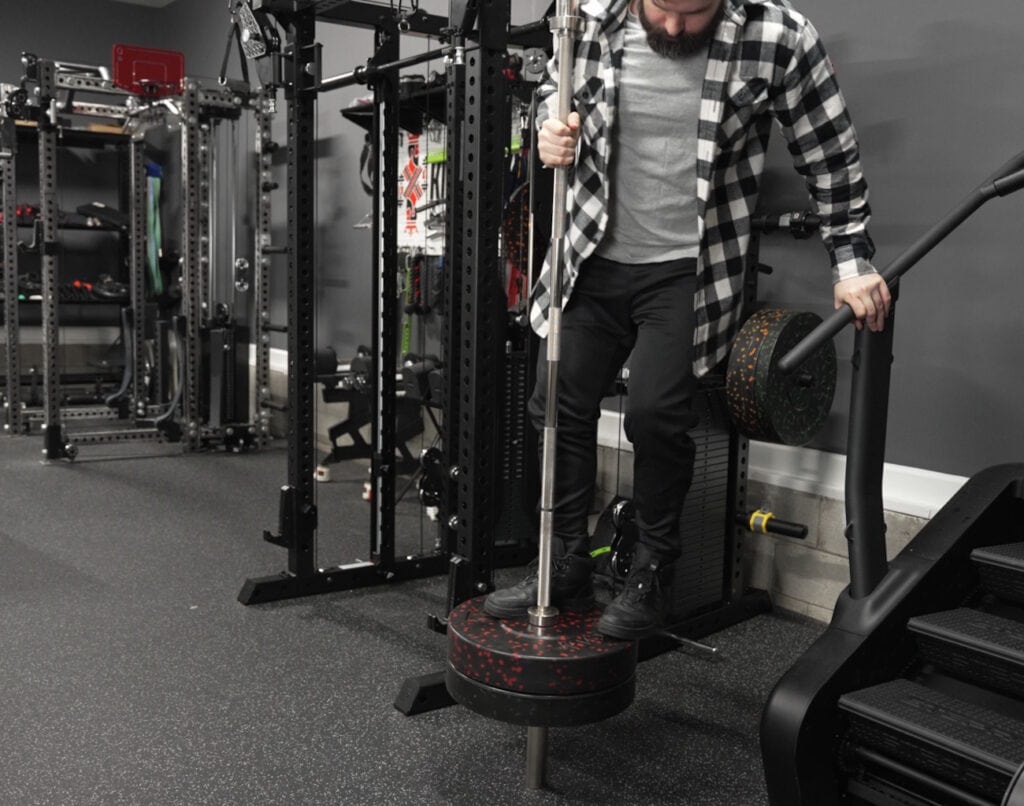
This test is not “real life,” but it’s useful because it isolates two things:
- Pure clamping strength
- How the collar behaves when gravity (and bodyweight) is constantly trying to pull plates off the sleeve
If a collar creeps here, that doesn’t automatically mean it’s useless, but it does tell you something about clamp strength and friction under constant load.
Drop Test (245 lb total, impact + vibration test)
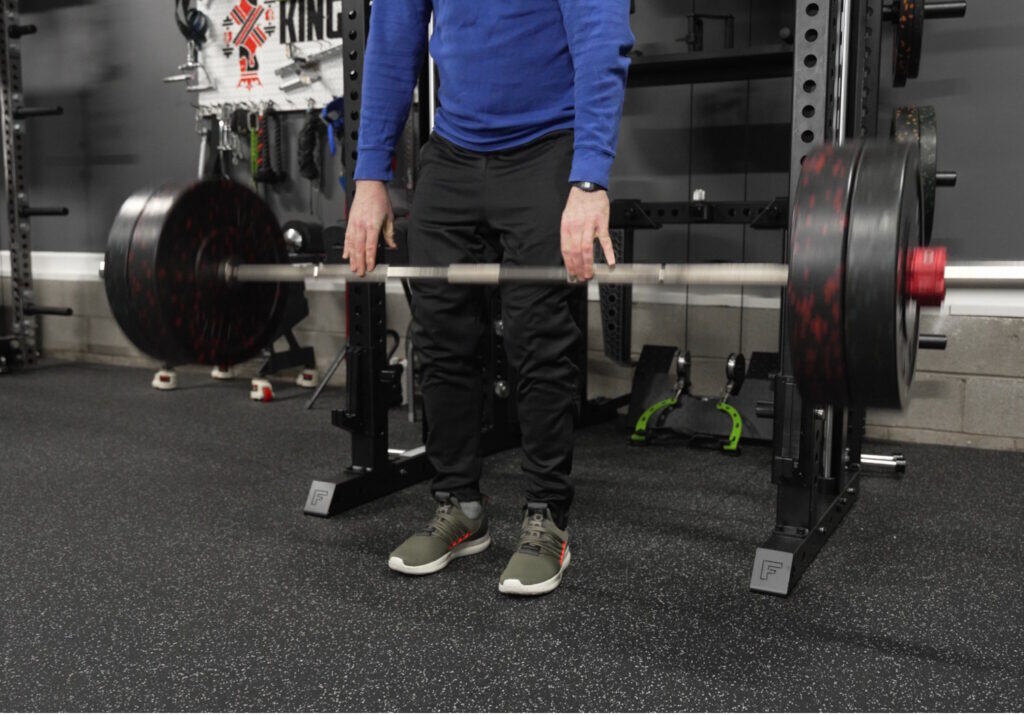
For this test, I loaded 55 + 45 per side (200 lb in plates), plus a 45 lb barbell, so 245 lbs total. Then I dropped it at least six times from the top of a deadlift.
I also did a few intentionally uneven drops to increase impact forces for collars that held up particularly well during normal drops.
This test is way closer to what actually matters for most people:
- deadlifts, heavy reps where you don’t carefully lower the bar down
- Olympic lifts
- sloppy sets on other lifts where things shake or are put down fast
If a collar holds here, it’s probably doing its job in real training.
Key insight before we start: The “best collar” isn’t always the one with the strongest clamp. A collar can be insanely strong and still be annoying enough that you stop using it. Or you can have a collar with slightly less clamp that’s so convenient you actually use it every set.
Ease of Use (Opening/Closing)
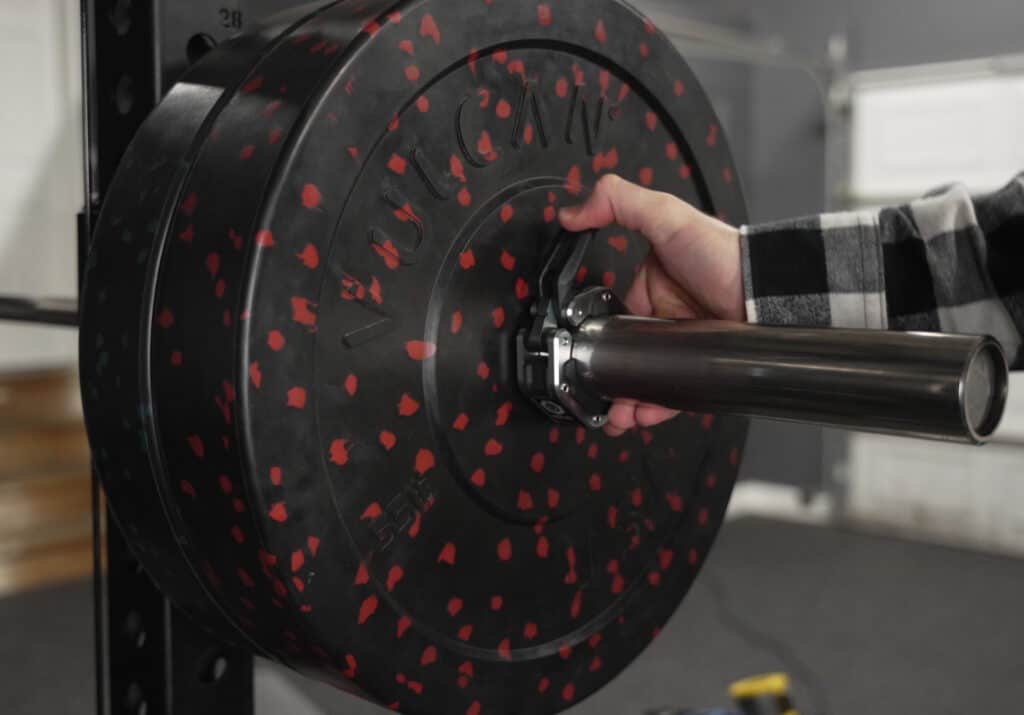
Clamp strength is only part of the equation. A collar can hold exceptionally well and still be frustrating enough that you stop using it in day-to-day training. That’s why I paid close attention to how easy each collar was to put on and take off in realistic situations.
For this portion of testing, I focused on one-hand versus two-hand operation, how much force was required to close the lever, and whether the sleeve wanted to spin while installing or removing the collar. I also paid attention to how these factors changed depending on how much weight was already on the bar, since heavier loading naturally stabilizes the sleeve and can make collars easier to handle.
Some collars are clearly optimized for maximum security, even if that means slower plate changes or mandatory two-hand use. Others prioritize speed and convenience, sometimes at the expense of absolute clamp force. Neither approach is inherently right or wrong; it just depends on how you train and how often you’re adjusting weight.
This section is less about declaring winners and losers, and more about identifying which collars feel effortless to live with, versus which ones demand more intention every time you use them.
Lock-Jaw HEX Review
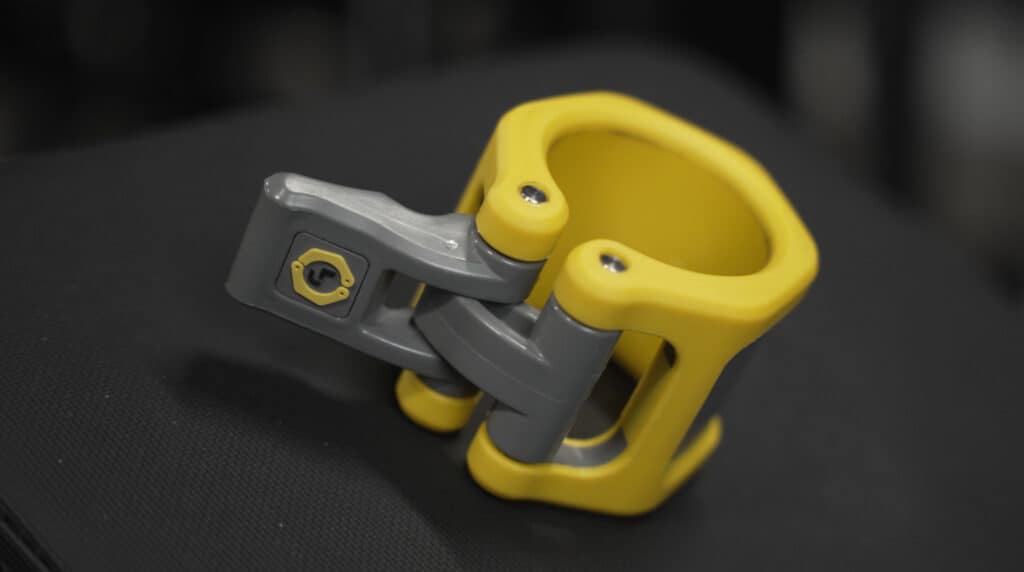
The Lock-Jaw HEX is the simplest and most budget-friendly Lock-Jaw collar. It’s not sold on Lock-Jaw’s website (they told me it’s being phased out), but it’s still available on Amazon.
How it performed in testing
Vertical hold: The HEX creeps. It doesn’t instantly fly off or “fail,” but it does slowly slide down the sleeve the longer you hold it. The key detail is that it didn’t settle into a stable point; it kept moving progressively.
Drop test: Surprisingly solid for the price. After six drops, it migrated around 2 mm total.
That result is important because it tells you what the HEX really is: not a maximum-hold collar, but also not junk; far from it, actually. It performs quite well for normal training, considering its price.
Usability
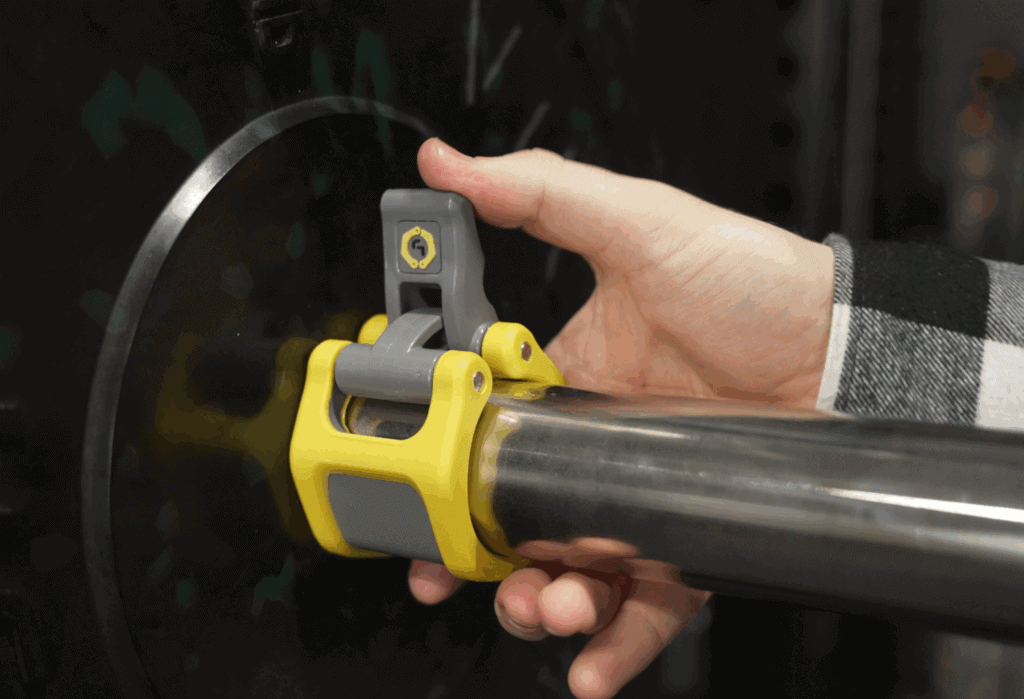
The HEX is extremely easy to put on and take off with one hand. It doesn’t feel stiff or overly tight. It’s fast, which matters more than people think if you’re doing plate changes often (deadlift warmups, supersets, quick weight jumps, etc.).
Design
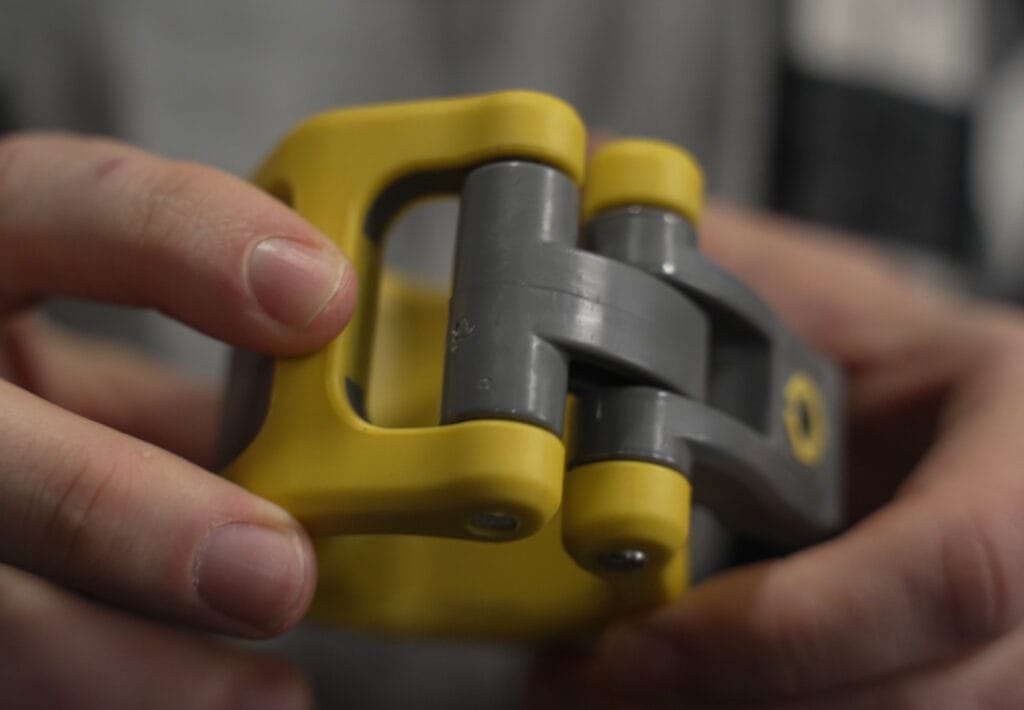
The HEX is structurally unique among Lock-Jaw’s composite collars:
- Most composite models have a lever hinge plus a mid-body hinge.
- The HEX basically has the lever hinge, and the rest of the body is more of a single piece.
It’s also lighter than the higher-end collars. That’s not inherently good or bad, but it matches how it feels: more minimal and less “premium.”
A nice detail is that it has a rubberized raised logo like all other composite Lock-Jaw collars, which is a nice touch and one I didn’t expect at the budget level.
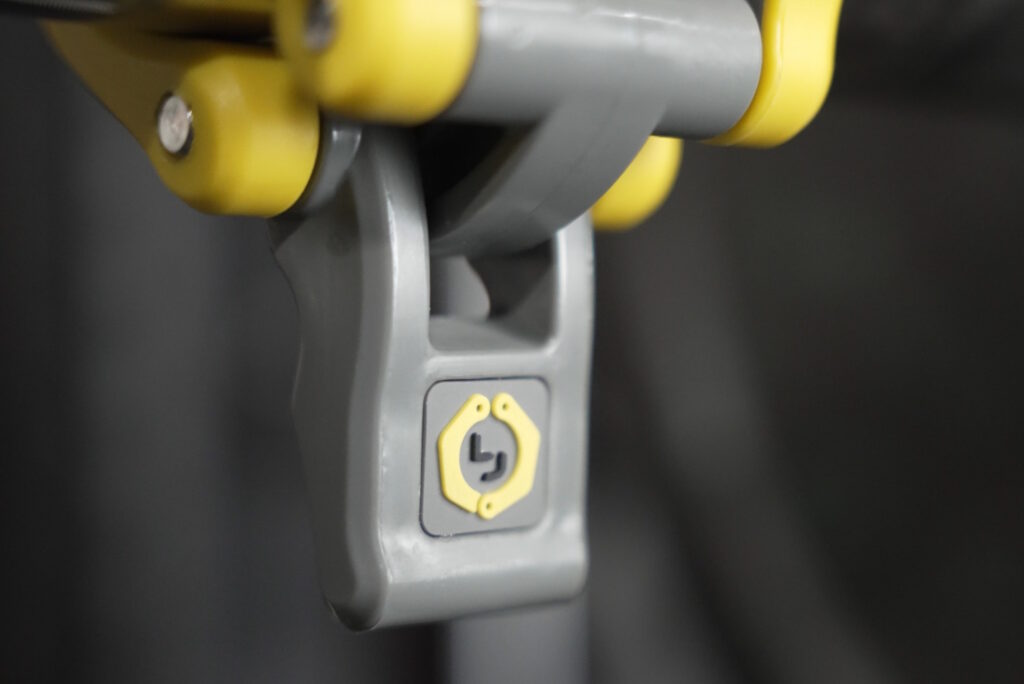
It does lack magnets, which makes storage less convenient. But for its low price, I wouldn’t have expected them.
Who should buy it
Buy the HEX if you want:
- the cheapest Lock-Jaw option
- a collar that’s fast and easy to use
- “good enough” holding for most training
- a simple backup collar
Skip it if you:
- want magnets
- want premium feel/build
- want the best possible clamp strength
Lock-Jaw Sport Review
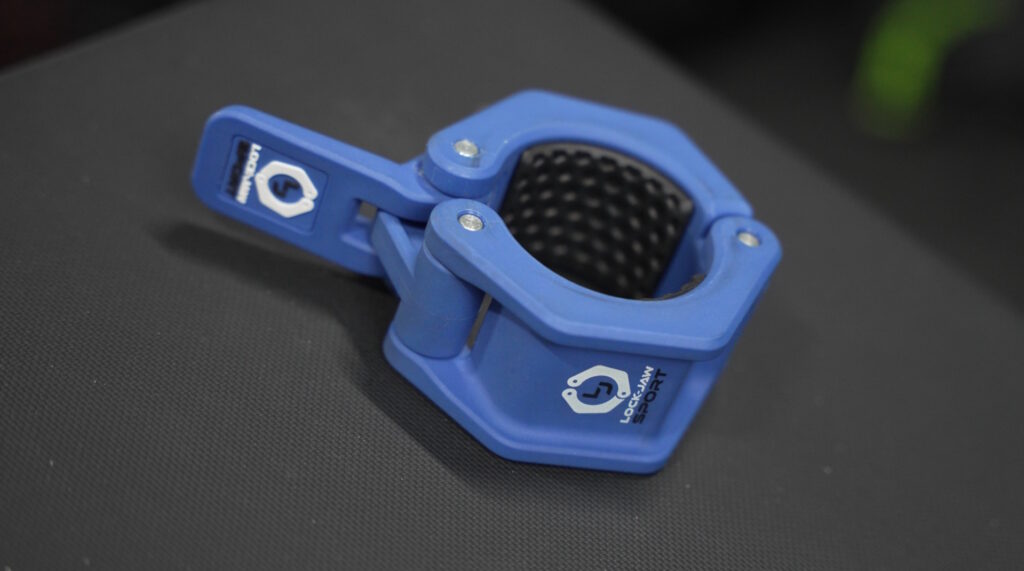
The Lock-Jaw Sport is one of the more interesting collars because it punches above its price in holding power, but it’s also one of my least favorites to live with because it can be inconvenient to use.
How it performed in testing
Vertical hold: Extremely strong. Virtually no movement under static load for about a minute. When I started standing and stomping, I was able to force about 2 mm of shift, but only after really trying.
Drop test: Also very strong. After six drops, only about 0.5 mm of movement.
For a collar around $25, that performance is impressive.
Usability
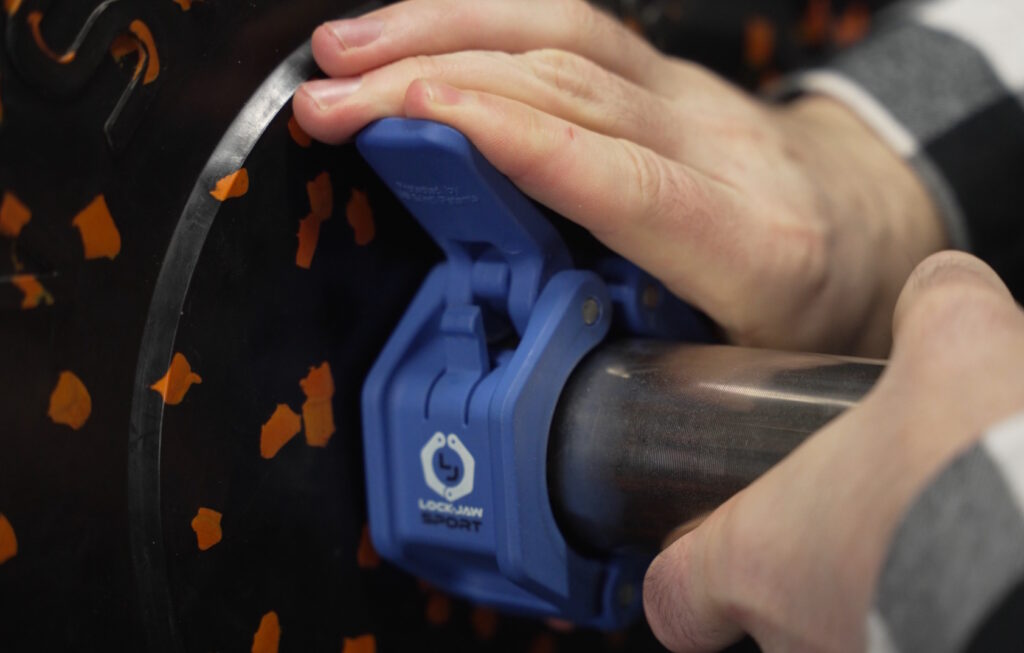
Here’s the problem: the Sport is stiff. It’s one of the hardest Lock-Jaw collars to put on and take off, second only to the Machine. One-handed use is out of the question. You always need:
- one hand to stabilize the sleeve (so it doesn’t spin)
- one hand to operate the lever (because it takes effort to close)
It’s not unusable. It’s just annoying enough that if you’re someone who does lots of plate changes, you may get tired of it.
Design
The Lock-Jaw SPORT uses a traditional composite, dual-hinge design, similar in overall layout to several other Lock-Jaw models.
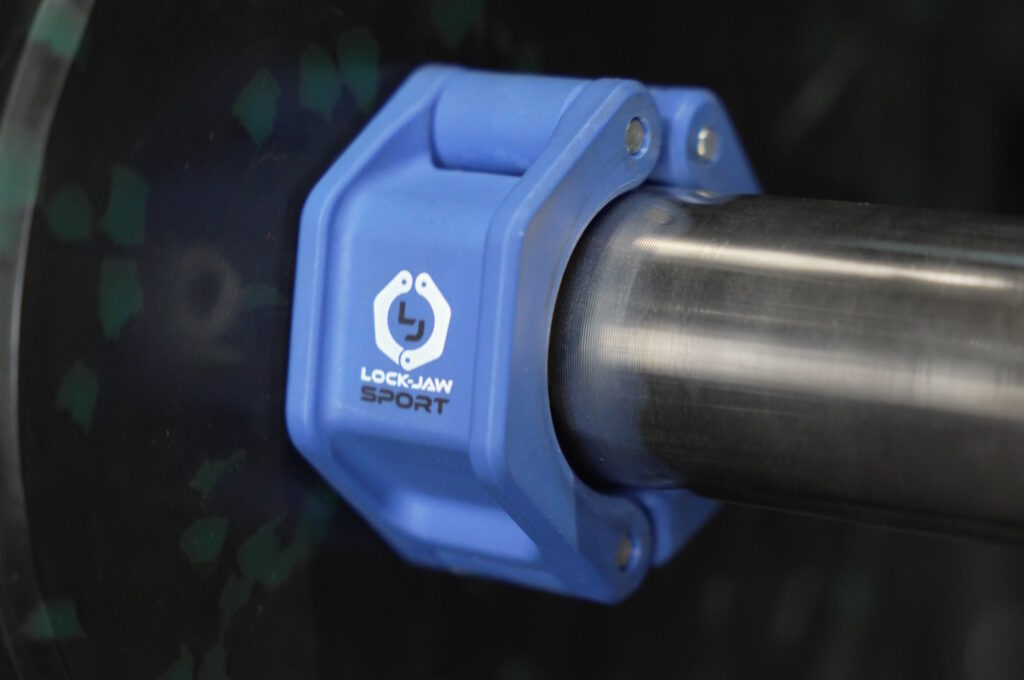
It features the brand’s rubberized, raised logo, which gives it a slightly more premium look than its price might suggest.
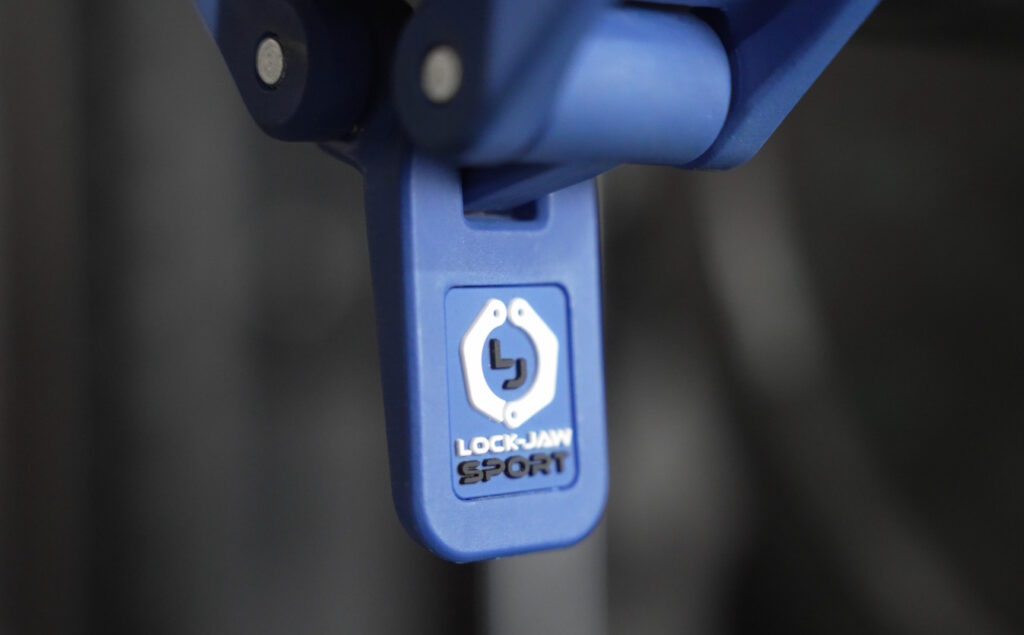
What really defines the SPORT from a design standpoint isn’t a special feature, but rather how stiff the entire mechanism is. It helps explain why the SPORT delivers such strong holding performance despite its budget price point. I’m assuming this was intentional, but I think they could’ve reduced it a bit for better ease of use.
Like the HEX, the Sport also doesn’t have magnets. However, magnets are a more premium features, and I would’ve been surprised if they included them at the $25 price point.
Who should buy it
Buy the Sport if:
- you want maximum hold per dollar
- you don’t mind two-hand operation
- you value security more than speed
Skip it if:
- you prioritize fast plate changes
- you want one-hand convenience
Lock-Jaw Olympic Review
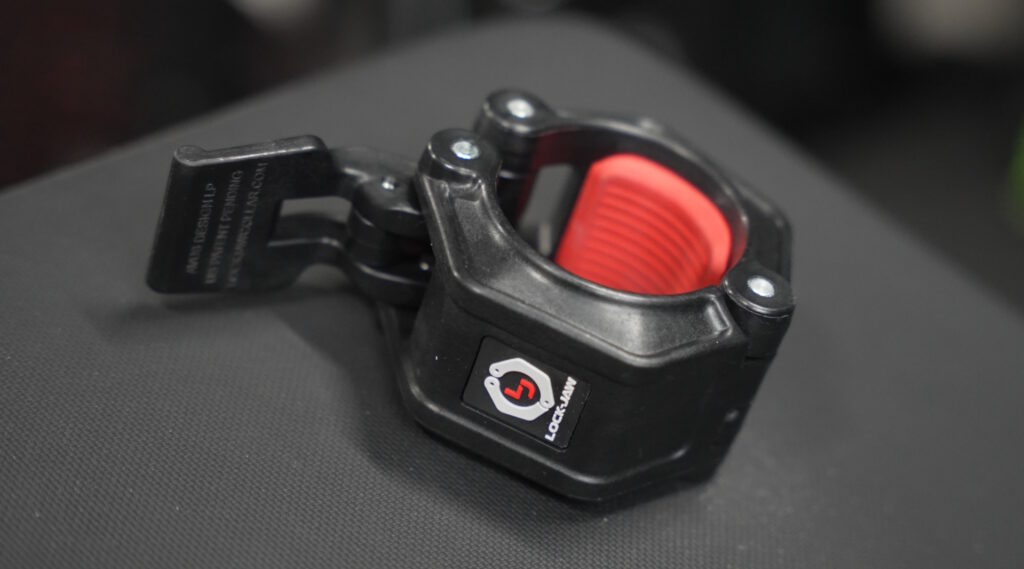
The Lock-Jaw Olympic sits in a great middle ground. It’s strong, well-built, and not a pain to use. If you asked me which collar feels like the most sensible “default” for most home gyms, this would be near the top of the list.
How it performed in testing
Vertical hold: Showed a little movement; about 1 mm during the static hold, and about 2–3 mm total after standing on it.
Drop test: Basically didn’t move. If it migrated at all, it was so small I couldn’t visually tell after six drops.
In short, the OLYMPIC performed better under impact than under constant vertical load, which is the opposite of what you might expect. That’s a good sign for real-world lifting.
Usability
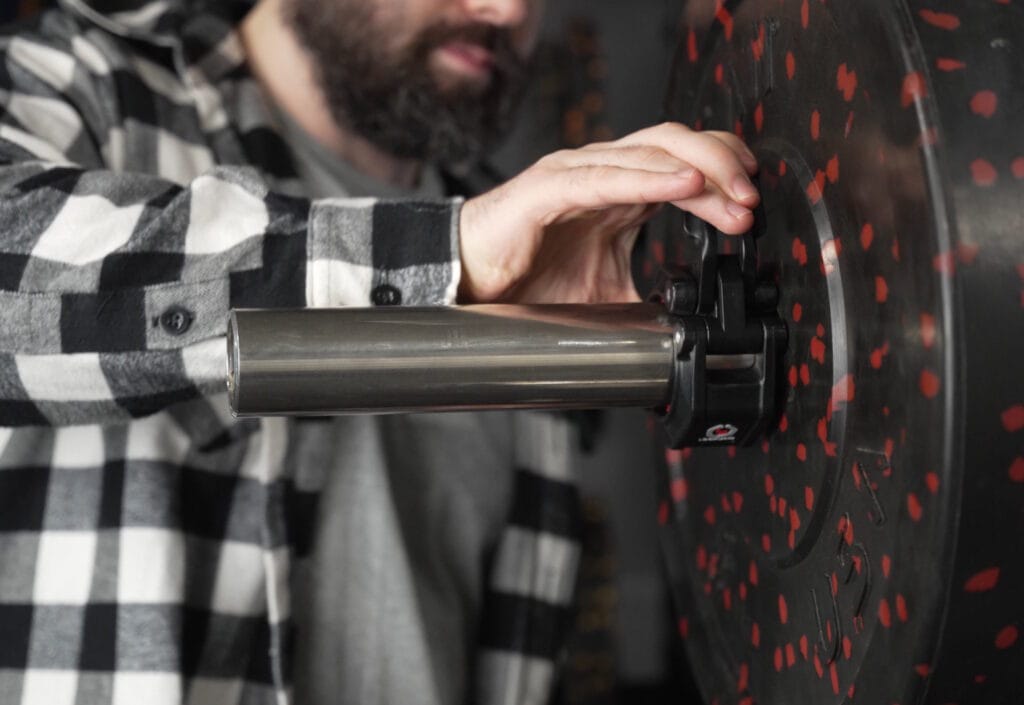
One-hand operation is very doable. It’s not quite as effortless as the HEX, but it’s close. It’s the kind of collar where you stop thinking about the collar during plate changes.
Design
The OLYMPIC uses a typical composite, dual-hinge design with Lock-Jaw’s rubberized raised logo, which gives it a clean, familiar look. It’s a straightforward yet very sturdy design.
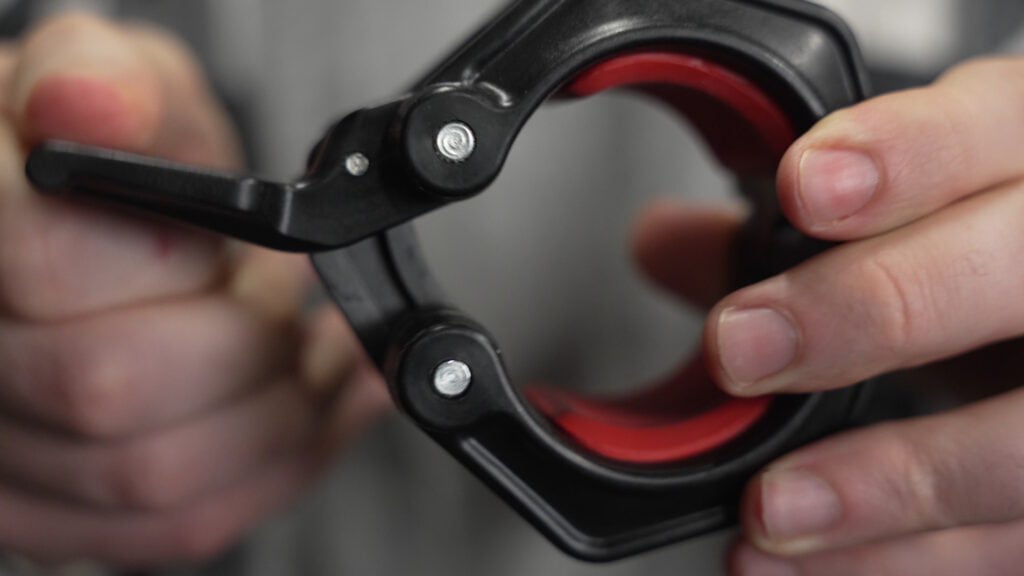
One downside is the lack of magnets. At around $40, it’s getting into a higher price range where I would’ve expected magnetic storage.
That said, the overall design prioritizes a healthy mix of ease of use AND holding strength. It doesn’t rank #1 in both of those categories compared to other models, but it’s probably the best mix of both.
Who should buy it
- you want a balanced collar that holds very well and is easy to use
- you want a “set it and forget it” collar for everyday lifting
Skip it if:
- you want magnets
- you want the thinnest profile possible
- you want the absolute strongest clamp in the lineup
Lock-Jaw Pro & Pro Magnet Review
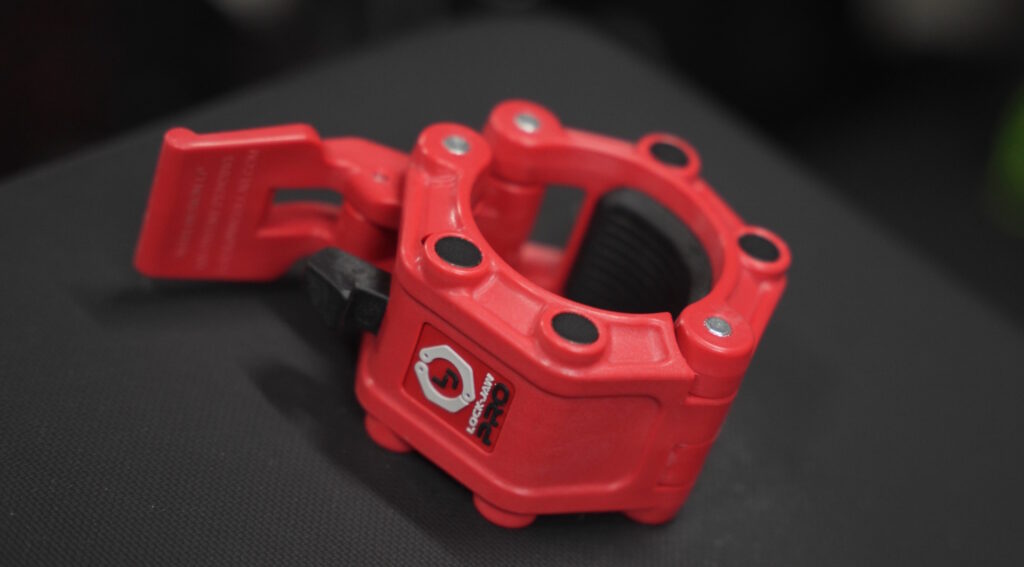
I only have the Lock-Jaw Pro Magnet, but other than magnets and pricing, it’s the same collar as the regular Pro.
How it performed in testing
Drop test: Very strong. Only a tiny amount of migration — roughly 0.25–0.5 mm at most — and even with intentionally uneven drops, it didn’t really increase.
Vertical hold: This is where things got weird. Under static load, it moved about 1.5 mm, mostly right away, then seemed to settle. But once I started stomping, it migrated significantly a few inches.
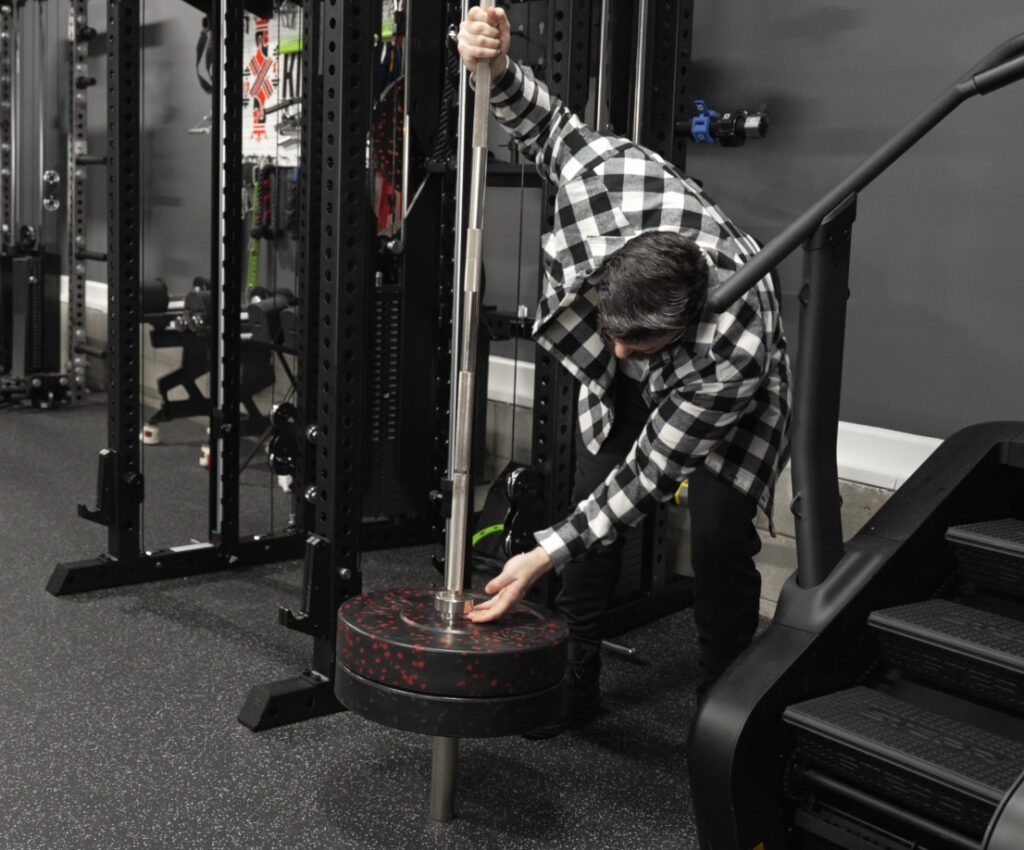
Now, nobody trains like that, so I don’t treat it as a dealbreaker. But at $55, it’s surprising and worth mentioning.
The Olympic model obviously outperformed it in the static hold test. And it even outperformed (arguably negligibly) in the drop test. However, as I’ll discuss shortly, the Pro/Pro Magnet has a security advantage over the Olympic with the inclusion of a locking tab that eliminates the possibility of ever popping open.
Usability
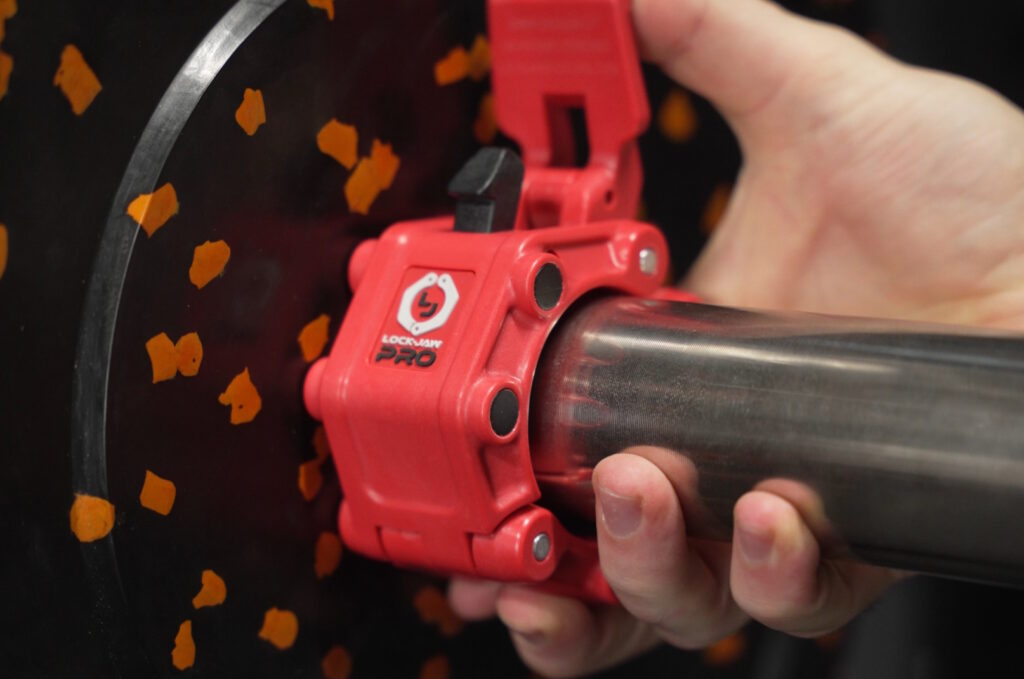
Usability is good and comparable to the Olympic. One-hand on/off is very doable. You just have to take a split second to first disengage the locking tab. If you don’t, then more force is required to rip open the lever.
Design
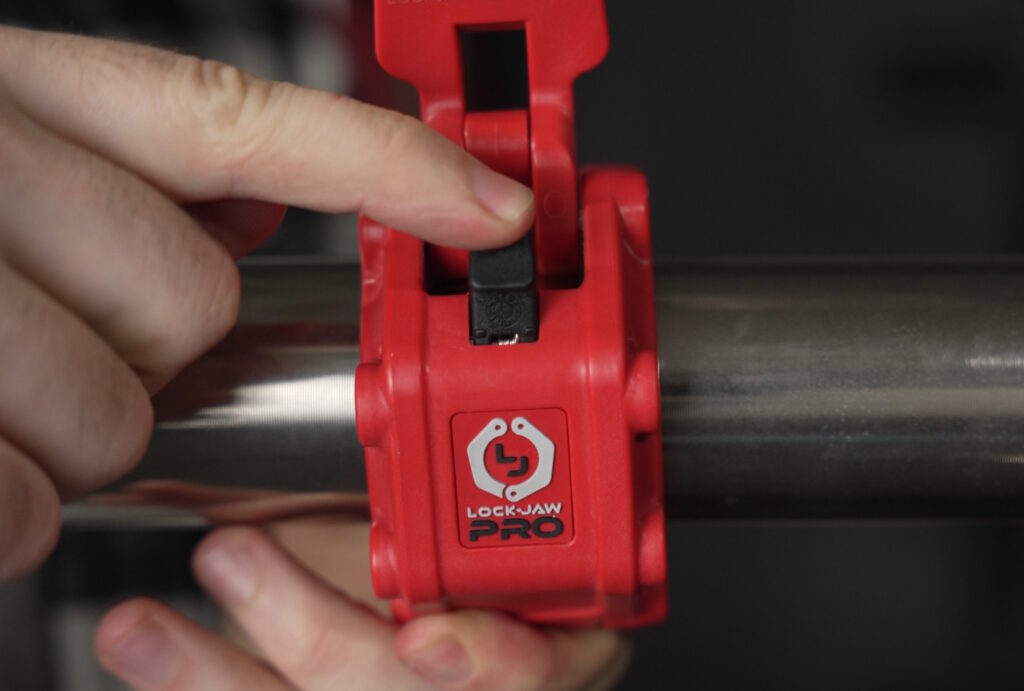
A key feature of the Pro Magnet is the spring-loaded secondary locking tab, which adds security against the lever popping open from extreme impacts. It’s a small feature, but it matters for:
- very heavy training on deadlifts
- higher-impact drops, especially on overhead Olympic lifts
- people who want maximum “never pops open” confidence
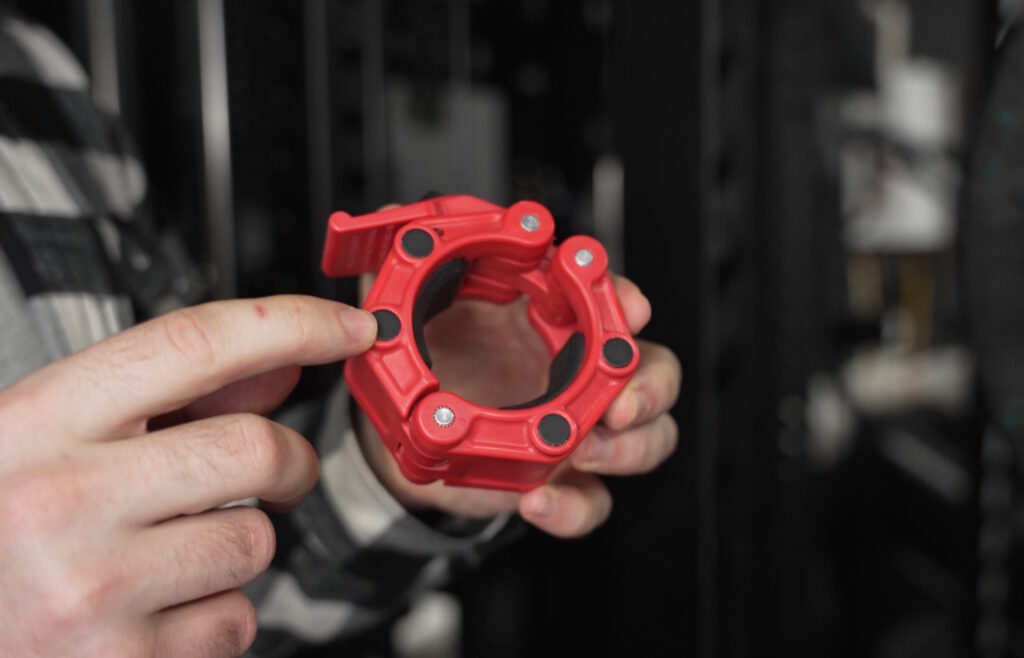
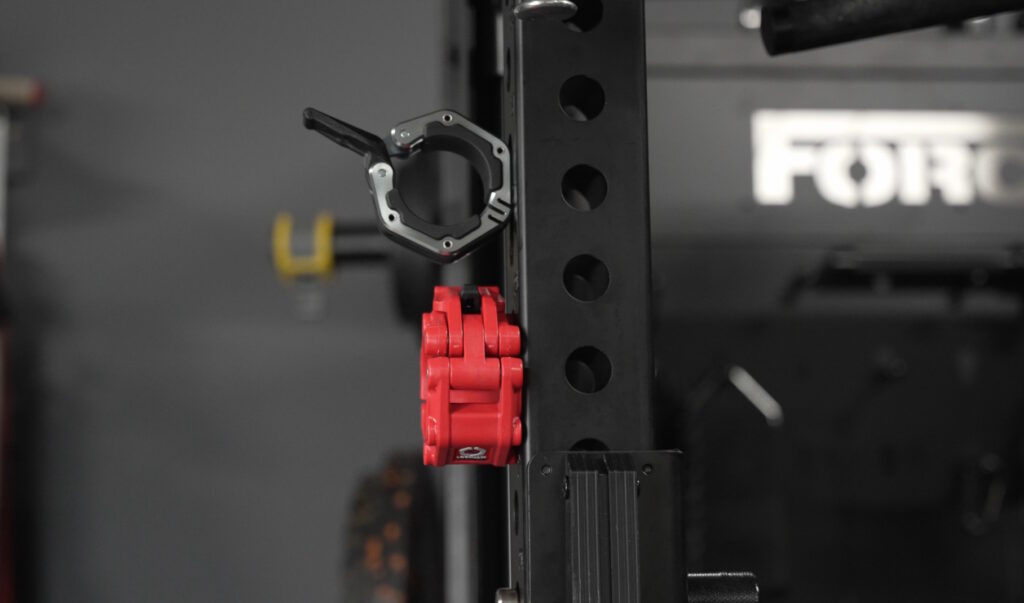
The Pro Magnet is just like the Olympic, obviously with the addition of the locking tab, but also the inclusion of magnets. If you care about magnets, the Pro Magnet is the best implementation in the Lock-Jaw lineup because:
- the magnets are strong
- the magnets are on the sides
- it stores flat against the rack (doesn’t jut out)
Compare this magnet placement to that of the Flex or Metal (magnet) models where the magnets are on the body or lever. It’s more convenient and secure to have them on the side like the Pro Magnet does.
Who should buy it
- you want the best magnets
- you want a collar that’s extremely secure and impossible to pop open
- you want strong real-world performance
Buy the regular Pro if:
- you want the same collar without magnets for ~$10 less
Skip the Pro models altogether if:
- you think you need the added security of the locking tab
- you want the absolute strongest hold across all tests
- you want a thinner collar profile
Lock-Jaw Flex Review
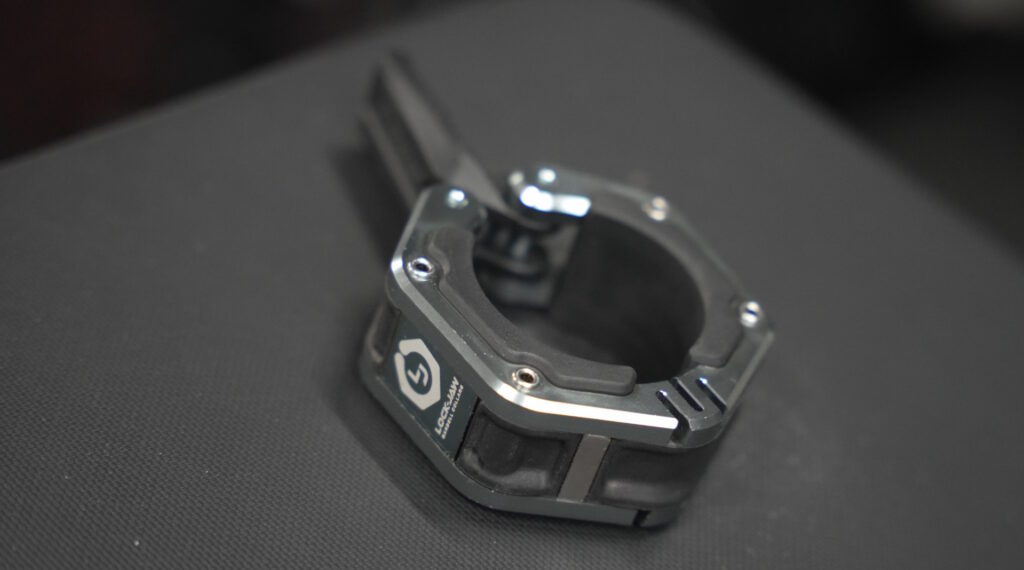
The Lock-Jaw Flex is the most unique collar in the lineup from a construction standpoint, and it became my benchmark for holding strength.
How it performed in testing
This is the simplest performance summary I can give you:
It didn’t move. Period.
- Vertical test: no movement
- Stomping: still no movement
- Drop test: no movement, even with uneven drops
It was the only collar that showed zero movement across every test.
That level of performance comes at a price: the Flex is $63, making it one of the most expensive collars in the lineup.
Design
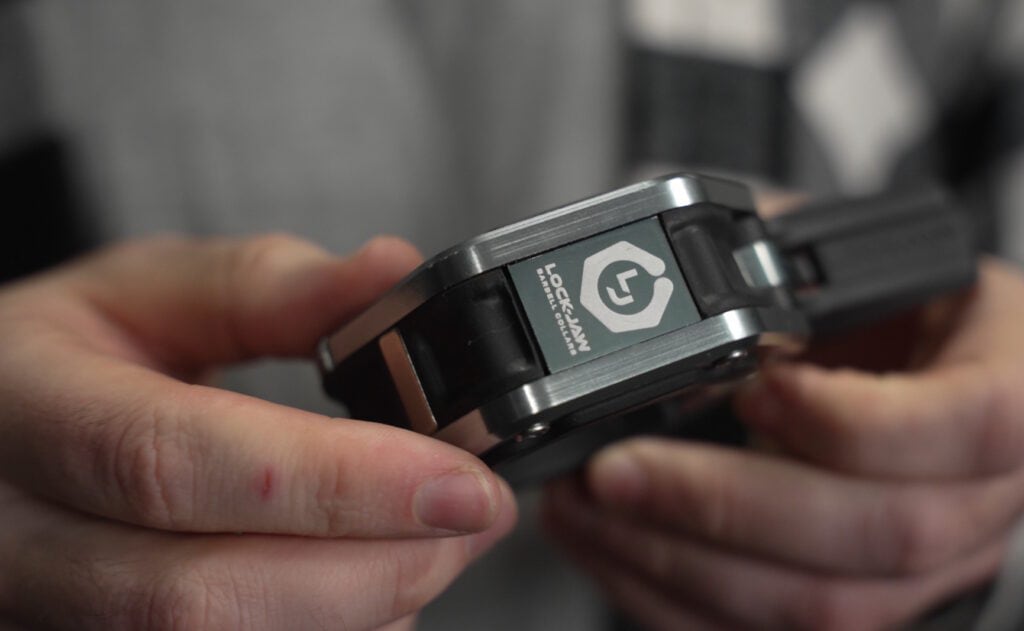
The Flex isn’t built like the composite collars.
It uses two mirrored metal side plates connected together, with an intentional cutout in the midpoint that allows controlled flex inward as you clamp it. That flex is the whole point: the collar clamps insanely hard because the body itself compresses around the sleeve.
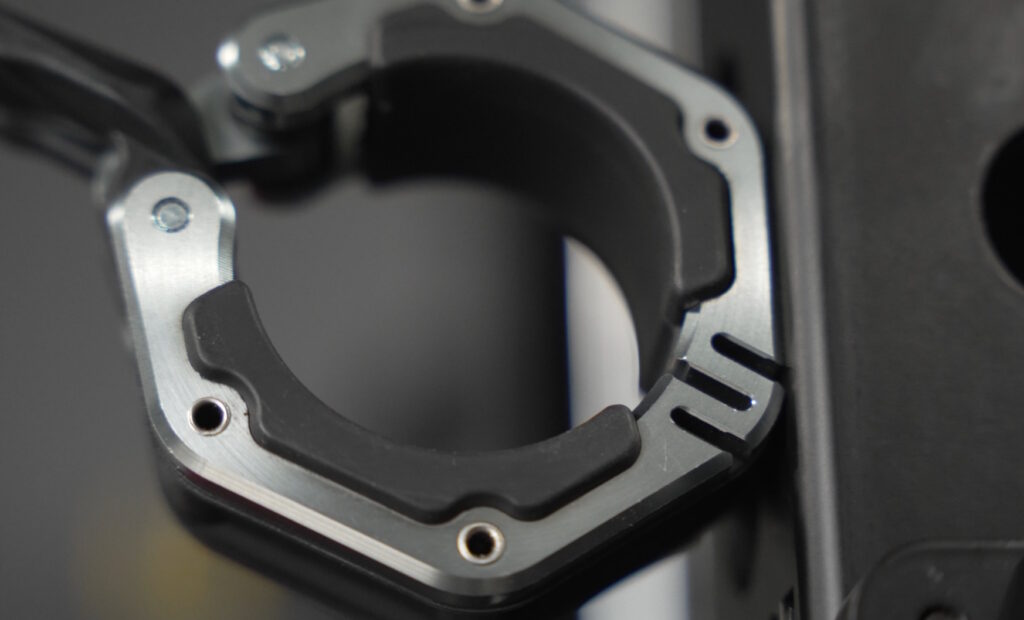
It’s also the thinnest Olympic collar Lock-Jaw makes, which matters if:
- you use bumpers
- you load the sleeve close to full
- you want every extra fraction of sleeve length
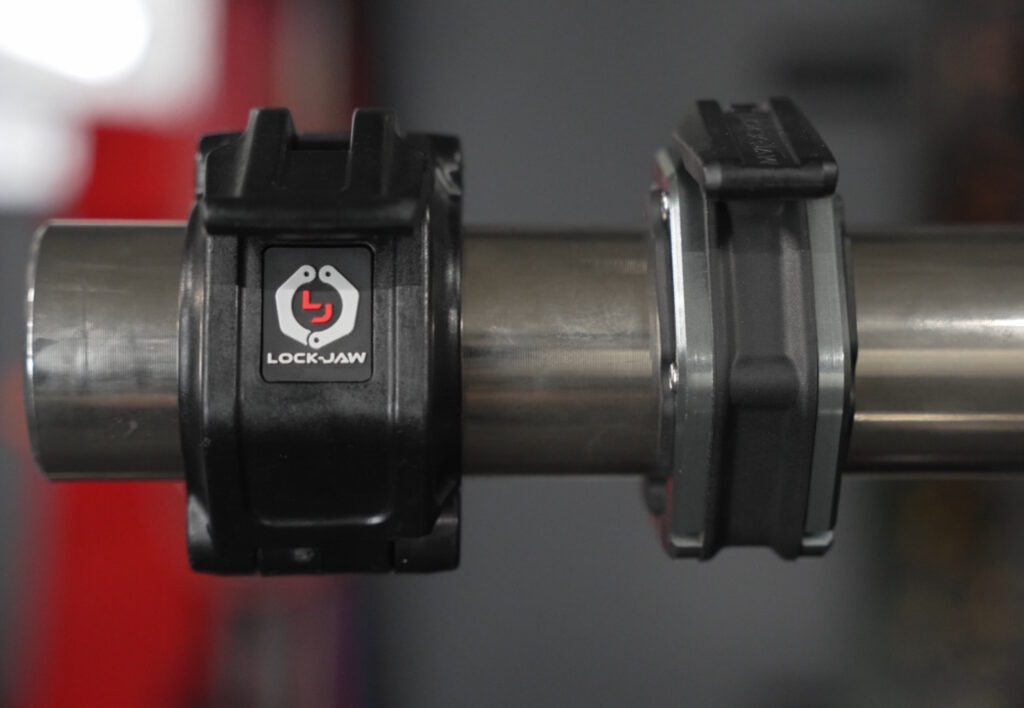
The Flex has magnets, but the placement isn’t ideal. They’re only on one face, so you have to orient it in a certain direction, and it protrudes a bit when stored. Still better than no magnets, but it’s not as clean as the Pro Magnet.
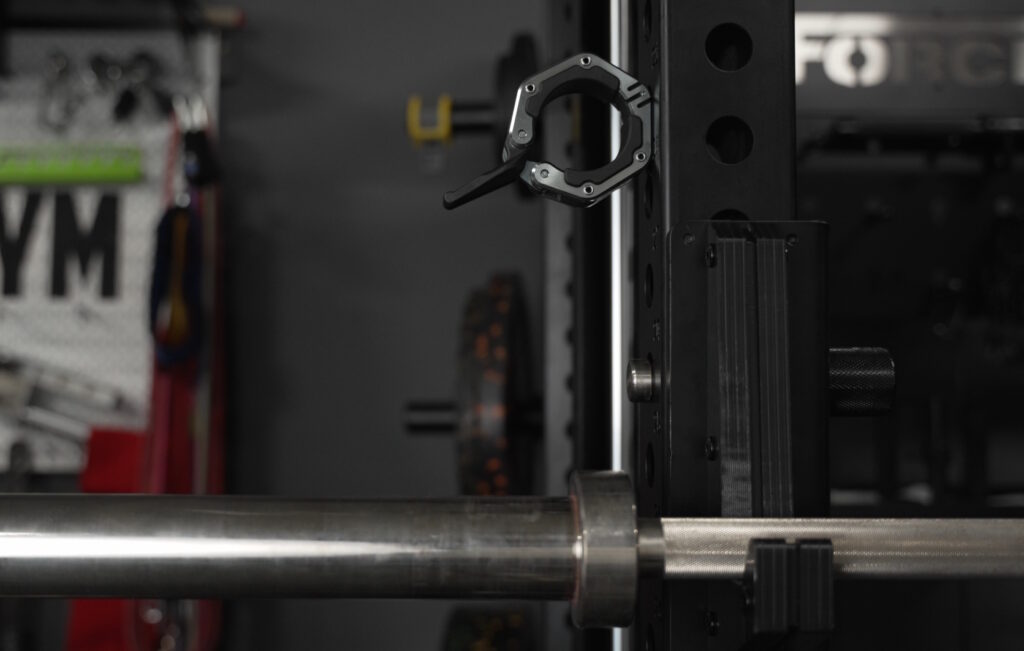
I’ve heard people say the magnets are weak. That has not been my experience. My Flex collars actually hold very well.
Usability
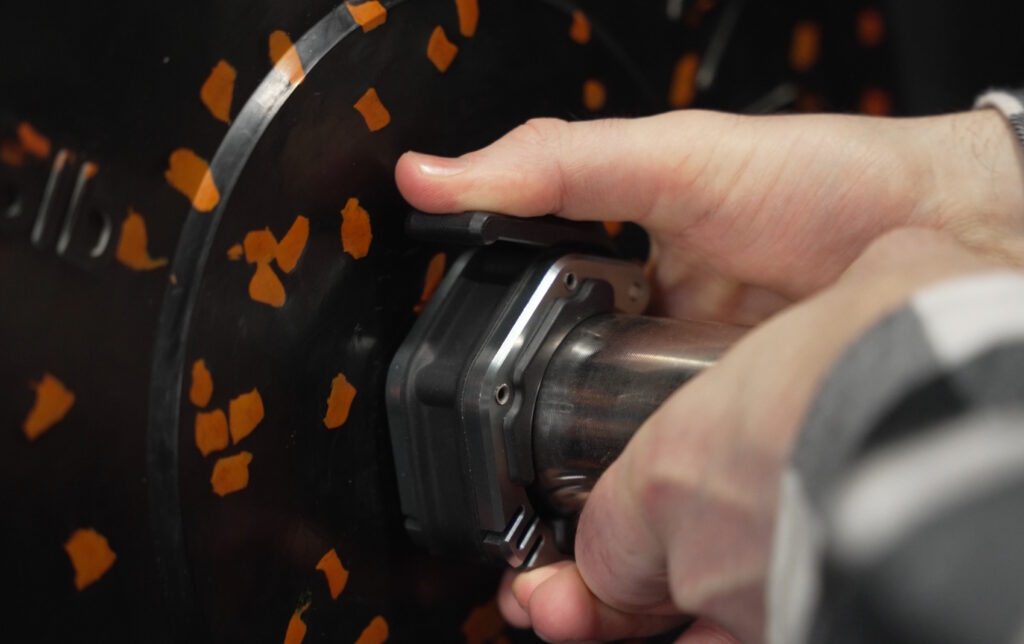
Removal is easy: pull back on the lever quickly with just a bit of force and it pops right off.
The ease of closing it, however, depends on the load:
- With lighter loading (like a single 45), one-hand install is technically possible; but practically, not so much, unless you have great hand strength
- As the bar gets heavier, one-hand install gets significantly easier because the sleeve doesn’t spin as much.
So the Flex trades a bit of ease of use at lighter loads for insane holding strength.
Who should buy it
Buy the Lock-Jaw Flex if you want:
- maximum clamp strength
- the thinnest profile
- magnets (even if placement isn’t perfect)
- the most engineered design
Skip it if you want:
- effortless one-hand install at lighter loads
- pure convenience over ultimate hold
Lock-Jaw Metal Review
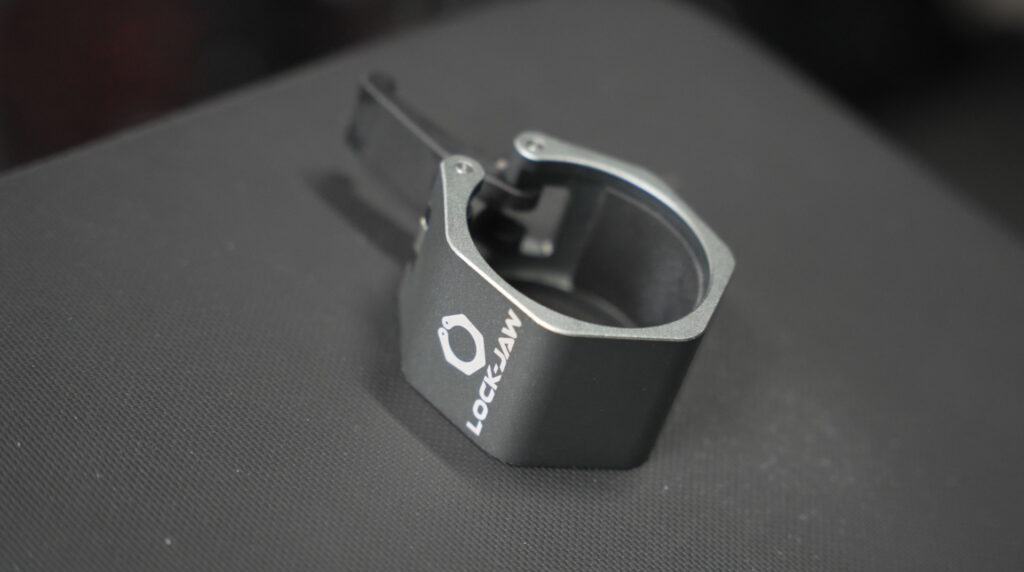
The Lock-Jaw Metal surprised me. It’s an elite performer, and it sits right behind Flex in the “how much does this move?” conversation.
The Metal takes a noticeably different approach from most of the lineup. Instead of a composite shell with multiple hinges, it uses a simpler, single-piece, fully aluminum body that prioritizes strength without unnecessary bulk.
How it performed in testing
Drop test: Excellent. No noticeable movement after multiple drops, even when intentionally dropping unevenly.
Vertical hold: Nearly flawless under static load with no visible movement. After adding bodyweight by stomping, total migration was minimal — about 1.5 mm.
In real training, this translates to an extremely secure collar that handles heavy drops with ease, with only minor movement under exaggerated vertical stress.
Usability
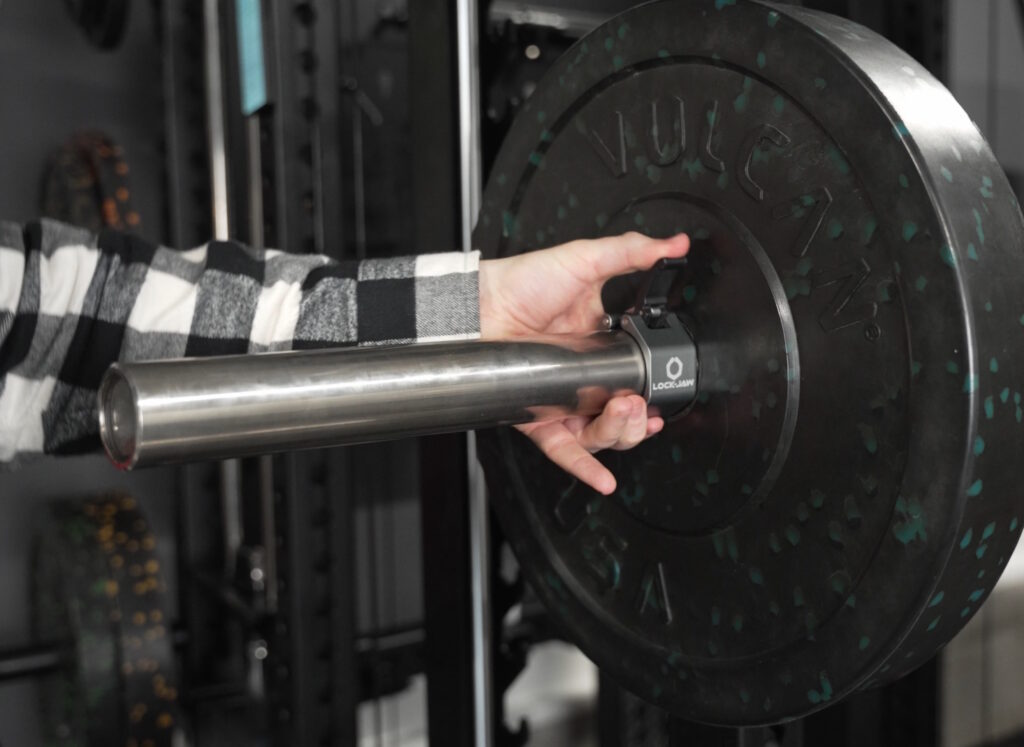
With just a bit of weight on the bar (i.e. a single 45), one-hand operation is very doable. It does require some thumb strength to push the lever down, so it’s not effortless, but you don’t need a second hand to stabilize the sleeve.
If I had to compare feel, daily usability lands much closer to the Olympic than the Flex. It’s secure without feeling overly stubborn to adjust, which makes it realistic to use as an everyday collar.
Design
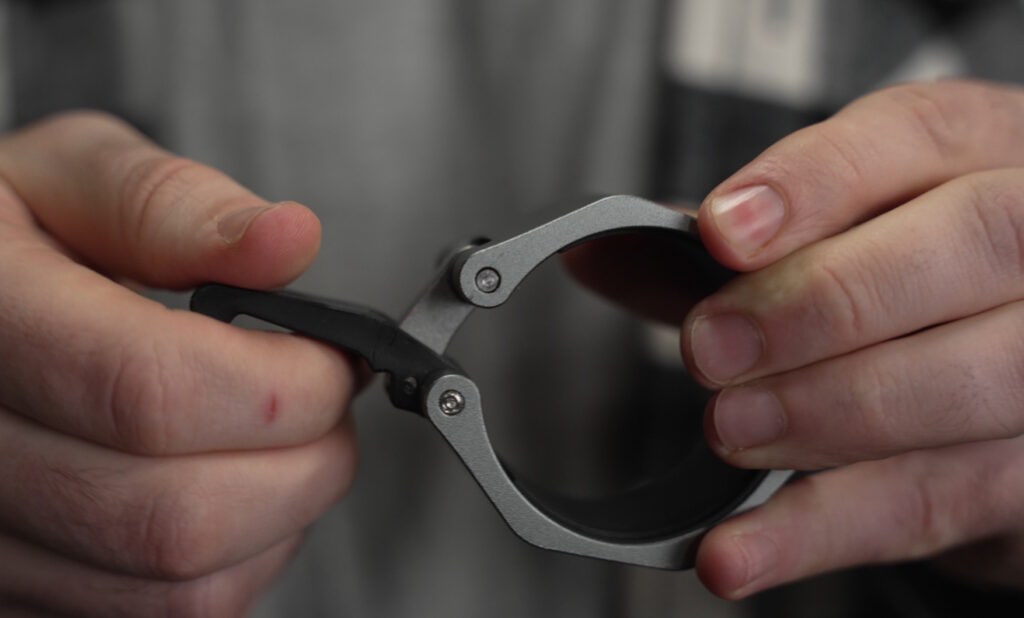
The standout design feature here is the single-piece aluminum construction. It gives the collar a sturdy, confidence-inspiring feel while remaining very lightweight in hand.
The branding is painted, rather than rubberized like on the composite models, which makes sense given the metal body. It keeps the aesthetic clean and industrial.
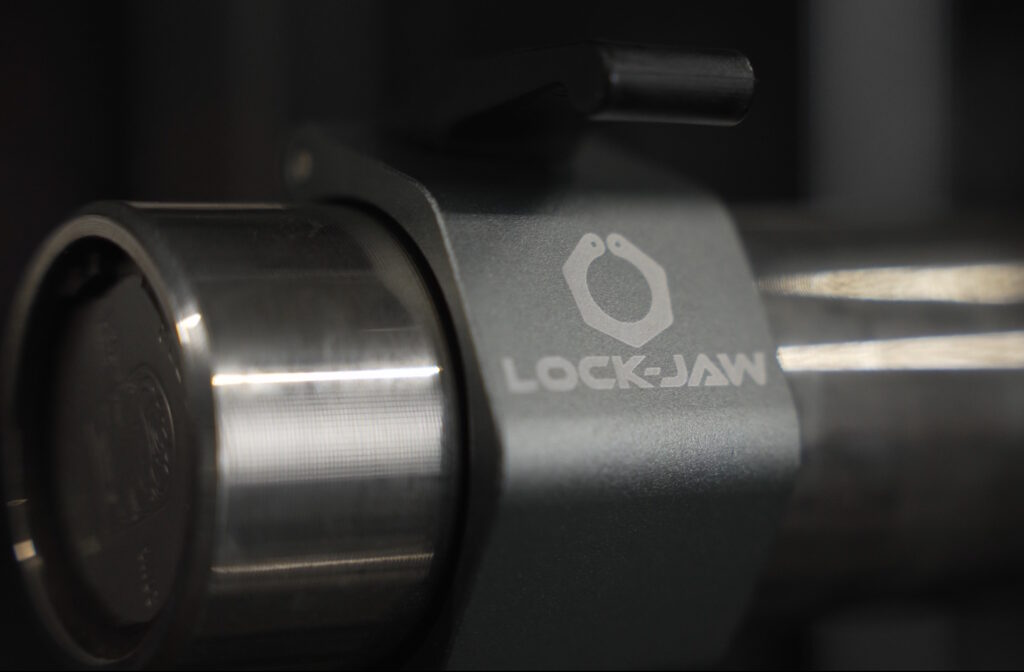
My version of the Metal does not include magnets, but Lock-Jaw has indicated that the non-magnetic version is being phased out in favor of a magnetic variant. I actually tried to buy the magnetic version to use in this comparison guide, but it was unfortunately out of stock at that time.
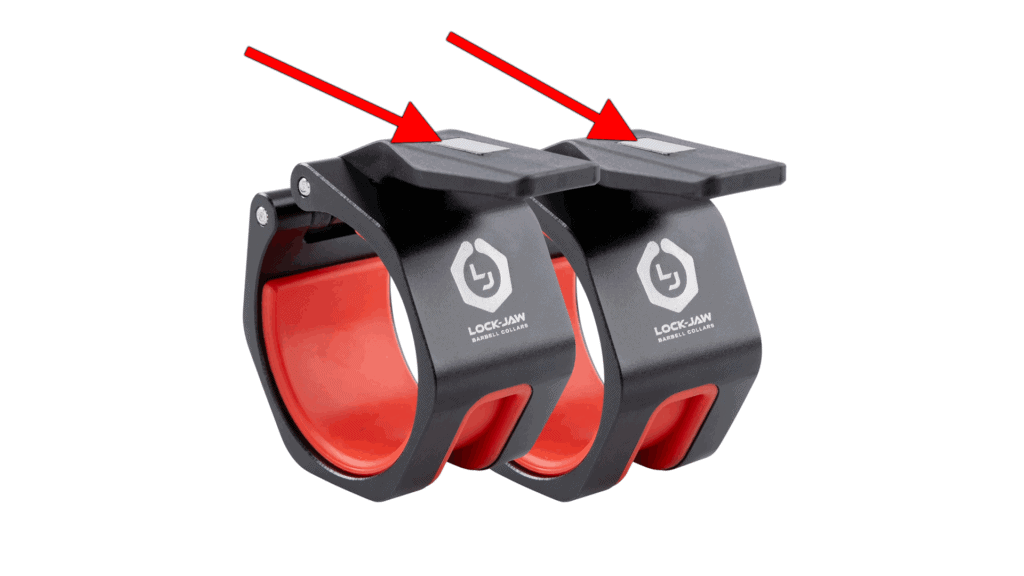
On the magnetic version, the magnet is placed on the lever, which means the collar will protrude slightly when stored on a rack, similar to the Flex. That placement isn’t ideal, but it’s largely dictated by the collar’s design, since it would be hard to fit magnets on the thin edges.
Who should buy it
The Lock-Jaw Metal makes a lot of sense if you want:
- A lightweight aluminum collar
- Magnetic storage (even if it sticks out to the side)
- Strong real-world performance without excessive stiffness
- A premium feel without the thickness of the Flex
At $48, it’s priced reasonably given its features (including magnets) and how well it performs.
That said, if your priority is absolute maximum clamp strength or the thinnest possible collar, the Flex is still the better choice. But if you want something extremely secure, lighter in feel, and easier to live with day to day, the Metal is one of the strongest all-around options in the Lock-Jaw lineup.
Lock-Jaw Machine Review
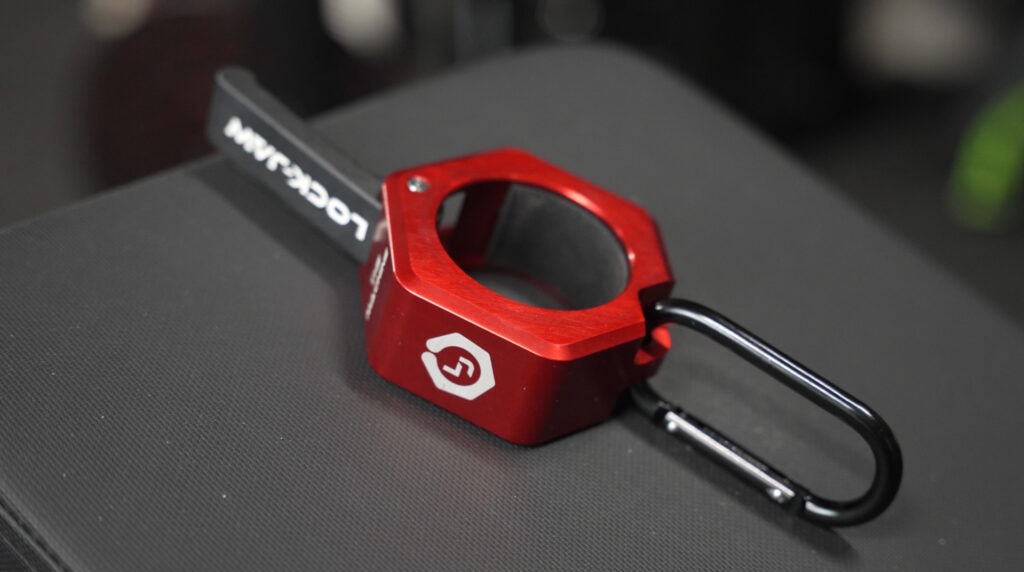
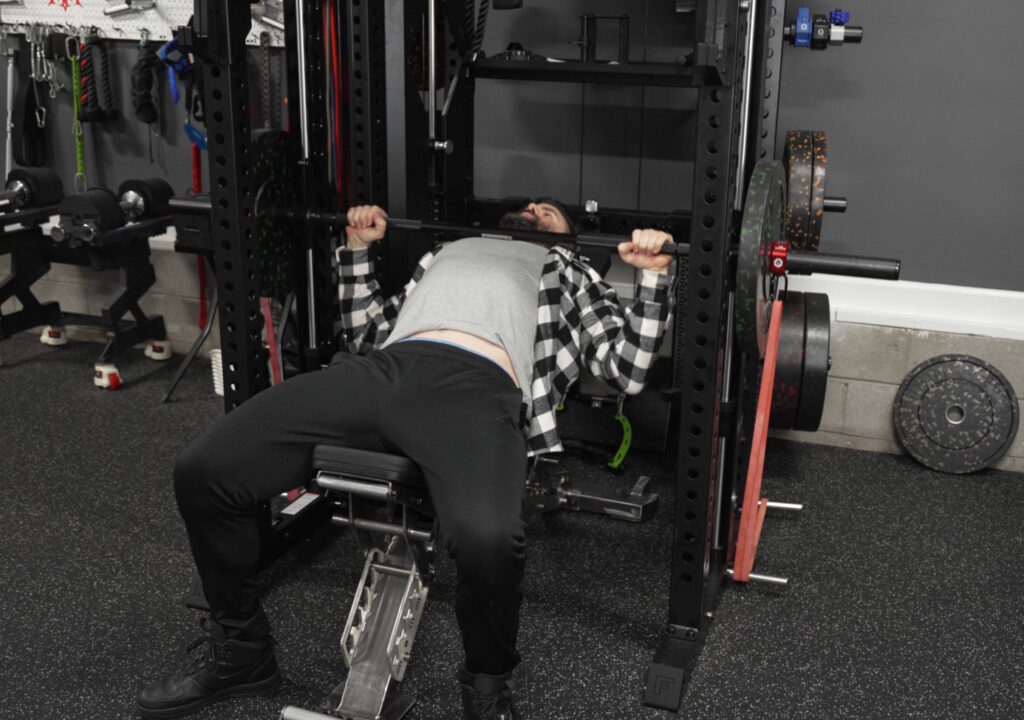
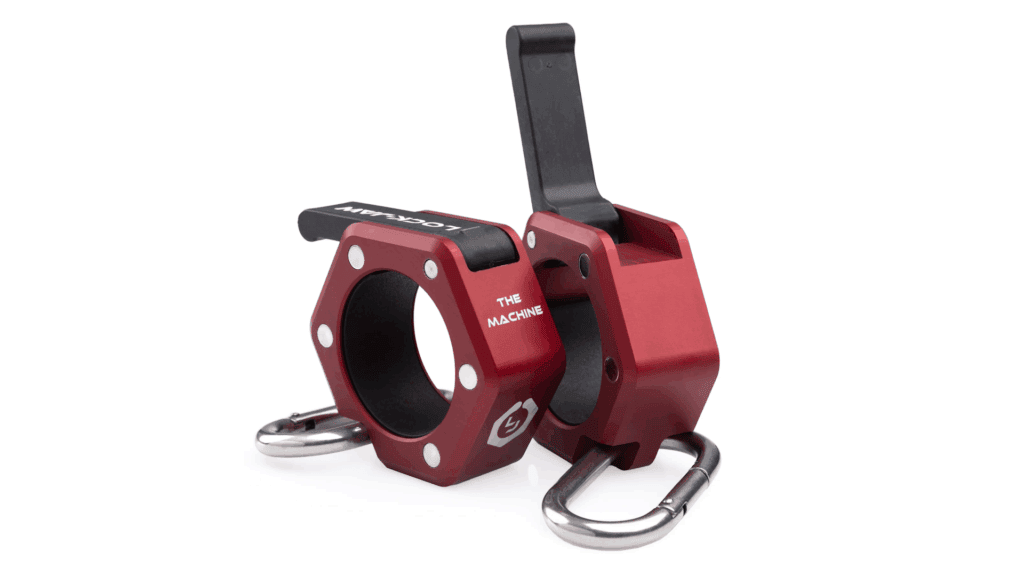
The Lock-Jaw Machine is the only Lock-Jaw collar with a built-in carabiner for attaching chains or bands.
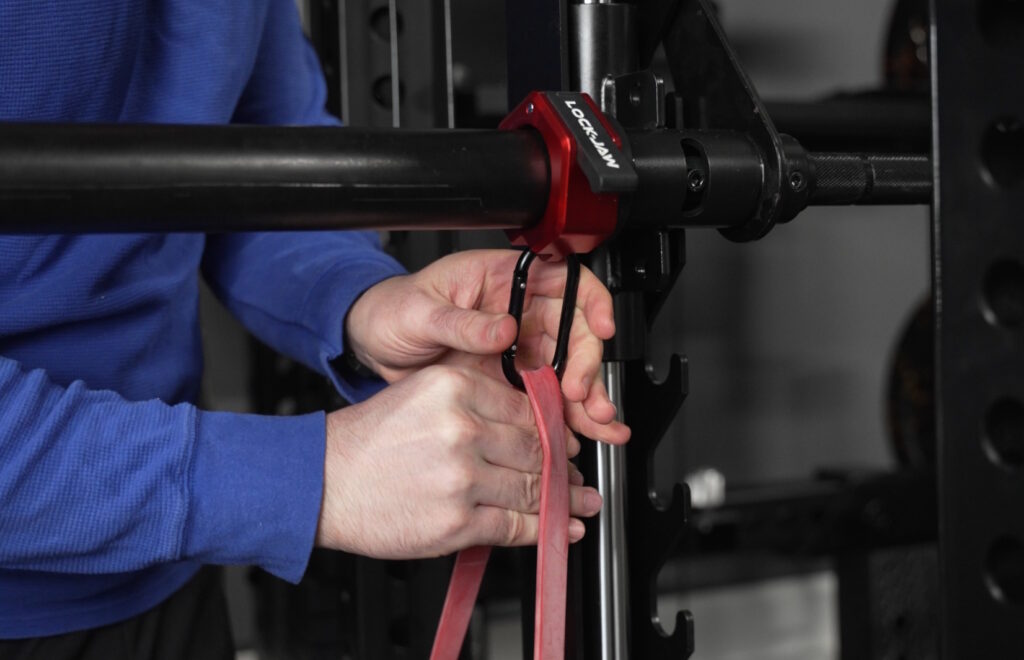
So if you want that feature, this is your collar. If you don’t, you probably shouldn’t buy it, and I’ll get into why that is shortly.
How it performed in testing
The Machine is very strong. Here’s how it did in my tests:
- Vertical test: The static hold portion of the test showed virtually no movement; and after stomping, it moved just ~1.5 mm
- Drop test: The movement was a mere ~0.5 mm, and uneven drops didn’t really worsen it. Very impressive real-world results
Usability
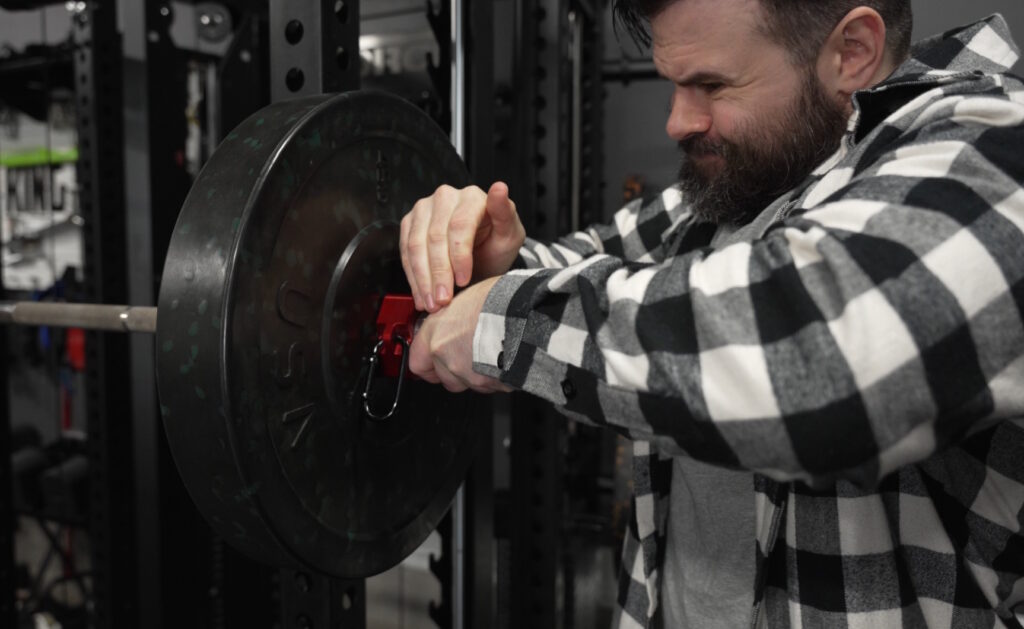
Usability is the downfall of the Machine collar.
It is by far the hardest collar to put on and take off. Signficantly more so than even the Lock-Jaw Sport.
The Machine requires two hands and real force. Like, you really have to strain to both open and close it.
It does break in slightly over time, but only to a point. It still takes effort, and yes, it can be annoying. Very annoying, actually.
But that annoyance may be worth it if you’re using it for its intended purpose: attaching chains and bands.
Otherwise, I do NOT recommend it. While you can remove the clip and use it like a regular collar, the effort required to open and close it simply isn’t worth it, at least not as your primary collar.
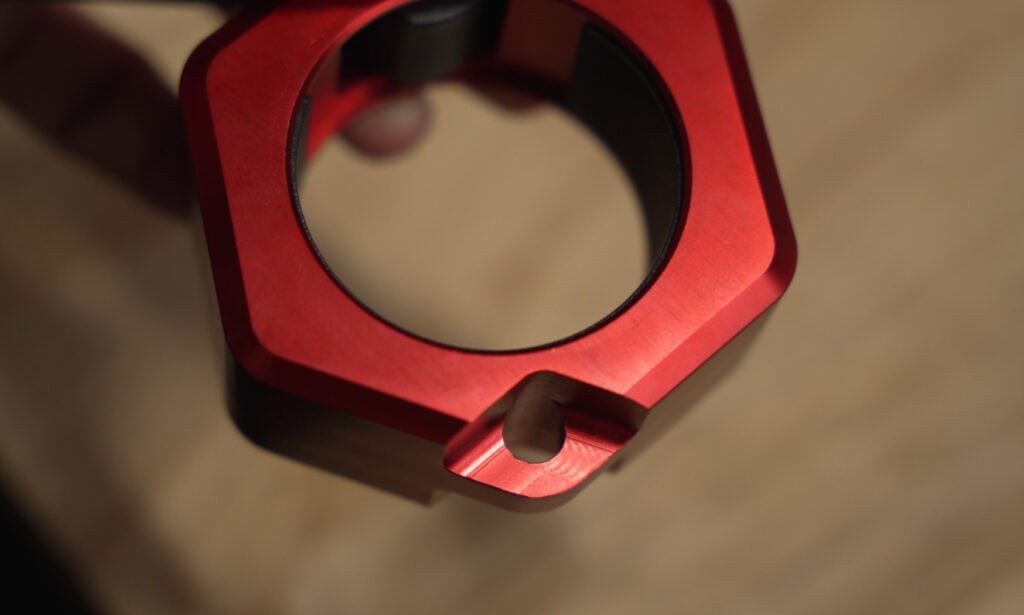
Design
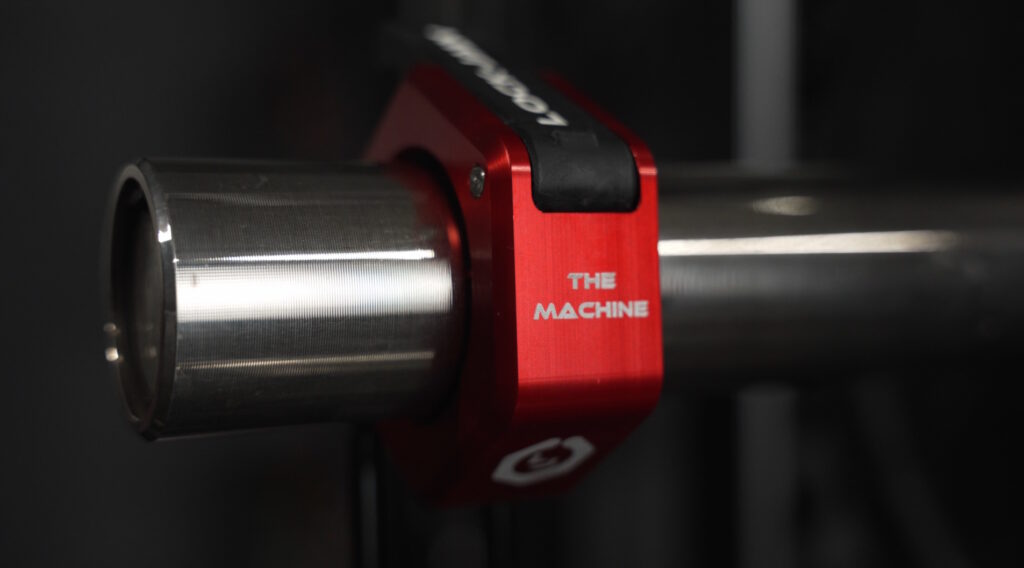
Construction-wise, it’s one of Lock-Jaw’s metal-bodied collars, with a thick, single-piece aluminum body that feels extremely robust. Branding is painted rather than the rubberized raised logo found on the composite collars, and there’s a nice touch with “Lock Jaw” debossed into the lever.
It really is a beautiful collar, which makes it even more disappointing because I would love to use it all the time just to enjoy the aesthetic.
My version does not have magnets, but there is also a magnetic version available. The magnets on that model are placed on the side, which is the best placement for rack storage because it sits flat and doesn’t jut out awkwardly.
The non-magnet version is $50 while the magnetic version is $70.
Who should buy it
- you want a convenient way to attach bands/chains to your bar
- you train with bands/chains often enough to justify the poor ease of use
Otherwise, skip it.
Lock-Jaw Pro Axle Review
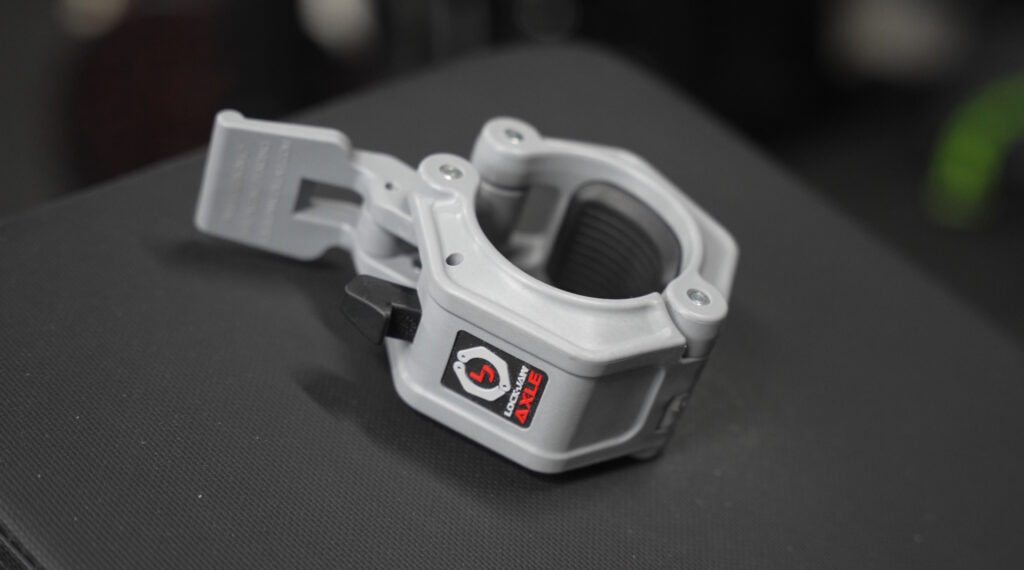
The Lock-Jaw Pro Axle is a specialty collar designed specifically for 1.9-inch axle sleeves, which are commonly found on axle bars, certain trap bars, and other specialty barbells. Conceptually, it’s the standard Pro collar scaled down to fit these smaller-diameter sleeves.
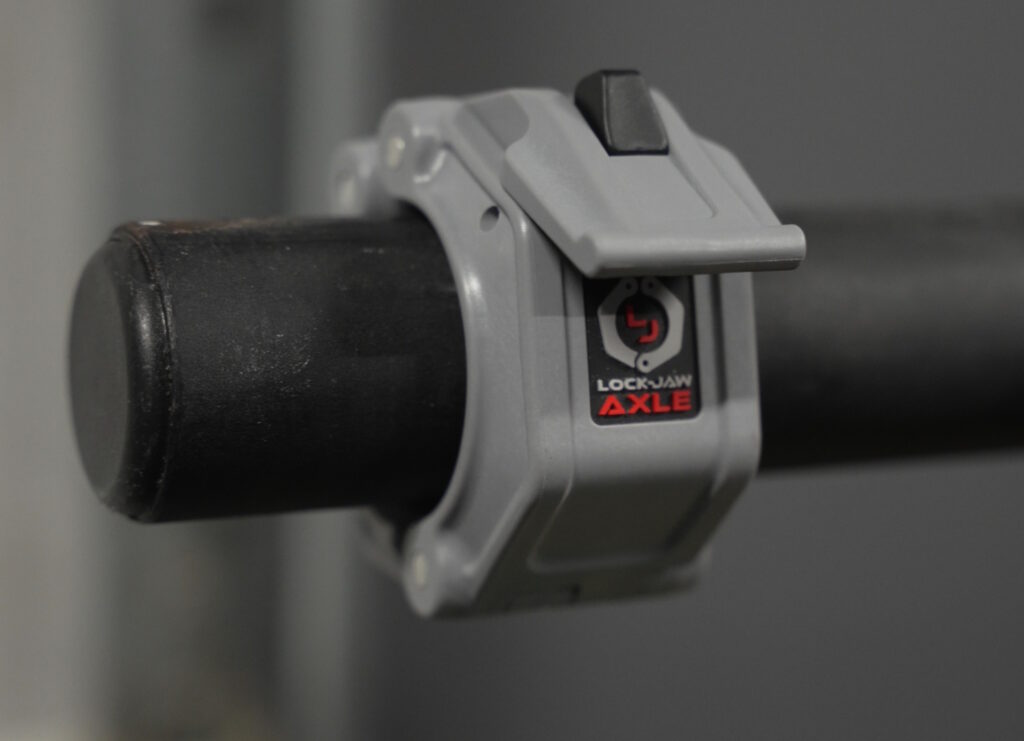
What I could test
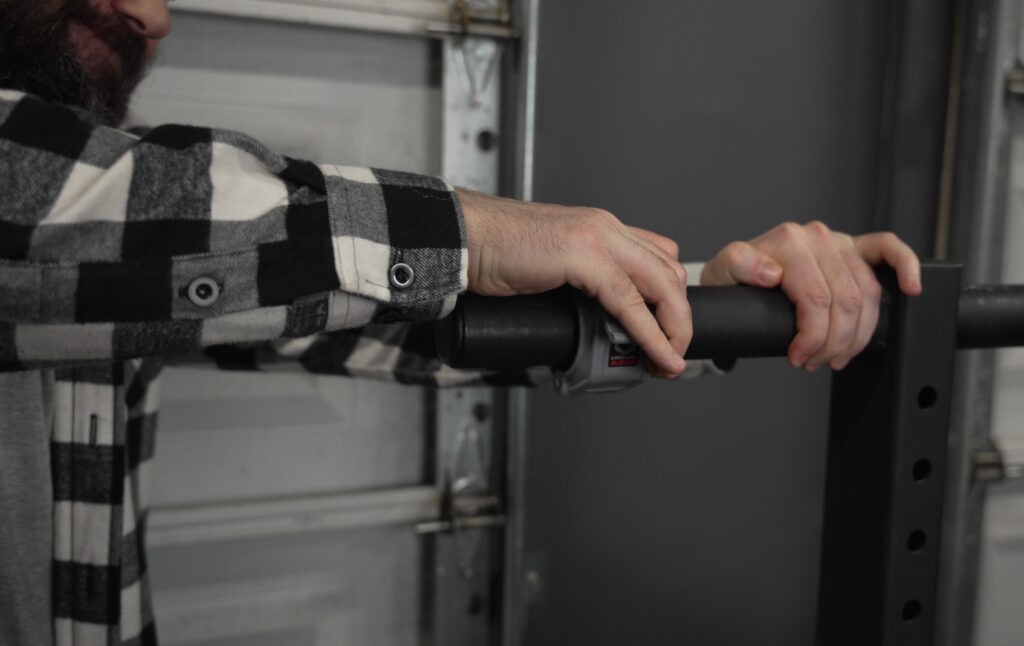
I don’t currently own any bars with true axle sleeves, so I tested the Pro Axle as thoroughly as possible on weight tree horns that match the same 1.9-inch diameter. While that limits the types of tests I could perform, it still allowed me to evaluate fit, security, and overall usability.
The primary test I ran was a manual pull-and-twist test. No matter how hard I pulled or twisted, the collar simply would not budge. It felt extremely secure on the sleeve.
Given that the Pro Axle shares the same design DNA as the standard Pro and Pro Magnet collars, it’s reasonable to expect similar behavior under drop tests and vertical loading when used on actual axle sleeves, even though I wasn’t able to perform those tests directly.
Usability
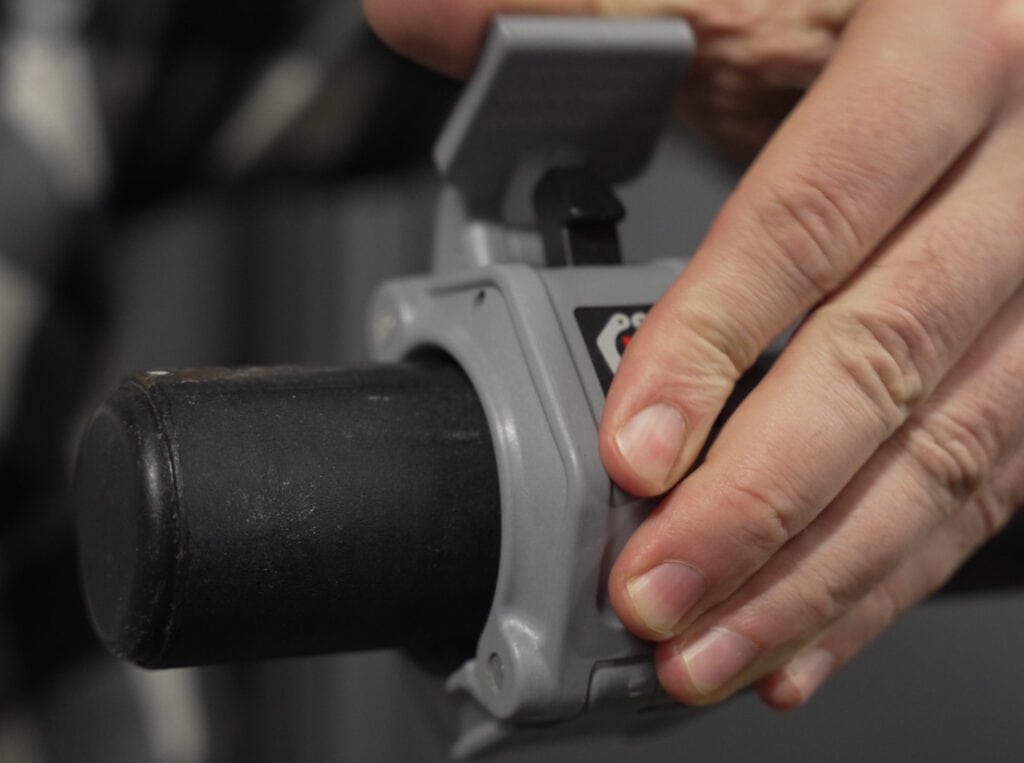
Usability is one of the Pro Axle’s strengths.
One-handed operation is very doable, both when putting the collar on and taking it off. Removal does take slightly more effort due to the spring-loaded secondary locking tab, but overall the mechanism feels smooth and controlled rather than stiff or annoying.
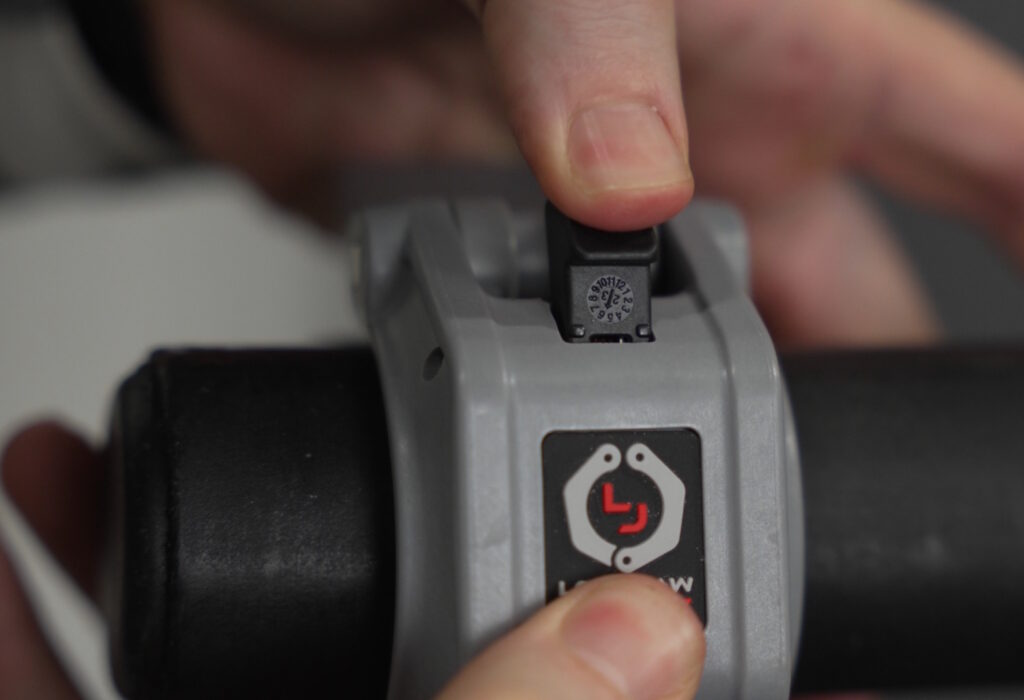
That locking tab is the same one used on the Pro and Pro Magnet models, and it adds a meaningful layer of security. Once closed, the lever is extremely resistant to popping open, even under extremely high-impact scenarios.
Design
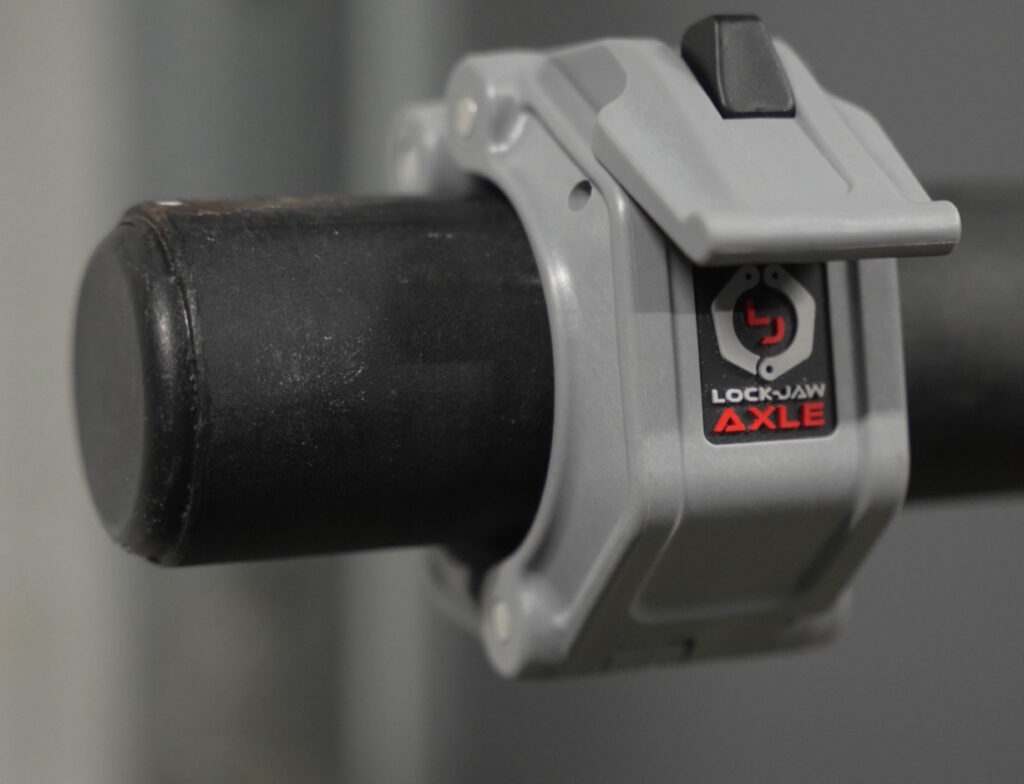
From a design standpoint, the Pro Axle mirrors the rest of the Pro family. The most notable omission is magnets, which the Pro Axle does not include.
Aside from that, construction, the raised rubberized logo, locking mechanism, and overall feel are very similar to the other Pro collars.
The Pro Axle comes in at $45, which is the same price as the regular (non-magnet) Pro model.
Who should buy it
If you have a bar with axle sleeves, this is your ONLY Lock-Jaw option, but it’s a good one.
Lock-Jaw One Review
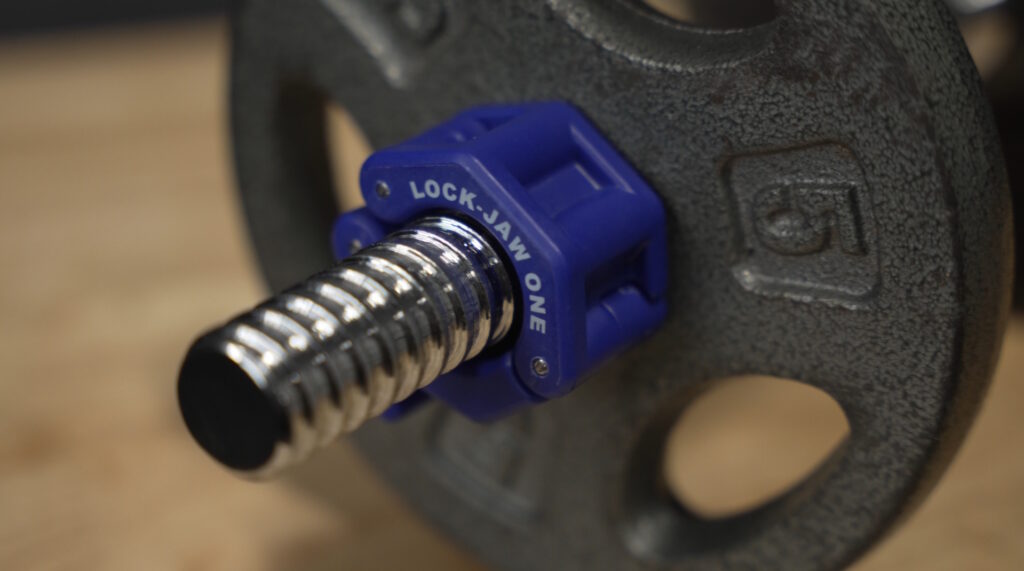
The Lock-Jaw One is designed for standard 1” bars and dumbbell handles, so it’s not competing directly with Lock-Jaw’s Olympic-style or axle collars.
How it performed in testing
In drop testing on a standard dumbbell handle, the Lock-Jaw One did not perform well:
- After a single drop, both collars shifted a few millimeters
- After the second drop, one collar popped open entirely
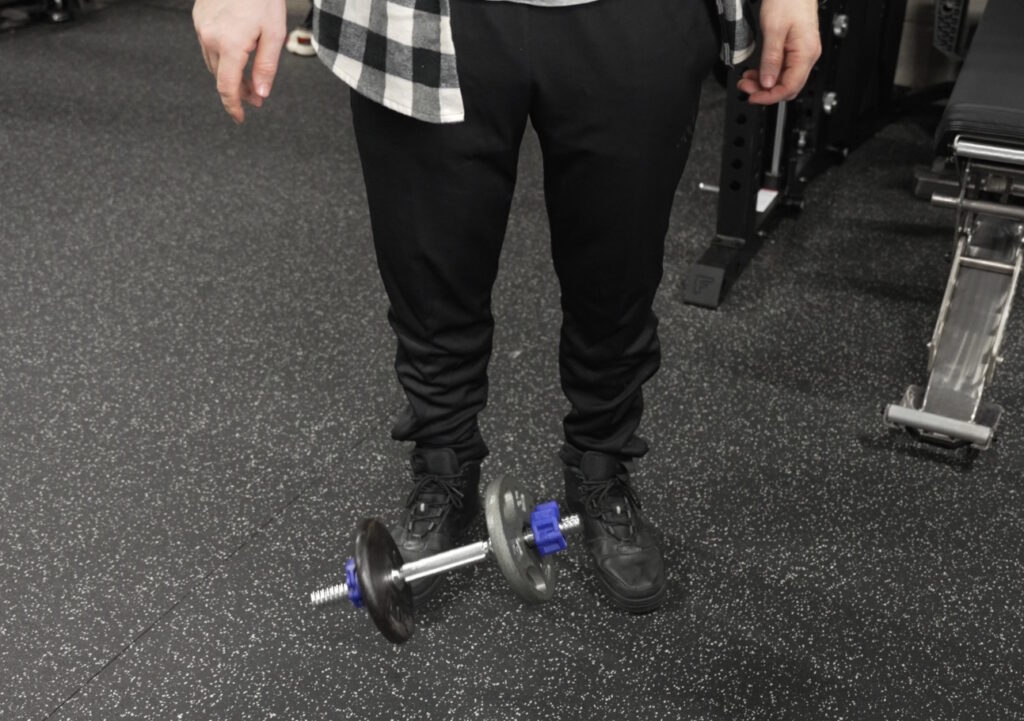
So, do not buy these for dropping standard dumbbells or barbells.
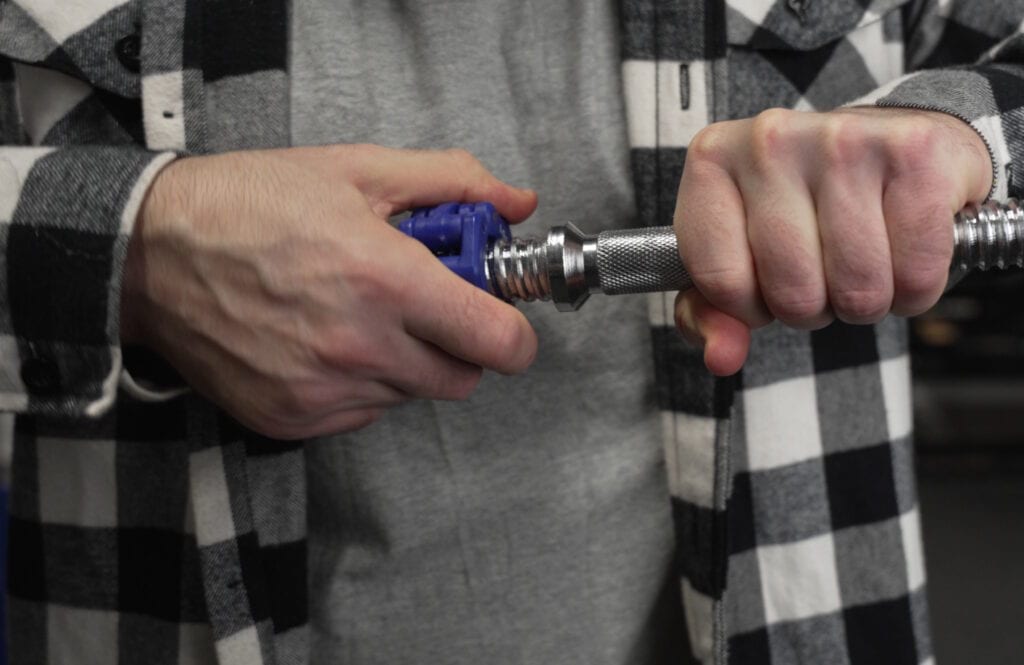
In a manual pull-and-twist test, I was also able to slowly work the collar down the sleeve by twisting it. This was the only Lock-Jaw model where I could create movement this way.
Real-world use vs spinlocks
Where things get more nuanced is during normal exercise use.
Spinlock collars, when fully tightened, can do a great job of preventing plate rotation, at least most of the time. The issue is that during faster or more dynamic movements, they can sometimes back off and loosen mid-set. When that happens, plate movement becomes very noticeable and distracting.
The Lock-Jaw One behaves differently. It always allows some plate rotation, but that rotation is consistent and does not progressively worsen during a set. It doesn’t back itself off over time the way spinlocks can.
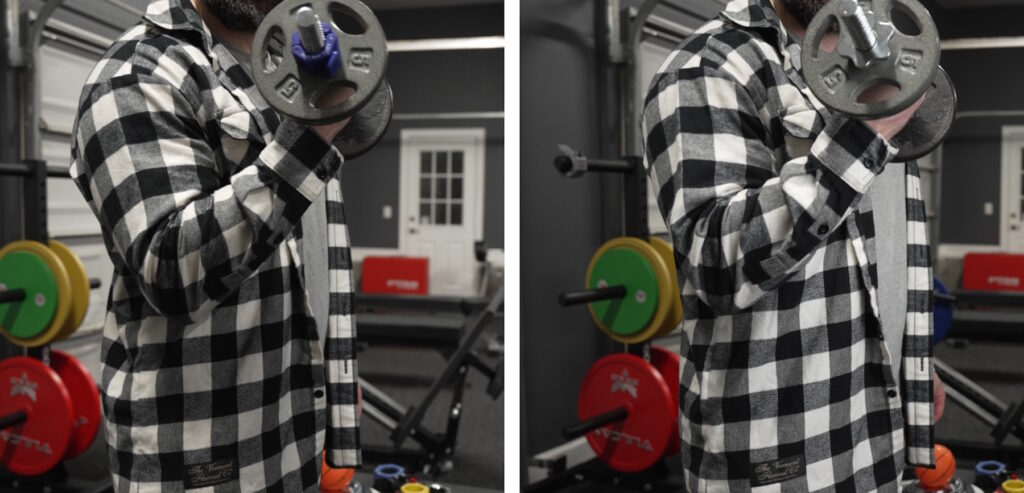
On threaded handles, you could argue that spinlocks are better when they stay fully tight. But if your spinlocks tend to loosen during use, the Lock-Jaw One can actually feel more predictable.
On smooth, non-threaded one-inch bars, where spring clips are the usual alternative, the Lock-Jaw One is clearly the better solution.
Usability
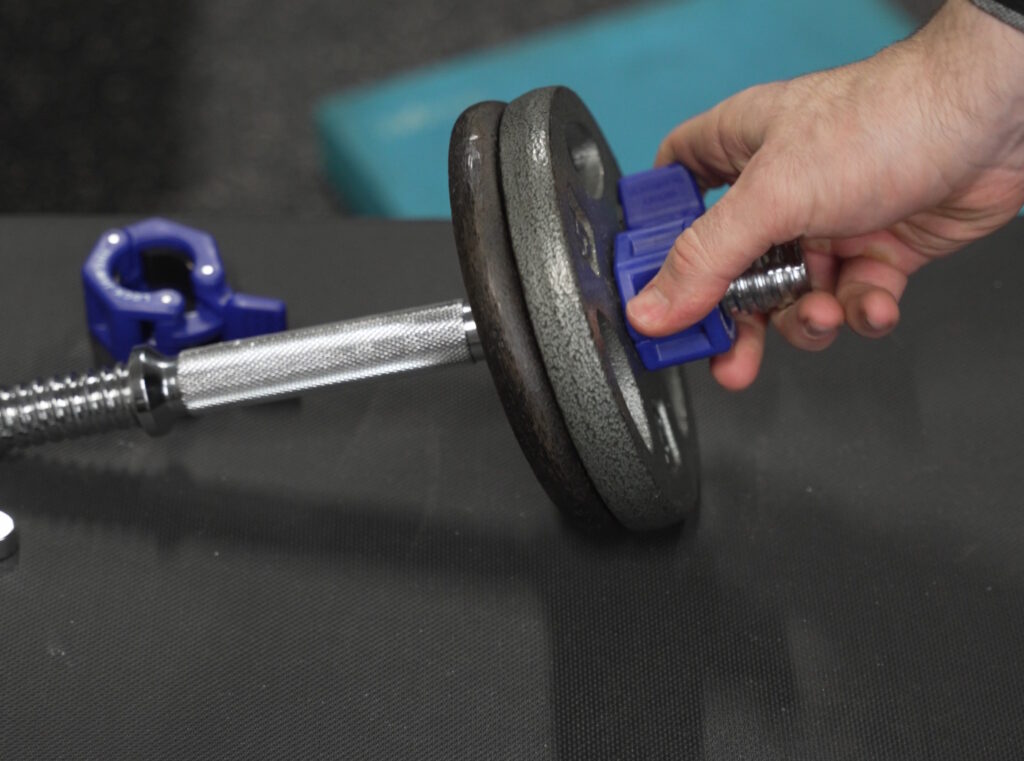
Usability is one of the Lock-Jaw One’s biggest strengths. It’s extremely easy to put on and remove, with effortless one-handed operation. In fact, it’s probably the easiest collar to use in the entire lineup.
Of course, the fact that it’s so easy to remove is probably why it can’t handle drops.
Who should buy it
The Lock-Jaw One is $20. I think it’s overpriced considering the Lock-Jaw HEX is less expensive, despite being a much more impressive and physically larger product.
That said, it can be worth it for some people. I’d say it’s worth it to buy the Lock-Jaw One if:
- you have standard 1” equipment, especially smooth sleeves
- you dislike spring clips
- your spinlocks loosen during sets
Skip it if:
- don’t have standard equipment
- you drop your standard dumbbells/bars
- your spinlocks are fine
How to Choose the Right Lock-Jaw Collar
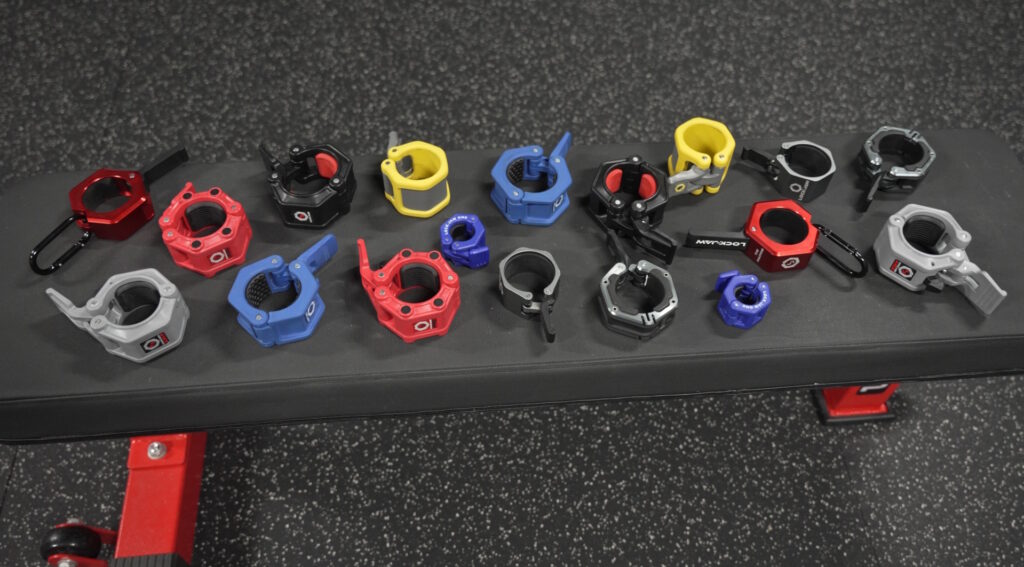
Here’s the reality: most people don’t need “perfect.” They need the collar that best matches:
- how much you value efficient collar changes
- whether, how much, or how hard/heavy they drop bars
- whether magnets matter
- whether you use chains/bands
- whether you use standard or axle sleeves
The simplest “best for” summary
Here’s my quick (overly-simplified-but-still-useful) cheatsheet to help you make a smart buying decision:
- Best overall hold: Flex
- Strongest yet light-feeling: Metal
- Best hold for the price: Sport
- Best premium easy-to-use everyday collar: Olympic
- Best budget choice: HEX
- Best magnetic collar + best rack storage: Pro Magnet
- Best for chains/bands: Machine
- Axle sleeves: Pro Axle
- Standard 1” equipment: One
Final Thoughts & My Favorite Models
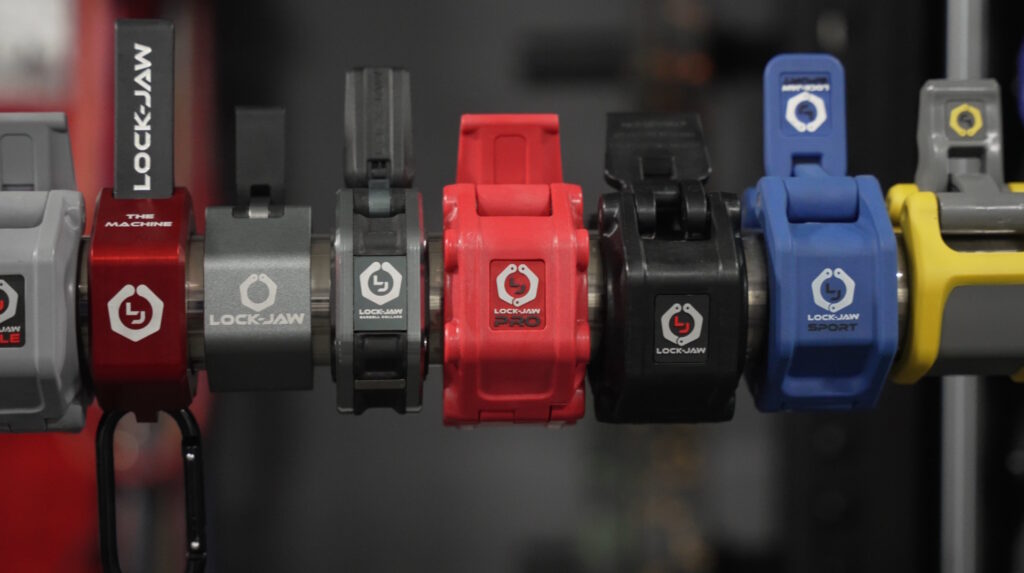
A lot of Lock-Jaw collars can “work.” The important thing is understanding the tradeoffs that don’t show up in product photos:
- some collars are strong but annoying (Machine, Sport)
- some are balanced and easy to live with (Olympic)
- some are premium for a reason (Flex)
- and some are cheap but not trash (HEX)
My Personal Top 3 Favorite Models
If you want my personal opinion, these are my three favorite models, and I also think they’ll be a great fit for most people and training styles:
But the “best” Lock-Jaw collar for you depends on your priorities, and hopefully this guide made that choice obvious.
If you want to pick up any of these collars, consider using my coupon code KING for 20% OFF any Lock-Jaw collars.